
Entertainment
Why Charlie Sheen’s Dad Martin Sheen and Brother Emilio Said No to Netflix Doc in 5 Emotional Reasons
Charlie Sheen opens up about why Martin Sheen and Emilio Estevez declined to appear in his tell-all Netflix documentary.

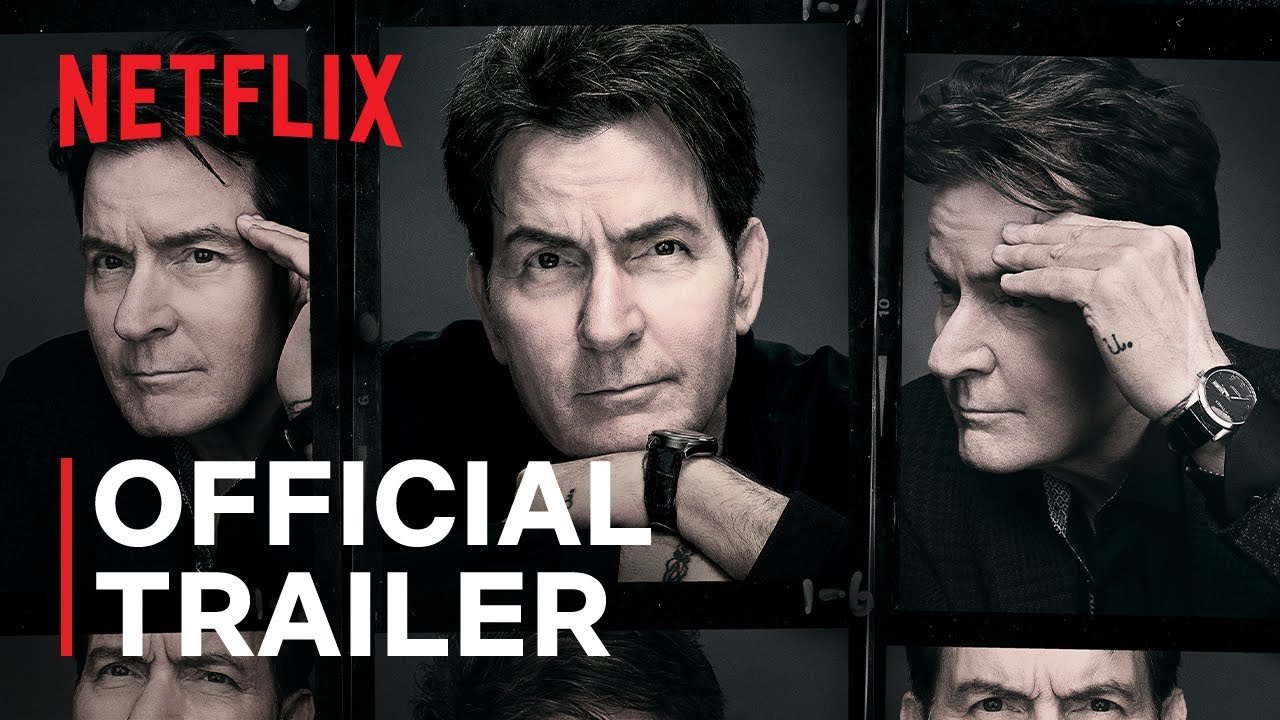
When Charlie Sheen walked the red carpet at the Netflix Tudum Theater in Los Angeles earlier this month, fans expected to see his entire family by his side. After all, the new two-part Netflix documentary, aka Charlie Sheen, was billed as a raw and emotional portrait of the actor’s life — from Hollywood highs to devastating lows.
But viewers quickly noticed something unusual. While Charlie’s former wives, children, and even longtime collaborators like Chuck Lorre and Jon Cryer appear on screen, two of the most important people in his life are missing: his legendary father Martin Sheen and his brother Emilio Estevez.
A title card in the documentary spells it out clearly: “Martin Sheen and Emilio Estevez declined to participate.”
Charlie Sheen Understands Their Choice
In the film, Charlie, now 60 and eight years sober, addressed the absence directly.
“Emilio and Dad, they fully support me. They’re rooting for me in ways you can’t even imagine,” Charlie explained. “But I can’t expect people to revisit all the drug abuse and all the s—-y choices that hurt the people I love. Would I love them both in this? Absolutely. But I completely understand why they chose not to.”
It was a moment of vulnerability that underscored just how much his addiction strained those relationships.

A Father and Son’s Tumultuous History
Charlie’s relationship with Martin has always been complex. Both men are actors who became household names — Martin through films like Apocalypse Now and the series The West Wing, and Charlie through Platoon and Two and a Half Men.
But their bond has been tested by addiction. Charlie recalls a harrowing moment during the filming of Apocalypse Now, when Martin suffered a minor heart attack after heavy drinking. “When we came back to the Philippines and saw him for the first time, he was taking baby steps on a cane,” Charlie remembered. “And he was crying, and he was devoid of that dad light. It was gone… He credits me with having a major hand in helping him during his rehab.”
The irony is painful: years later, it would be Martin trying to guide his son through his own struggles with drugs and alcohol.
Why Emilio Stepped Back
For Emilio Estevez, who made his own mark as part of the Brat Pack with movies like The Breakfast Club and St. Elmo’s Fire, the decision to decline was likely about privacy. Unlike his brother, Emilio has always preferred a quieter life away from tabloid headlines.
Still, Charlie made it clear there is no animosity: “We banged heads a lot over the years. I can’t imagine being my dad. I can’t even imagine being Emilio. They’ve been through enough because of me.”
A Documentary Called a “Love Letter”
Despite their absence, Charlie insists the documentary is ultimately for his father. “I hope he sees some of this as the love letter to him that it is,” he said. “It is hard for sons to always share with their fathers what is truly in their hearts.”
Even without Martin and Emilio, the film includes many voices from Charlie’s inner circle: his ex-wives Denise Richards and Brooke Mueller, his brother Ramon Estevez, and his children Lola and Bob.
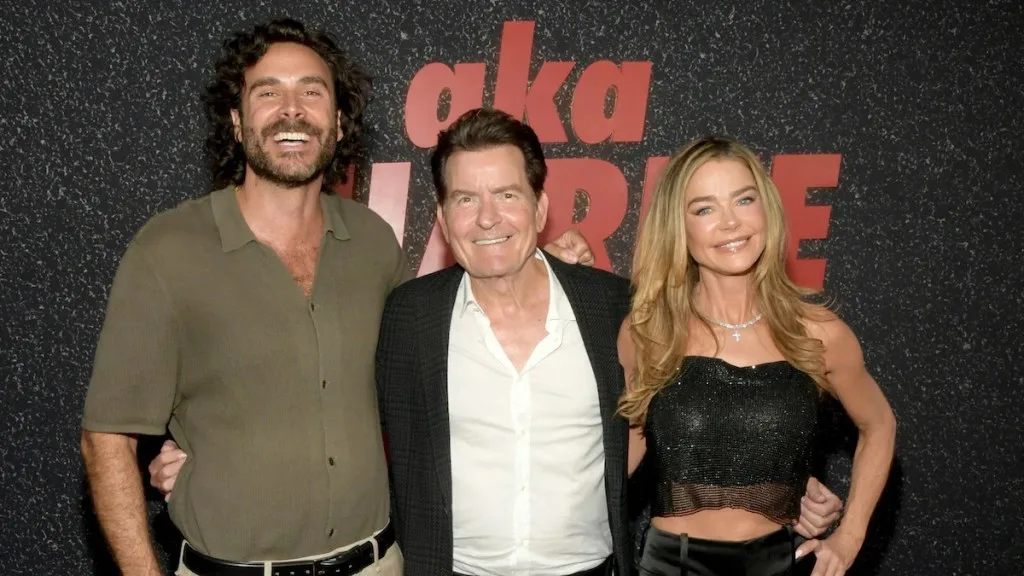
Hollywood Friends Speak Out
Perhaps most striking is the inclusion of people Charlie once clashed with publicly. Both Chuck Lorre, the creator of Two and a Half Men, and actor Jon Cryer — who played Alan Harper opposite Charlie’s infamous role as Charlie Harper — appear in the documentary. Their willingness to revisit those turbulent years shows how far Charlie has come in repairing relationships.
Charlie admitted, “We came to a place that’s been beautiful. It has been nourishing. If I could put it into one word: gratitude.”
A Sober Reflection
Today, Charlie lives a quieter life. At 60, he participates in charity softball games and spends more time with his children. But the “shame shivers,” as he calls them, still hit when he reflects on his past. “Would I rewrite the past if I could? Absolutely. But I can’t. What I can do is show gratitude.”
And perhaps that’s why Martin and Emilio declined to appear. Not because they don’t support him, but because sometimes the best way to love someone is to let them tell their story in their own words.
Final Word
The Netflix documentary aka Charlie Sheen is more than a confession — it’s an intimate portrait of fame, family, and forgiveness. While Martin Sheen and Emilio Estevez chose not to participate, their presence looms large. For Charlie, this isn’t just about revisiting demons, but about honoring the people who stood by him, even from the sidelines.
Stay connected with Daily Global Diary for the latest entertainment news, Hollywood deep dives, and exclusive updates.







Entertainment
Russell T. Davies Warns ‘We Are Absolutely Sliding Back’ on Queer Rights — and His New Show Has Something Urgent to Say About It…
At BFI Flare, the creator of Queer as Folk and It’s a Sin gave the most honest, fired-up talk of the year — revealing what Tip Toe is really about, why he loves Heated Rivalry but won’t let it take his crown, and what he really thinks about Trump, Elon Musk, and the state of the world.

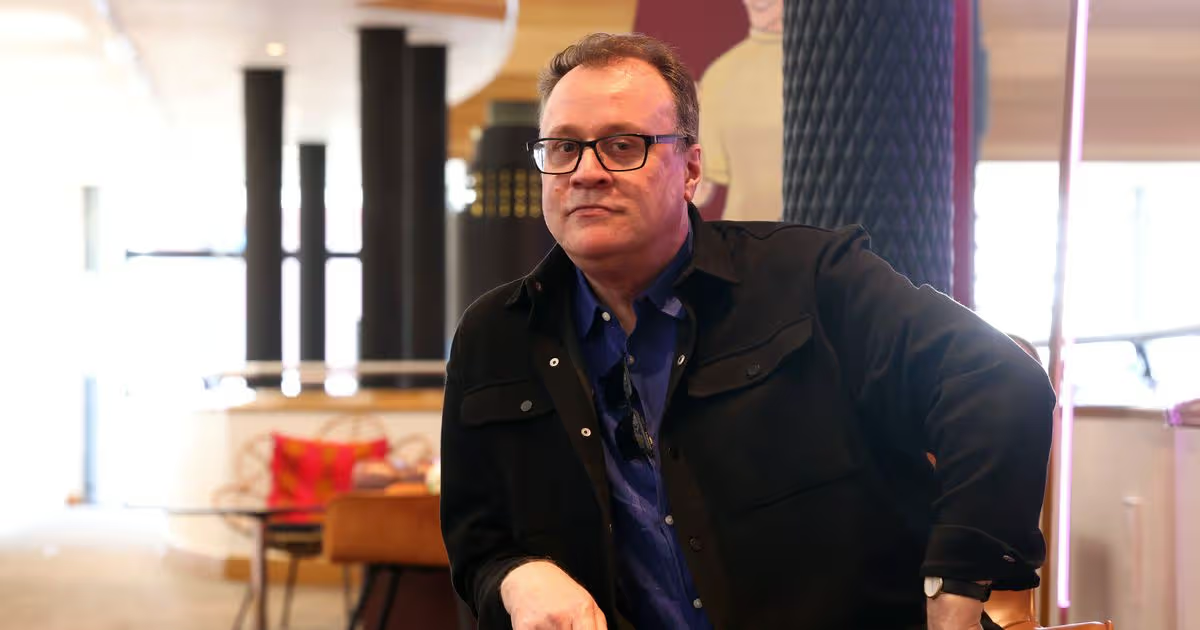
There are few people in British television who speak with the kind of authority — and the kind of fury — that Russell T. Davies does. And on Monday, at the BFI Flare: London LGBTQIA+ Film Festival, he didn’t hold back a single word.
Speaking at a Screen Talk session at the BFI Southbank in London, the man behind Queer as Folk, It’s a Sin, and Doctor Who laid out his vision, his fears, and his fire — all in one extraordinary afternoon.
“We Are Absolutely Sliding Back”
The room went quiet when Davies addressed the question everyone in that audience was already thinking about.
ALSO READ : “She Never Made It Out…” Albany House Fire Claims Woman’s Life as Family Pleads for Help to Bring Her Home
Davies was direct about the state of queer rights: “We are absolutely sliding back. Undoubtedly. And that is terrifying.” He added that trans stories are being weaponised to incite negative emotions — and he warned about the current and future state of the world: “I think we are on the precipice of something. The whole world is on the precipice of something much worse.” The Hollywood Reporter
He didn’t shy away from naming names either. He discussed the backlash on queer rights around the world, referencing US President Donald Trump, Elon Musk, and ICE. The Hollywood Reporter These aren’t abstract political talking points for Davies — they’re the fuel behind his newest drama.
‘Tip Toe’: The Show He Had to Write
Davies said of Tip Toe: “This is a show I had to write because the world is getting stranger, tougher and darker, and frankly, the fight is on.” Deadline
The five-part miniseries is, in Davies’ own words, “a bit like Years and Years meets Queer as Folk” — set in Manchester and following a gay bar owner while also confronting rising far-right politics and threats to LGBT rights. Variety
The cast is formidable. Alan Cumming and David Morrissey star as Leo and Clive — two men who have lived next door to each other in Manchester for almost 15 years. Just as life should be settling down, the world around them grows more tense. Words become weapons, opinions become radicalised, and two neighbours gradually become deadly enemies. Deadline
At BFI Flare, Davies screened an exclusive six-minute clip. In it, Cumming’s character Leo is seen talking to his friend Melba — an aging drag queen played by Paul Rhys — about the state of the world. Variety The dialogue was pointed and contemporary. One character tells another: “The president of America has given these men permission to attack us. Leo, you’re queer in 2026 — you’re a political act.” The Hollywood Reporter
That line alone drew gasps.
Showing the Conservative Heart — Not Just the Villain
What makes Davies different from many political dramatists is his refusal to reduce his characters to cardboard cut-outs. Even when he’s writing about people who hold views he fundamentally disagrees with.
Asked how the show portrays conservatives through the lens of Morrissey’s character, Davies said his interest was to zoom in on the “hearts and humanity” of people. Morrissey plays an electrician who runs his own business — and Davies explained: “That’s always going to be a Tory voter, and with good reasons. Actually, in the past, the Conservative Party used to be a decent party. The Conservative Party of 30 years ago would protect small business owners, and that’s naturally the world he was brought up in. I hope we see their hearts and their humanity and why they think what they think, and the ridiculous pressures they are under.” The Hollywood Reporter
That’s the kind of writing that cuts through. Not propaganda — portraiture.
‘Queer as Folk’ Still Walked So Nobody Else Could Run
Davies was also asked about the current darling of queer television — the breakout hockey drama Heated Rivalry — and his answer was vintage Davies: warm, funny, and just a little bit combative.
“I love it and Heated Rivalry creator Jacob Tierney is a brilliant man,” he said. “Yet, to be absolutely honest, when people sit there going, ‘Oh, it’s such a revolutionary gay show,’ I’m going: ‘Hello!’ People on my Instagram page say: ‘Queer as Folk walked, so Heated Rivalry could run.’ I thought we were f—ing running from the start.” Time Out
He’s not wrong. But Davies was also generous: “Heated Rivalry does prove that the audience is there and the market is there. And actually, it is unique in the way that it’s become an international hit.” The Hollywood Reporter
That’s the thing about Davies — he’s got enough confidence in his own legacy to praise someone else’s work without feeling threatened by it.

His Take on SNL UK? Delightfully Honest
Davies also weighed in on the week’s other big TV talking point — the debut of Saturday Night Live UK on Sky One, hosted by Tina Fey. His verdict? Characteristically unvarnished — and worth reading between the lines.
The Man Behind the Legacy
It’s worth stepping back and remembering just who this man is. Davies introduced openly queer characters and storylines to Doctor Who, bringing LGBTQIA+ experiences into mainstream television with unprecedented visibility and nuance. He created Queer as Folk (1999), Cucumber (2015), It’s a Sin (2021), as well as A Very English Scandal (2018) and the dystopian Years and Years (2019). BFI
Channel 4’s Director of Drama Ollie Madden described Davies as “one of the greatest writers of our time, and the man behind some of our most era-defining hits.” Channel 4
Tip Toe launches on Channel 4 in June 2026. If Monday’s BFI Flare talk is any indication, it’s going to hit like a sledgehammer wrapped in wit.
The world may be sliding back. But Russell T. Davies is not going quietly.
Entertainment
Sony Just Bought a Supernatural Thriller That Over 20 Producers Were Desperately Fighting For — and the Plot Will Keep You Up at Night…
71 Minutes is the spec script Hollywood couldn’t stop chasing — a real-time race against sunrise, a mystery-shrouded premise, and one of the hottest writer-producer pairings in the game right now. Here’s everything we know.

When a spec script causes a feeding frenzy among over 20 production companies and multiple major studios simultaneously, you stop and pay attention. That’s exactly what happened with 71 Minutes — and Sony Pictures just walked away with the prize.
In what is shaping up to be one of the most talked-about acquisitions in Hollywood right now, Sony has secured the rights to 71 Minutes, an original supernatural thriller written by screenwriter Ian Shorr. And the man stepping in to produce it? None other than Jason Reitman — the director behind Ghostbusters: Afterlife, Juno, and Saturday Night.
The Premise That Sent Hollywood Into a Frenzy
So what’s in this script that had two dozen companies reaching for their chequebooks at the same time?
While many of the details are being kept under the tombstones, the project is described as a real-time thriller about a man who needs to elude his pursuers in a ticking clock scenario — and only has 71 minutes until the sun rises to do so. The Hollywood Reporter
That single sentence. That’s all it took. The clock ticking. The sunrise as the deadline. The pursuers lurking in the dark. It’s lean, it’s visceral, and it immediately raises one very obvious question that the internet has already started asking: is this a vampire movie?
ALSO READ : “She Never Made It Out…” Albany House Fire Claims Woman’s Life as Family Pleads for Help to Bring Her Home
Could it be a vampire film, greenlit in the wake of another original genre piece, Sinners? Film Stories Nobody’s officially confirming anything yet — and that mystery is precisely what makes this project so electric.
Sony Beats Out 20+ Rivals to Land the Script
This wasn’t a quiet little acquisition. This was a war.
Shorr wrote 71 Minutes on spec, and the script immediately generated massive interest — with over 20 production companies, plus some studios, chasing the project before Sony Pictures acquired it. Yahoo!
That kind of market frenzy over an original, unproduced script is genuinely rare in today’s Hollywood, where IP-driven sequels and reboots dominate. The fact that a wholly original idea caused this level of stampede says something both about the quality of Shorr’s writing — and about an industry that, deep down, still craves something it hasn’t seen before.
Jason Reitman: The Producer Who Knows Ticking Clocks
Jason Reitman will produce the feature via his Ghost Corp banner along with the company’s Erica Mills. He is not attached to direct at this stage. The Hollywood Reporter

But here’s what makes Reitman such a natural fit for this project specifically: he’s done real-time storytelling before — and done it brilliantly. Reitman last directed Saturday Night, which recounted the making of the very first Saturday Night Live episode — and was also a ticking clock story. The Hollywood Reporter
The man understands what it means to build unbearable tension inside a compressed timeline. If anyone knows how to make 71 minutes feel like it could be your last, it’s him.
Reitman has also been keeping himself very busy in the genre space. He has been producing and developing the world of Ghostbusters, and was recently announced to be teaming with Gil Kenan for a live-action adaptation of Osamu Tezuka‘s Astro Boy. JoBlo The man has momentum — and 71 Minutes slots right into the streak.
The Writer Behind the Script: Ian Shorr Is Having a Moment
If you don’t know the name Ian Shorr yet, you will soon. This deal isn’t the only reason he’s making headlines right now.
Shorr is known for his sci-fi work, penning the Antoine Fuqua-directed Paramount+ feature Infinite, which starred Mark Wahlberg and Chiwetel Ejiofor. The Hollywood Reporter
But the 71 Minutes deal is happening at the exact same time as another major Shorr project. His other script — currently untitled — is now shooting as a Warner Bros. production starring Keanu Reeves with Tim Miller at the helm. The Hollywood Reporter
That untitled project — previously known as Shiver — has been described as having shades of Tom Cruise‘s Edge of Tomorrow and Blake Lively‘s The Shallows, and is due for release in 2027. Film Stories
Two massive projects. Two massive studios. Both at the same time. Ian Shorr is, without question, having his moment.
What This Means for Hollywood
There’s something quietly exciting about the way this deal happened. No franchise. No existing IP. No sequel number in the title. Just a writer, a blank page, a terrifying idea about a man racing the sunrise — and a script so good it started a bidding war.
The detail that might encourage any budding screenwriters out there: 71 Minutes was written entirely on spec. Film Stories Shorr didn’t have a studio assignment. He didn’t have a guaranteed deal. He just wrote something great, threw it into the arena, and watched Hollywood fight over it.
That’s the dream. And right now, it’s very much alive.
No director has been attached yet, no cast announced, no release date confirmed. But with Sony Pictures behind it and Jason Reitman producing, 71 Minutes is already one of the most anticipated projects in development. Whatever is hiding in the dark before that sunrise — we’re already afraid of it.
Entertainment
Steven Knight Finally Reveals the Tom Hardy Twist He Scrapped From ‘Peaky Blinders: The Immortal Man’ — ‘I Had an Idea Which I Haven’t Really Spoken About…’
Fans spent months wondering whether Alfie Solomons would return for Tommy Shelby’s final chapter. Now the creator of Peaky Blinders is opening up about what almost happened — and why he walked away from it.

For months before Peaky Blinders: The Immortal Man hit Netflix, the question driving every fan conversation was the same: is Tom Hardy in it?
The answer, as it turned out, was no. But what Steven Knight has now revealed is that it very nearly wasn’t that simple.
The Twist That Almost Was
In a candid new interview, the creator and writer of Peaky Blinders has broken his silence on a scrapped storyline involving Tom Hardy‘s beloved character — the Camden Town gang lord Alfie Solomons — and what he had once planned for the film before ultimately deciding against it.
“I didn’t do it in the end, but I had an idea, which I haven’t really spoken about,” The Hollywood Reporter Knight revealed — offering just enough to drive fans absolutely wild while keeping the actual details under wraps. Classic Peaky Blinders energy, even off-screen.
It’s the kind of admission that opens a door just a crack — enough to let your imagination run through it completely.
ALSO READ : “She Never Made It Out…” Albany House Fire Claims Woman’s Life as Family Pleads for Help to Bring Her Home
Why Alfie Solomons Wasn’t in the Film
Peaky Blinders produced a litany of memorable characters throughout its six seasons, and chief among the fan favourites was Tom Hardy’s Alfie Solomons — the Camden Town gang leader and eternal frenemy of Cillian Murphy‘s Tommy Shelby. Their fictional relationship was so combustible that Tommy actually killed Alfie at the end of Season 4 — at least until Hardy lobbied Knight to keep him around for Seasons 5 and 6. The Hollywood Reporter
Yes — Tom Hardy essentially saved his own character through sheer persistence. He kept texting Knight, saying, “Alfie’s not dead.” So back he came. The Hollywood Reporter You genuinely cannot make this up.
For a colorful rogue who even managed to come back from the dead in a last-minute story choice, Alfie’s return in a movie literally titled “The Immortal Man” would’ve added a dark sense of irony. It’s easy to imagine a scenario where, late in the film and out of options, Tommy calls upon his old pal to help him out of a jam one last time — or stab him in the back, for old time’s sake. /Film
But ultimately, Knight made a different call. Knight stated: “For the film, I had to be laser-focused and it has to be on Tommy. So the story determined who would be in the film, really.” Soapcentral
Knight also acknowledged that adding characters like Alfie, Lizzie, or even Grace in dream sequences might have made The Immortal Man harder to follow for new viewers — since the movie was designed to stand alone and work even for people who had never watched Peaky Blinders. Soapcentral
What the Film Is Actually About
For those who haven’t yet watched, The Immortal Man is everything long-time fans hoped for — and more.
The story picks up in 1940, six years after the end of the mothership series. Tommy has secluded himself in his dilapidated countryside mansion to simmer in guilt and write his memoir, all while his estranged son, Duke Shelby (Barry Keoghan), runs the Peaky Blinders with reckless abandon. The nihilistic Duke is soon recruited by Nazi Germany to crash the British economy through the distribution of counterfeit currency — and effectively decide World War II for the German Reich. The Hollywood Reporter

Thus, Tommy’s sister, Ada (Sophie Rundle), and Kaulo Chiriklo (Rebecca Ferguson), the twin sister of Duke’s mother, separately implore Tommy to save his son — and Gypsy people — by extension saving Britain itself. The Hollywood Reporter
The film premiered at Symphony Hall, Birmingham on 2 March 2026, released in select cinemas on 6 March 2026, and released globally on Netflix on 20 March 2026. On the review aggregator website Rotten Tomatoes, 92% of 79 critics’ reviews are positive.
An Alfie Spinoff? Knight Has Thoughts on That Too
With Alfie absent from Tommy’s final chapter, fans naturally started asking the next obvious question: what about a spinoff series for Alfie Solomons?
Knight was direct: “No, I never have. I don’t think it would work. He’s so good, and he’s been so great with Alfie.” He added that he and Hardy have worked on Taboo together, and that they are talking about doing another Taboo — and he hopes that happens. The Hollywood Reporter
So while Alfie Solomons may have fired his last shot in the Peaky Blinders universe for now, Tom Hardy and Steven Knight are far from done with each other.
What’s Next for the Peaky Blinders Universe
The story of Birmingham’s most dangerous family is far from over. A sequel series to Peaky Blinders is in development from Netflix and the BBC. The untitled series, which consists of two six-episode seasons, will pick up after the events of The Immortal Man and follow the next generation of the Shelby family in Birmingham in 1953. Filming on the show began in March 2026. NME
And as for Knight himself — the man doesn’t slow down. Having finished bringing Peaky Blinders to feature-length form, Knight is currently writing the James Bond 26 script for Amazon. IMDb
By order of the Peaky Blinders — the next chapter is already being written.

Russell T. Davies Warns ‘We Are Absolutely Sliding Back’ on Queer Rights — and His New Show Has Something Urgent to Say About It…

Sony Just Bought a Supernatural Thriller That Over 20 Producers Were Desperately Fighting For — and the Plot Will Keep You Up at Night…

Steven Knight Finally Reveals the Tom Hardy Twist He Scrapped From ‘Peaky Blinders: The Immortal Man’ — ‘I Had an Idea Which I Haven’t Really Spoken About…’

‘Shōgun’ Season 2 Is Quietly Building Something Massive — Five New Faces Just Joined the Cast and Feudal Japan Is About to Get Even More Dangerous…

Marvel’s ‘Wonder Man’ Just Got Renewed for Season 2 — and It’s One of the Rarest Things to Ever Happen in the MCU’s Disney+ History…

1-Iran Issues Dire Warning to Israel and Defies Trump on Nukes: “We’re Ready to Strike Deep Inside”

Donald Trump’s net worth reveals the fortune behind the former US President and business mogul

“She Never Made It Out…” Albany House Fire Claims Woman’s Life as Family Pleads for Help to Bring Her Home

“Tomás Rodríguez Net Worth 2025: Panama’s Gold Cup Goal‑Machine’s Surprising Fortune Revealed”

Caitlin Clark Sidelined with Quad Strain, Set to Miss Two Weeks of WNBA Action

Miss Jamaica Suffers Terrifying Fall Off Miss Universe Stage; Rushed to Hospital on Stretcher in Viral Video

Moana Live-Action Teaser Sparks Outrage as Fans Call Disney’s Move a ‘Clear Money Grab’ — What Went Wrong?

Ryan Gosling’s Project Hail Mary Trailer Stuns Fans with a Mysterious Alien Ally and a Mission That Could Save Earth

Apple delays Jessica Chastain thriller The Savant about domestic extremism after recent US violence

Avatar 3, Fire and Ash trailer reveals Jake Sully’s family facing terrifying new Na’vi enemies with deadly fire powers
-
 Entertainment1 week ago
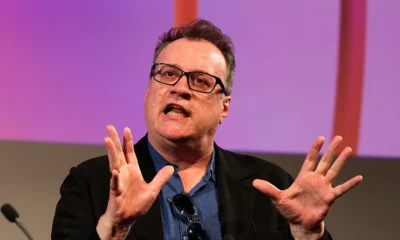
Russell T Davies Says ‘You’re Queer in 2026, You’re a Political Act’ — and His New Show ‘Tip Toe’ Is His Most Furious, Personal Work Yet…
-

 Entertainment1 week ago
Broadway Shake-Up: Samira Wiley Steps Away From ‘Proof’… Kara Young Steps In at the Last Moment
-

 Entertainment1 week ago
A Shocking Shift for ‘Dune 3’: Villeneuve Promises a “Thriller”… With Zendaya & Pattinson at the Center
-

 Entertainment6 days ago
Sean Penn Won His Third Oscar on Sunday — Then Vanished. Now We Think We Know Exactly Where He Was and Who He Was With…
-

 Entertainment1 week ago
Cardi B vs Slow Sales: Rap Star Warns Canadian Fans Over Threat to Her Perfect Record
-
 Sports1 week ago
NBA Top Shot Lawsuit Settlements Are Hitting Venmo Accounts — And the League Just Set a $165M Salary Cap for Next Season
-

 Entertainment1 week ago
Cardi B Fires Warning to Canadian Fans… “Don’t Mess With My Sold-Out Record” as Ticket Sales Lag
-

 Entertainment1 week ago
Broadway Surprise: Samira Wiley Drops Out of ‘Proof’… Kara Young Takes Center Stage