
Entertainment
Chuck E. Cheese secretly opens ‘adult-only’ arcades and fans say it’s the comeback we never knew we needed
From Mortal Kombat nostalgia to pizza and wine, Chuck’s Arcade is bringing childhood memories back—with an adult twist.


Chuck E. Cheese, the beloved children’s entertainment chain known for its singing animatronics and chaotic birthday parties, is back—but not in the way you remember. In a surprising twist that’s already sending waves across social media, the company has quietly launched a new spin-off called “Chuck’s Arcade,” tailored exclusively for adults.
Described as a “modern-day love letter” to vintage gaming and loyal fans, Chuck’s Arcade brings a curated mix of retro classics and modern hits into a stylish, grown-up setting—complete with prize counters, “old-school merch,” and even a side of wine.
So far, ten locations have opened across the United States, including hotspots in St. Petersburg, Florida, Tulsa, Oklahoma, El Paso, Texas, and St. Louis. Each Chuck’s Arcade features distinct, brand-inspired decor, with original artwork that nods to the glory days of arcade culture. And yes—each arcade is still “watched over” by beloved characters like Chuck E. Cheese himself or his friends from the Munch’s Make Believe Band.
CEO David McKillips called the adult-focused expansion a “natural evolution” of the brand. After a $350 million remodeling effort across 500 traditional locations, he says the company now aims to “engage both lifelong fans and a new generation” by tapping into the timeless appeal of joystick battles and blinking lights.
The arcades boast a delightful mix of games—from Donkey Kong, Mortal Kombat, and Pac-Man, to modern favorites like Halo and Connect Four Hoops. And while the child version leaned heavily on soda and cupcakes, Chuck’s Arcade is serving something stronger: beer and wine are now on the menu at select locations, including the new Kansas City branch, which also hosts its own pizza kitchen.
The adult arcade revival couldn’t come at a more interesting time. Industry rival Dave & Buster’s recently reported a 9.4% decline in same-store sales, with current leadership blaming “ill-advised changes” made by former executives. Meanwhile, Chuck E. Cheese appears to be clawing its way back into relevance after filing for bankruptcy during the 2020 pandemic.
And fans? They’re all in. Social media is already lighting up with excitement, with many calling it “the comeback we never saw coming.” Nostalgia-driven millennials and Gen Xers are expected to be a core audience for the reboot, especially as arcades evolve into experience-driven entertainment venues.
Whether it’s sipping wine under neon lights or racking up prize tickets after a round of Skeeball, Chuck’s Arcade could be the surprise win of the post-pandemic entertainment world.


Entertainment
Russell T Davies Says ‘You’re Queer in 2026, You’re a Political Act’ — and His New Show ‘Tip Toe’ Is His Most Furious, Personal Work Yet…
The man behind Queer as Folk and It’s a Sin is back on Manchester’s Canal Street — and this time, he’s not just telling a story. He’s sounding an alarm about a world he says is ‘rapidly and urgently’ sliding backwards on queer rights.


There is a moment in the new Channel 4 drama Tip Toe — shown as an exclusive six-minute clip at BFI Flare, London’s LGBTQIA+ film festival this week — that lands like a punch you didn’t see coming.
Alan Cumming‘s character Leo, a gay bar owner on Manchester’s iconic Canal Street, is talking to his friend Melba, an aging drag queen. The conversation begins quietly — life, the bar, the noise online. And then it cuts to the bone.
“The president of America has given these men permission to attack us. Leo, you’re queer in 2026, you’re a political act.”
Six words. A complete summary of where the world now stands. And the person who wrote them is Russell T Davies — the Welsh screenwriter who has spent three decades being exactly right about exactly the wrong things.
‘Literally No One Asked for This. I Had to Write It.’
“Literally no one asked for Tip Toe,” Davies said bluntly. “I was technically busy on Doctor Who, but I was driven to this desk. I had to write it in Manchester. And I would have written it for free. It just had to be written.”
ALSO READ : “She Never Made It Out…” Albany House Fire Claims Woman’s Life as Family Pleads for Help to Bring Her Home
That urgency comes through in every corner of the show. The five-part miniseries — which Davies describes as “a bit like ‘Years and Years’ meets ‘Queer as Folk'” — is set in Manchester and follows a gay bar owner while also dealing with the rising far-right politics and growing threats to LGBTQ+ rights.
Cumming and David Morrissey are playing Leo and Clive in Tip Toe — two opposites who have lived next door to each other in Manchester for almost 15 years. But just as life should be settling down, the world around them is growing more tense. Words become weapons, opinions become radicalised, and gradually, two neighbours become deadly enemies in a tense, suburban thriller which challenges everything we consider to be safe.
A Legacy Built on Being Ahead of the Curve
To understand why Tip Toe matters so much — to Davies, to queer audiences, and frankly to anyone paying attention to 2026 — you need to understand who Russell T Davies is and what he has consistently done that others haven’t.
In 1999, he created Queer as Folk for Channel 4 — a bracingly explicit, deeply human drama about gay men on Manchester’s Canal Street that shocked some and saved others. Many of the people who watched it as teenagers came out because of it.
He then revived Doctor Who for the BBC in 2005, turning it from a cult relic into a national institution. In 2021, he delivered It’s a Sin — a shattering, five-part account of the HIV/AIDS crisis in 1980s Britain that became Channel 4‘s biggest ever streaming boxset and broke an entire generation’s heart.
“It is the strongest thing I’ve written,” Davies has said of Tip Toe. “I do believe Queer as Folk, Cucumber, It’s a Sin and Tip Toe are the ones that will be on my gravestone.”
That is not a small statement from a man who also brought Doctor Who back to life twice.
‘Things Are Rapidly and Urgently Getting Worse’
Davies has not been quiet about why this show needed to exist. He has been saying — loudly, repeatedly, with the kind of fury that comes from genuinely caring — that the world is sliding backwards in ways that most people are not yet willing to fully acknowledge.
“It’s funny. When Queer as Folk came out in 1999, if you’d said, what will gay rights be like in 2025, we’d have said, ‘Oh, it will all be marvellous. It’ll be sunshine and skipping down the street, hand in hand — gays, queers, lesbians, everyone.’ And look at where we are. Things got better. But now things are rapidly and urgently getting worse.”
“What happens in America always happens here — and as we look down the barrel of a Reform government, we, the gay community, queer community, should be revolting in terror and anger and action.”
The Reform reference points squarely at Nigel Farage and his party’s growing foothold in British politics. The American reference needs no explanation. Davies has publicly called out Donald Trump‘s rhetoric on LGBTQ+ issues on multiple occasions, warning that the normalisation of anti-queer sentiment from the top of political power structures has real, street-level consequences.
A Stellar Cast Built for a Show That Has No Time to Waste
Emmy and Tony award-winner Alan Cumming plays Leo — vivid, funny and dynamic, the owner of a bar called Spit & Polish in Manchester’s Gay Village. BAFTA-nominated David Morrissey plays Clive, Leo’s unsmiling and troubled next-door neighbour.
The series also stars Pooky Quesnel (The A Word), Jackson Connor (Masters of the Air), Joseph Evans, Elizabeth Berrington (Last Night in Soho), and Iz Hesketh
Tip Toe is produced by Quay Street Productions, with Davies exec-producing alongside long-term partner Nicola Shindler (Queer as Folk, It’s a Sin, Fool Me Once), Peter Hoar, and Cumming himself. The series is directed by Hoar and produced by Phil Collinson (It’s a Sin, Doctor Who).
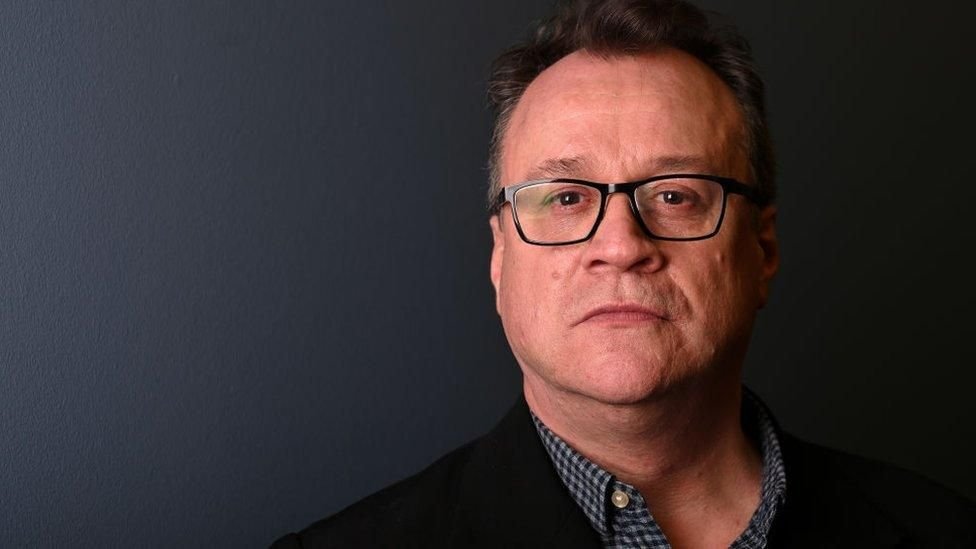
Shindler said of the project: “Tip Toe is not just a timely drama, but a captivating story shot through with Russell’s brilliant wit, warmth and devastating poignancy.”
The Show That Will Make Conservatives Look in the Mirror — Whether They Like It or Not
Here is the part of the Tip Toe conversation that doesn’t get talked about enough: Davies is not simply preaching to the queer choir. He has spoken explicitly about wanting the show to reach people who do not usually seek out LGBTQ+ narratives — specifically, conservatives. He wants to show them their own hearts and humanity reflected back through people whose lives they might otherwise dismiss.
Tip Toe is described as an exploration of “the most corrosive forces facing the LGBTQ+ community today, examining the danger as prejudice creeps back into our lives.” Davies has added that he is attempting to push an urgent message: the queer community is more vulnerable than ever as blatant acts of hatred become more frequent and normalised. QUEERGURU
The Clive character — the electrician, the father of two boys, the man with no visible malice but a growing sense of aggrieved rightness — is crucial to that ambition. He is not written as a villain. He is written as a neighbour. That is far more frightening, and far more honest, than a straightforward monster would be.
Davies put it plainly at the time of the show’s commission: “This is a show I had to write because the world is getting stranger, tougher and darker, and frankly, the fight is on.” Televisual
Canal Street, Again. Because It Has To Be.
There is something deeply deliberate about Davies returning to Manchester — to the same streets, the same Gay Village, the same city where Queer as Folk was born in 1999 — to tell this story.
“Cucumber shows a generation that’s lived through HIV, although it’s hardly mentioned. And so does Tip Toe — it is me checking in, saying, ‘Where are we now?'” Big Issue
The answer to that question, in 2026, is uncomfortable. The rights that felt permanent are no longer permanent. The freedoms that felt won are being renegotiated. The streets that felt safe have new graffiti on the walls.
And Russell T Davies — the man who has been taking the temperature of gay Britain for more than 25 years — is back on Canal Street with a camera, a brilliant cast, and something burning in his chest that will not let him stay quiet.
Tip Toe comes to Channel 4 in 2026. Based on everything Davies has said and shown, it will be unmissable — for the queer community that needs it desperately, and for the conservatives he’s writing to whether they know it yet or not.
Entertainment
Netflix’s Ted Sarandos Turns to Europe After Warner Deal Collapse… and Sends a Subtle Message to Regulators
With the Warner Bros. Discovery talks behind him, Netflix co-CEO Ted Sarandos pivots toward Europe—insisting there was “no political interference” while quietly lobbying against tighter media rules.
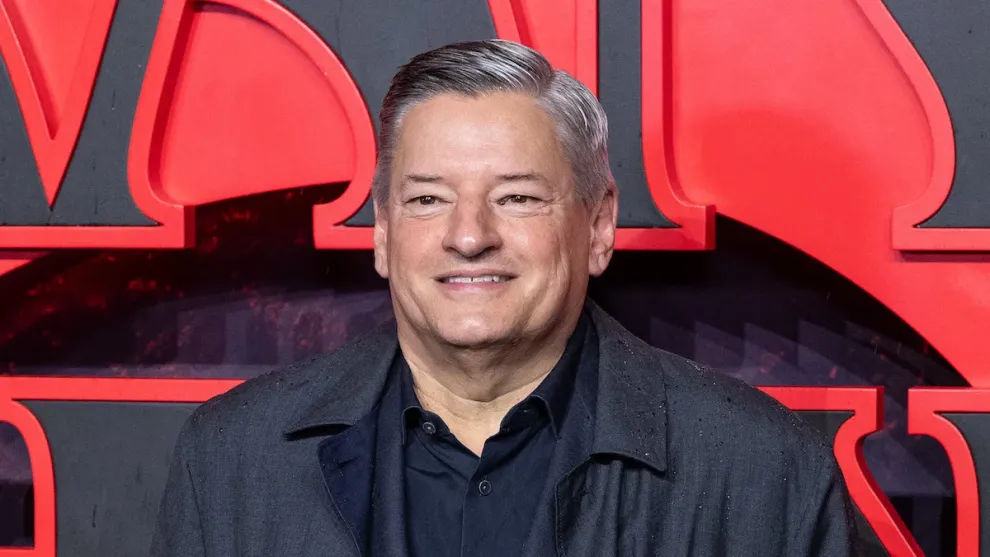
In the ever-evolving world of global streaming, strategy shifts often reveal more than official announcements. This week, Ted Sarandos, co-CEO of Netflix, made headlines not just for what he said—but for where he’s heading next.
After stepping away from a potential deal involving Warner Bros. Discovery, Sarandos is now turning his attention firmly toward Europe. And if his recent comments are anything to go by, this pivot is as much about opportunity as it is about influence.
“No Political Interference”—But Plenty at Stake
In a candid conversation with Politico, Sarandos addressed speculation surrounding the failed discussions with Warner Bros. Discovery. He was quick to dismiss any political undertones, stating there was “no political interference” from Donald Trump or his allies during the talks.
That clarification, however, comes at a time when media consolidation and political scrutiny are deeply intertwined—especially in the United States. The streaming giant’s decision to step back from such a high-profile deal signals a calculated move rather than a missed opportunity.
ALSO READ : “She Never Made It Out…” Albany House Fire Claims Woman’s Life as Family Pleads for Help to Bring Her Home
Why Europe—and Why Now?
With Hollywood facing increasing competition, rising production costs, and regulatory debates, Europe has emerged as fertile ground for expansion. Sarandos’ latest outreach suggests Netflix is doubling down on its European ambitions—not just in content, but in policy influence.
The company has already invested heavily in European productions, from Spanish thrillers to German sci-fi hits. But now, the focus is shifting beyond storytelling to regulation.
Sarandos is reportedly engaging with European Union lawmakers, urging them to tread carefully when drafting new media rules that could reshape the streaming landscape. His message is simple: overregulation could stifle innovation and limit global competitiveness.
A Charm Offensive in Brussels
Industry insiders describe Netflix’s current approach as a “charm offensive.” By directly engaging policymakers in European Union, Sarandos aims to position Netflix not as a disruptive outsider, but as a collaborative partner in Europe’s digital future.
This comes as the EU considers stricter content quotas, taxation policies, and transparency requirements for streaming platforms. While these measures are designed to protect local industries, they could also complicate operations for global players like Netflix.
Sarandos’ diplomatic tone suggests a balancing act—supporting European creativity while pushing back against rules that might limit Netflix’s flexibility.
What the Warner Exit Really Means
The abandoned Warner Bros. Discovery discussions may ultimately prove to be a turning point. Rather than pursuing consolidation in the U.S., Netflix appears to be betting on organic growth and international expansion.
For a company that once revolutionized how audiences consume entertainment, this shift underscores a broader reality: the next phase of the streaming wars will be fought not just on screens, but in boardrooms and legislative halls.
The Bigger Picture
Netflix’s European pivot reflects a larger trend across the tech and media industries. As regulatory pressures intensify in the U.S., companies are increasingly looking abroad—not just for audiences, but for strategic leverage.
Sarandos’ remarks may have dismissed political interference, but they also highlight how deeply politics and media are intertwined today. Whether in Washington or Brussels, the rules of the game are being rewritten—and Netflix intends to have a seat at the table.
Entertainment
The Writers of ‘Paradise’ Debated Hard Before Giving You That Jaw-Dropping Moment Early — Here’s Why They Finally Said ‘Do It…’
Hulu’s breakout thriller starring Sterling K. Brown made a gutsy storytelling call that had the writers room divided — and it paid off in the most ‘holy-shit’ way possible

There’s a specific kind of television magic that happens when a show decides to trust its audience completely. No teasing, no withholding, no dragging a mystery across half a season just to justify the runtime. Hulu‘s Paradise made that bet early — and this week, viewers found out exactly what was at stake.
The Dan Fogelman-created series has been building quietly but confidently since its debut, earning a devoted following that has grown louder with every episode. But it was this week’s cliffhanger ending that tipped the conversation from “you should be watching this” to “drop everything and watch this.” And according to the people who made it, that moment almost didn’t happen the way it did.
The Debate That Almost Changed Everything
Inside the writers room, the question wasn’t whether to deliver a major revelation — it was when. Do you make the audience wait? Do you string it out across episodes, let the tension ferment, reward patience the old-fashioned way? Or do you hand them the grenade and let them sit with it?
ALSO READ : “She Never Made It Out…” Albany House Fire Claims Woman’s Life as Family Pleads for Help to Bring Her Home
Dan Fogelman — the creator best known for engineering emotional devastation on This Is Us — pushed for something bolder. The debate, as it has been described, centred on one core question: “How do we make this all come together in this holy-shit kind of moment?” That phrase alone tells you everything about the creative ethos driving Paradise. This isn’t a show interested in slow burns for their own sake. It wants the gut punch, and it wants you to feel it land. Follow Fogelman’s work and updates on
The decision to not make audiences wait — to deliver the moment when the story earned it rather than when the episode count demanded it — reflects a growing shift in how prestige television thinks about pacing. In the age of binge-watching, the old model of the season-finale payoff has started to feel almost quaint. Viewers have been trained by streaming to expect more, faster, and Paradise is leaning into that expectation without abandoning craft.
Sterling K. Brown Carries the Weight
None of this works without the right actor at the centre of it. Sterling K. Brown — who built his reputation on This Is Us and American Crime Story before landing here — has delivered what many critics are calling the most nuanced performance of his already decorated career. There’s a particular quality to his work in Paradise that’s hard to pin down: a stillness that somehow contains enormous forward momentum. He’s not acting at you. He’s pulling you in.
Brown has spoken in interviews about the physical and emotional preparation the role demanded, and watching the latest episode, you feel every hour of that work. When the cliffhanger lands, it lands partly because of the script and partly because of what he’s been quietly building across every scene that came before it. You can follow Sterling K. Brown on X and read more about his career on
What the Cliffhanger Actually Does
Without diving too deep into spoiler territory, what the ending of this week’s episode accomplishes is something specific and difficult: it recontextualises everything you’ve already seen while simultaneously making you desperate for what comes next. That’s a structural trick that sounds simple on paper and is genuinely hard to execute on screen.
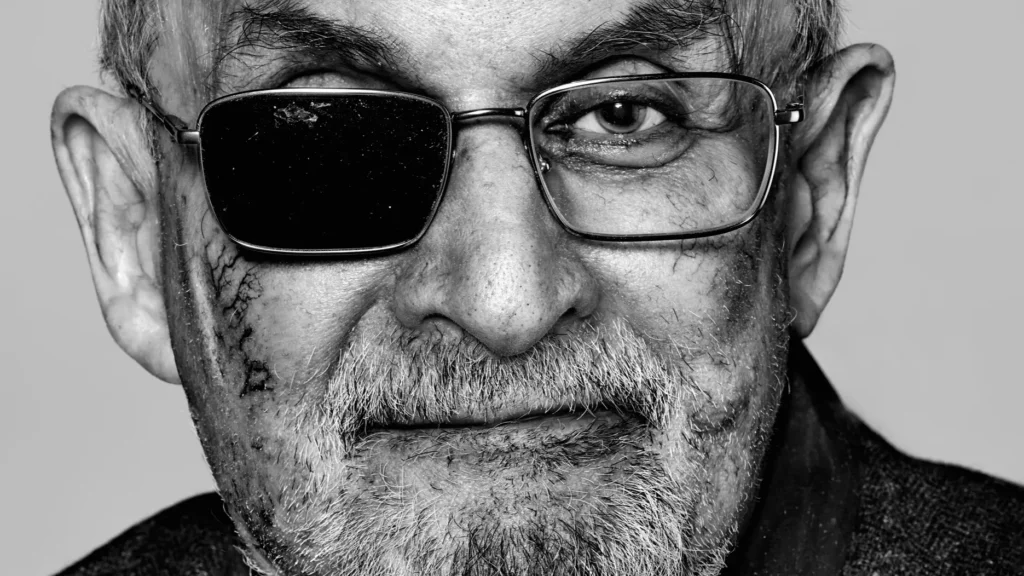
The best cliffhangers don’t just end — they rebegin. They make the audience feel like they’ve been watching one show, and suddenly they’re watching a completely different one. Paradise pulled that off this week, and the writers room debates that preceded it were clearly worth every minute.
Hulu’s Quiet Confidence
It’s worth pausing to acknowledge what Hulu has been doing with its original drama slate. While the streamer doesn’t always get the same volume of cultural conversation as Netflix or HBO, it has developed a habit of quietly commissioning and backing shows that genuinely surprise people. Paradise is the latest in that tradition — a show that arrived without the marketing blitz of a prestige event series and has grown entirely through word of mouth and critical appreciation.
gave Fogelman the space to make something that didn’t fit neatly into a logline, and the creative team returned the favour by making something that genuinely demands to be discussed. In a television landscape crowded with content, that’s rarer than it should be.
Why It Matters Beyond the Show
The conversation around Paradise‘s storytelling choices touches on something bigger happening in prestige TV right now. The era of the slow-burn prestige drama — where restraint was treated as sophistication — is giving way to something more urgent. Audiences are more impatient, yes, but they’re also more perceptive. They can tell the difference between a show that withholds because it has something worth revealing and one that withholds because it has nothing to say.
Paradise clearly has something to say. And this week, it said it loud.
The writers room gambled on giving audiences a real moment — not a tease, not a fake-out, but the actual thing — and the response has been exactly the kind of collective, breathless reaction that television used to produce more regularly and now struggles to manufacture at all.
That it came from a debate about timing, about trust, about what audiences deserve, makes it feel even more earned.

Russell T Davies Says ‘You’re Queer in 2026, You’re a Political Act’ — and His New Show ‘Tip Toe’ Is His Most Furious, Personal Work Yet…

Netflix’s Ted Sarandos Turns to Europe After Warner Deal Collapse… and Sends a Subtle Message to Regulators

The Writers of ‘Paradise’ Debated Hard Before Giving You That Jaw-Dropping Moment Early — Here’s Why They Finally Said ‘Do It…’

Rajasthan Royals Sold for Record $1.63 Billion — IPL’s First $1 Billion Franchise, Meet New Owner Kal Somani

Spencer Johnson Ditches PSL, Joins CSK for IPL 2026 — PCB Threatens Legal Action as Player Exodus Continues

1-Iran Issues Dire Warning to Israel and Defies Trump on Nukes: “We’re Ready to Strike Deep Inside”

Donald Trump’s net worth reveals the fortune behind the former US President and business mogul

“She Never Made It Out…” Albany House Fire Claims Woman’s Life as Family Pleads for Help to Bring Her Home

Caitlin Clark Sidelined with Quad Strain, Set to Miss Two Weeks of WNBA Action

“Tomás Rodríguez Net Worth 2025: Panama’s Gold Cup Goal‑Machine’s Surprising Fortune Revealed”

Miss Jamaica Suffers Terrifying Fall Off Miss Universe Stage; Rushed to Hospital on Stretcher in Viral Video

Moana Live-Action Teaser Sparks Outrage as Fans Call Disney’s Move a ‘Clear Money Grab’ — What Went Wrong?

Ryan Gosling’s Project Hail Mary Trailer Stuns Fans with a Mysterious Alien Ally and a Mission That Could Save Earth

Apple delays Jessica Chastain thriller The Savant about domestic extremism after recent US violence

Avatar 3, Fire and Ash trailer reveals Jake Sully’s family facing terrifying new Na’vi enemies with deadly fire powers
-
 Entertainment6 days ago
Cannes 2026 Hasn’t Announced a Single Film Yet — But the Whisper Network Is Already Pointing to These Names and It’s Exciting…
-
 Entertainment7 days ago
Amy Poehler and Sterlin Harjo Are Getting One of Television’s Highest Honours — and the Reason Why Says Everything About Where Storytelling Is Headed…
-

 Entertainment6 days ago
Almodóvar, Lars von Trier, Joel Coen and More — The Films That Could Own Cannes 2026 Are Already Generating Serious Buzz and the List Is…
-

 Entertainment1 week ago
Oscars 2026 Red Carpet Shockers: Zendaya’s Late Arrival, Jessie Buckley’s Grace Kelly Tribute… and Chase Infiniti Owning the Night
-
 Entertainment1 week ago
The Oscars Are Already Being Called Before They Happen and Scott’s Final Feinberg Forecast Reveals a Shocking Front-Runner That Nobody Saw Coming…
-

 Politics1 week ago
“Trump Reveals ‘Early Stage Breast Cancer’ Diagnosis of Susie Wiles… But Says Her ‘Strength Says Everything’”
-

 Entertainment6 days ago
Lollapalooza 2026 Just Dropped Its Most Surprising Lineup Yet — and the One Historic Thing Nobody Is Talking About Is the Real Story…
-

 Health1 week ago
“Kent Meningitis Tragedy: Second Student Dies as Outbreak Sparks Hospital Emergency…”