
World News
A Stunning Turn in the Harvey Weinstein Case as Defense Points to Juror Pressure Claims
As Harvey Weinstein awaits sentencing in New York, his legal team points to alleged juror intimidation, asking the court for a rare hearing that could reshape the future of the high-profile case.


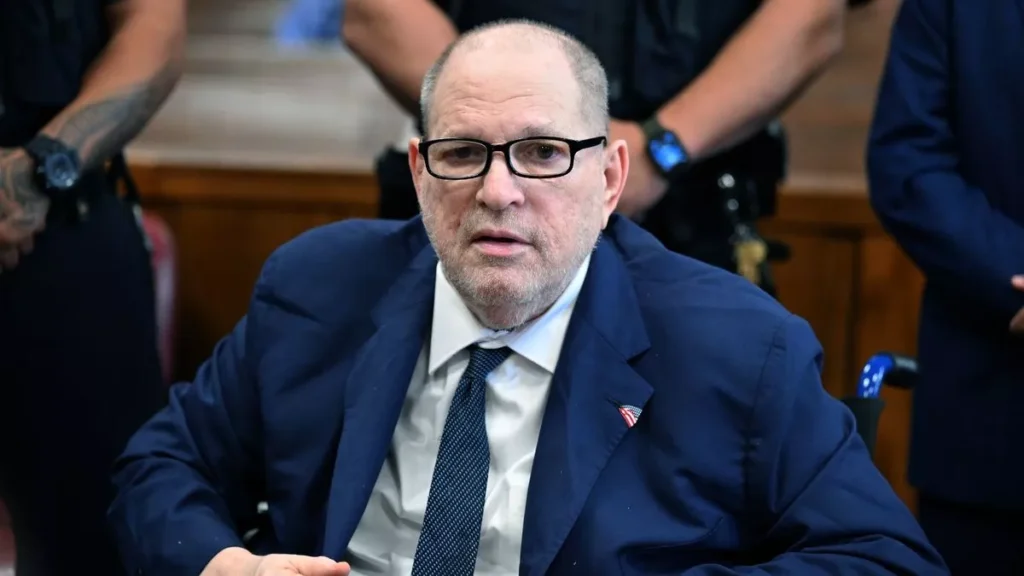
The legal battle surrounding disgraced Hollywood producer Harvey Weinstein has taken another dramatic turn. His defense team is now pushing hard to undo his latest New York conviction, citing claims that a juror was pressured and bullied into delivering a guilty verdict — a move that could potentially reopen one of the most closely watched trials in modern American legal history.
In June, a 12-member jury in Manhattan convicted Weinstein on one count of a criminal sexual act in the first degree involving former Project Runway assistant Miriam Haley. The jury, however, acquitted him on a separate charge involving former model Kaja Sokola, and failed to reach a verdict on a third count of rape connected to aspiring actress Jessica Mann, leading to a mistrial on that charge.
A Juror’s Claim Sparks New Legal Strategy
Weinstein’s attorney, Arthur Aidala, says the verdict may have been compromised. According to Aidala, a juror approached his legal team moments after the verdict, alleging they were intimidated by fellow jurors and effectively coerced into voting guilty on the Haley charge.
“These are not small claims,” Aidala said in remarks to The Hollywood Reporter. “At the very least, we are asking the court to hold a hearing and hear this juror out.”
ALSO READ : “She Never Made It Out…” Albany House Fire Claims Woman’s Life as Family Pleads for Help to Bring Her Home
The defense formally moved to vacate the conviction in October, backing the request with sworn affidavits from two jurors. The motion argues that internal jury pressure crossed a legal line — a rare and difficult standard to prove, but one that can be explosive if accepted by the court.
Prosecutors Push Back Hard
Prosecutors have strongly opposed the request. In a November filing, they argued that juror testimony about internal deliberations cannot legally be used to overturn a verdict unless it involves extremely narrow exceptions, such as racial bias or improper outside influence — neither of which, they say, applies here.
“Juror testimony cannot, as a matter of law, be used to impeach a guilty verdict,” prosecutors wrote, emphasizing that tension, disagreement, or heated debate inside the jury room does not constitute misconduct under New York law.
They also stressed that the trial judge, Curtis Farber, addressed concerns promptly and thoroughly whenever they arose during the proceedings.
Earlier Jury Tensions Revisited
During the trial, the jury foreperson approached Judge Farber on two occasions. One concern involved jurors allegedly referencing Weinstein’s past conduct that was not entered into evidence. Another juror later said he overheard discussions about a fellow juror in courthouse elevators and questioned whether the deliberations were fair.
Judge Farber questioned the jurors both in open court and privately in chambers before determining there was no misconduct serious enough to halt the trial. Notably, the juror now cited in Aidala’s motion was not among those previously questioned.
What Happens Next
A hearing on the motion to vacate had been scheduled for this week but was postponed until early January due to unrelated court matters. At that hearing, Judge Farber could dismiss the motion outright, order a limited hearing with the juror, or move forward with preparations for a new rape trial related to Jessica Mann.
Meanwhile, Weinstein has yet to be sentenced on the June conviction. Since April 2024, he has been held at Rikers Island, following the overturning of his 2020 New York conviction. He has also spent time at Bellevue Hospital during the proceedings, as his legal team continues to cite serious health concerns.
According to Aidala, Weinstein is now “on the verge” of entering his seventh year behind bars when accounting for time already served — a grim milestone for the once-powerful studio executive whose downfall helped ignite the global #MeToo movement.
Whether these new juror intimidation claims gain legal traction or quietly fade away, they underscore one reality: even years after his initial conviction, Harvey Weinstein’s courtroom saga is far from over.



World News
Saudi’s Mohammed bin Salman Told Trump to Keep Bombing Iran Until the Regime Falls — NYT Bombshell Report Rocks Middle East Diplomacy
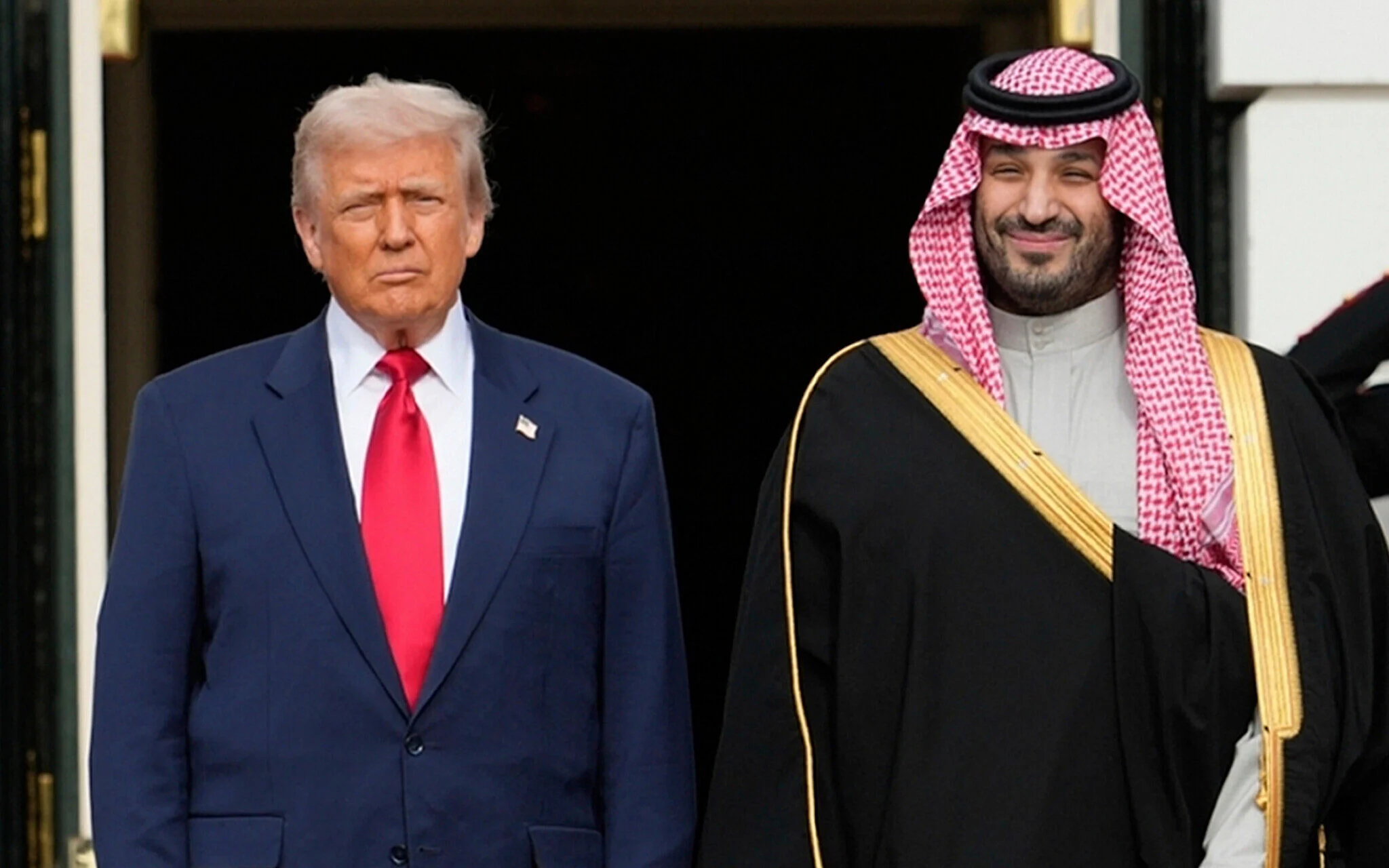
A New York Times report claims Saudi Crown Prince Mohammed bin Salman has been privately urging Donald Trump to press on with the war against Iran — and even pushed for ground operations inside Iranian territory. Saudi Arabia has flatly denied the claims.

The US-Iran war is approaching its one-month mark. Peace talks are being whispered about in Islamabad. Donald Trump has paused strikes on Iran’s energy and nuclear facilities for five days. The world is daring to hope.
And then came the New York Times.
A new report by The New York Times has thrown a grenade into the middle of those fragile hopes — alleging that one of America’s closest Gulf allies has been quietly working behind the scenes to keep the war going. That ally is Saudi Arabia. And the man at the centre of it all is Crown Prince Mohammed bin Salman.
What the NYT Report Claims
According to the report, Prince Mohammed has held multiple phone conversations with Donald Trump over the past week — each time pushing the same message: do not stop until Iran’s current government is completely dismantled.
Sources familiar with the discussions told the NYT that Prince Mohammed has consistently conveyed to Trump that he must press toward the destruction of Iran’s hard-line government. The reasoning, analysts suggest, is rooted in Saudi Arabia’s deep-seated fear of a resurgent Iran. If Trump pulls back now without achieving a definitive outcome, Riyadh and its Gulf neighbours could find themselves facing an Iran that is more emboldened, more aggressive, and very much still in power.
For Saudi Arabia, a wounded but surviving Iran may be more dangerous than no war at all.
Ground Troops Inside Iran — MBS’s Alleged Proposal
The report does not stop there. According to sources briefed by US officials, Prince Mohammed has also urged Trump to consider deploying ground troops inside Iran — specifically to seize key energy infrastructure and accelerate regime change.
In recent days, Trump has reportedly given serious thought to a potential military operation targeting Kharg Island — Iran’s most critical oil export hub. Such a move, whether executed through airborne Army forces or a Marine amphibious assault, would be extraordinarily high-risk and would mark a dramatic escalation of the conflict.
Crucially, the report claims that Trump had considered winding down the conflict — but was advised against doing so by Prince Mohammed himself.
When contacted by the NYT, White House Press Secretary Karoline Leavitt declined to comment, saying the administration “does not comment on the president’s private conversations.” That silence, in Washington, speaks volumes.
How Did This War Even Start?
The United States and Israel have maintained from the beginning that their strikes were preemptive — that Iran was planning a large-scale attack on their territories, and they struck first. Many independent observers, however, believe that Israel played a decisive role in pushing Washington toward military action and continues to oppose any ceasefire.
Trump recently hinted at the internal dynamics at a public event, suggesting that his Defence Secretary Pete Hegseth had been the first senior administration official to openly advocate military action against Iran. Now, with the NYT report, a third player has entered the frame — one that wears a thobe, not a uniform.
Saudi Arabia Pushes Back Hard
Riyadh was not going to let these allegations stand unchallenged.
Saudi officials swiftly and strongly denied the report’s claims, insisting the kingdom has consistently favoured diplomatic solutions over military escalation. In an official statement, the Saudi government said the kingdom has always supported a peaceful resolution — even before the conflict began — and that officials remain in close contact with the Trump administration.
The statement also pointed to Saudi Arabia’s own vulnerabilities in this conflict — oil installations have come under Iranian attack, and a prolonged war threatens to damage the kingdom’s own economy.
“Our primary concern today is to defend ourselves from the daily attacks on our people and our civilian infrastructure,” the statement read. “Iran has chosen dangerous brinkmanship over serious diplomatic solutions. This harms every stakeholder involved, but none more than Iran itself.”
Iran Is in No Mood for Talks
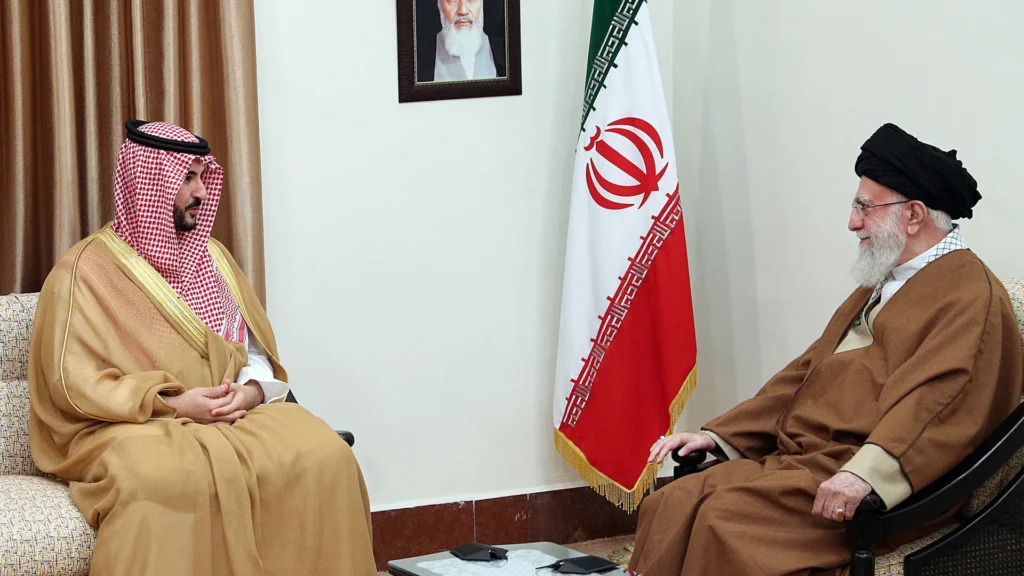
Meanwhile, Iran — despite the growing global pressure for negotiations — remains defiant. According to Fars News Agency, Iran’s state media outlet, the Islamic Republic has no interest in negotiating with someone it describes as dishonest and lacking in honour or conscience — a thinly veiled reference to Trump.
Whether peace talks materialise in Islamabad or elsewhere, Iran’s public posture suggests that any negotiation will be an uphill battle.
The Bigger Picture
What the NYT report — if accurate — reveals is a conflict that is far more complex than a simple US-Iran confrontation. There are multiple actors, multiple agendas, and multiple phone calls happening behind closed doors that the public never hears about.
Saudi Arabia has its own generational score to settle with Iran. The two countries represent opposing poles of the Islamic world — Sunni and Shia, Arab and Persian, rival visions of regional dominance. For Mohammed bin Salman, a weakened or collapsed Iranian regime would fundamentally reshape the Middle East in Saudi Arabia’s favour.
Whether Trump will follow that advice — or choose the path toward peace that Pakistan is offering to host — may well determine not just the fate of this war, but the shape of the entire region for decades to come.
World News
Islamabad to Host US-Iran Peace Talks? Trump Shares Sharif’s Invite on Truth Social — JD Vance May Fly to Pakistan This Week
Pakistan PM Shehbaz Sharif offered to host negotiations between Washington and Tehran — and within barely an hour, Donald Trump reposted it on Truth Social. The world took notice immediately.
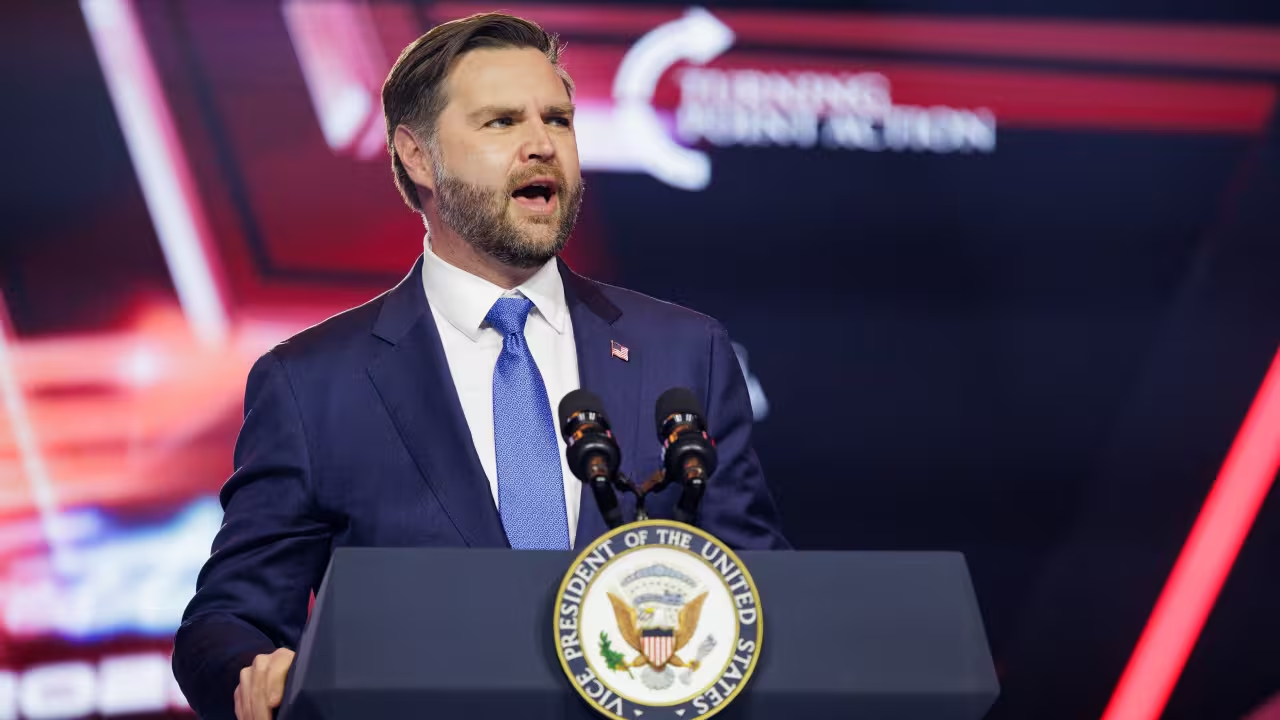
In diplomacy, timing is everything. And on Tuesday evening, the timing was unmistakable.
Pakistan’s Prime Minister Shehbaz Sharif posted an invitation on X, offering Pakistan as a neutral venue for peace talks between the United States and Iran. Within barely 60 minutes, US President Donald Trump took a screenshot of that post and shared it on his Truth Social account.
No official statement. No press conference. Just a screenshot — and the world understood exactly what it meant.
For the first time since the US-Iran war began, a concrete venue for negotiations appears to be taking shape. And that venue is Islamabad.
Sharif’s Invitation — Word for Word
In his post, Sharif wrote that Pakistan “welcomes and fully supports ongoing efforts to pursue dialogue to end the war in Middle East, in the interest of peace and stability in region and beyond.” He added that subject to agreement from both the US and Iran, Pakistan “stands ready and honoured to be the host to facilitate meaningful and conclusive talks for a comprehensive settlement of the ongoing conflict.”
It was carefully worded. Diplomatic. And it landed exactly as intended.
This came as a significant reversal for Trump, who had repeatedly insisted in recent weeks that the United States had effectively “already won” the war. Sharing Sharif’s invite signals a clear shift — the White House is now open to sitting across the table from Tehran.
JD Vance Could Land in Islamabad This Week
American media outlet Axios has reported that Trump’s two most trusted negotiators — his close friend Steve Witkoff and son-in-law Jared Kushner — may travel to Islamabad as early as this week to meet an Iranian delegation. More significantly, US Vice President JD Vance is also reported to potentially join them.
If that happens, it would mark one of the most consequential diplomatic moments in recent memory — and one of Pakistan’s biggest geopolitical achievements in decades.
Iran — Mocking First, Then Acknowledging
Tehran’s response has been characteristically layered. Iran’s foreign ministry initially mocked Trump’s claims that back-channel talks were already underway — dismissing the suggestion with barely concealed contempt.
But in the same breath, Iran’s state news agency acknowledged that the country had received messages from “some friendly countries indicating a US request for negotiations at ending the war.” That is not a rejection. That is a door being left ajar.
Who might represent Iran at any such talks remains unclear. Parliament Speaker Mohammad Bagher Ghalibaf is widely speculated to be Tehran’s likely envoy, though his public posture has remained firmly defiant.
The Man Behind the Curtain — Field Marshal Asim Munir
Pakistan’s official diplomatic machinery — PM Sharif and Foreign Minister Ishaq Dar — has been visible and vocal. Sharif confirmed he personally spoke with Iranian President Masoud Pezeshkian. Dar said he has been in regular contact with his Iranian counterpart, Abbas Araghchi.
But the most intriguing figure in this story may be one who has said nothing publicly.
Field Marshal Asim Munir — Pakistan’s Army Chief and the man who, in practical terms, holds the levers of power in the country — is reported to be playing a leading role behind the scenes. Pakistan’s former envoy to Oman, Imran Ali Chaudhry, told a television channel that Munir had already held talks with both Witkoff and Kushner approximately two to two-and-a-half weeks ago — meaning during the active phase of the war itself. Munir’s office has not confirmed this.
Pakistan’s Moment — And Its Nobel Ambitions
This is not the first time Pakistan has found itself at the centre of Trump’s foreign policy calculations. Trump has claimed credit for ending eight wars during his current term — among them the India-Pakistan military exchanges of May 2025. India insists the ceasefire happened at Pakistan’s request. Pakistan, for its part, has been perfectly happy to let Trump take the credit — with both Munir and Sharif reportedly advocating for Trump to receive the Nobel Peace Prize.
In Islamabad, geopolitics is very much a contact sport.
Modi Gets a Call — India Watches Carefully
Trump also called Indian Prime Minister Narendra Modi on Tuesday. Modi confirmed the conversation on social media, writing that India “supports de-escalation and restoration of peace at the earliest” and that keeping the Strait of Hormuz open and secure is essential for the entire world.
Modi had also spoken with Iran’s President Pezeshkian over the weekend, as well as leaders of Gulf countries whose territories house US military bases and have come under Iranian attack.
Opposition leader Rahul Gandhi, however, used Pakistan’s emerging mediator role as ammunition against the Modi government. “Our foreign policy is PM Modi’s personal foreign policy,” he said. “You can see the results of this — everybody considers this a universal joke.”

The World Is Watching — But Cautiously
Beyond Pakistan, active mediation efforts are underway involving Saudi Arabia, Egypt, and Turkey. Traditional peacebroker Qatar also voiced support on Tuesday for “all diplomatic efforts” to end the war. US Secretary of State Marco Rubio is scheduled to meet his G7 counterparts in France on Friday — his first foreign trip since the conflict began.
Meanwhile, Israel continues to keep a watchful eye on any potential deal. PM Benjamin Netanyahu has tasked his close confidant Ron Dermer with monitoring any US-Iran negotiations to safeguard Israeli interests. Israel’s defence minister made clear the military campaign would continue “at full intensity” — and another minister cautioned that Trump’s words should be taken “slowly.”
Iran, for its part, is not backing down either — issuing a retaliatory warning of “not an eye for an eye, but a head for an eye.”
Analysts remain sceptical that a breakthrough is imminent. David Khalfa, a Middle East specialist at the Paris-based Jean-Jaures Foundation, told AFP that trust between the warring parties has been completely destroyed and their positions are further apart than ever.
Yet for the first time in weeks, there is something in the air — fragile, uncertain, but unmistakably present.
Hope. And it has a Pakistani address.
World News
Trump Says Iran Agreed to ‘Never Have a Nuclear Weapon’ — But Tehran Says There Were No Talks at All
US President Donald Trump claimed negotiations with Iran are underway and that Tehran has given America a “significant prize” linked to the Strait of Hormuz — Iran’s parliament speaker called it all a lie designed to manipulate financial markets.
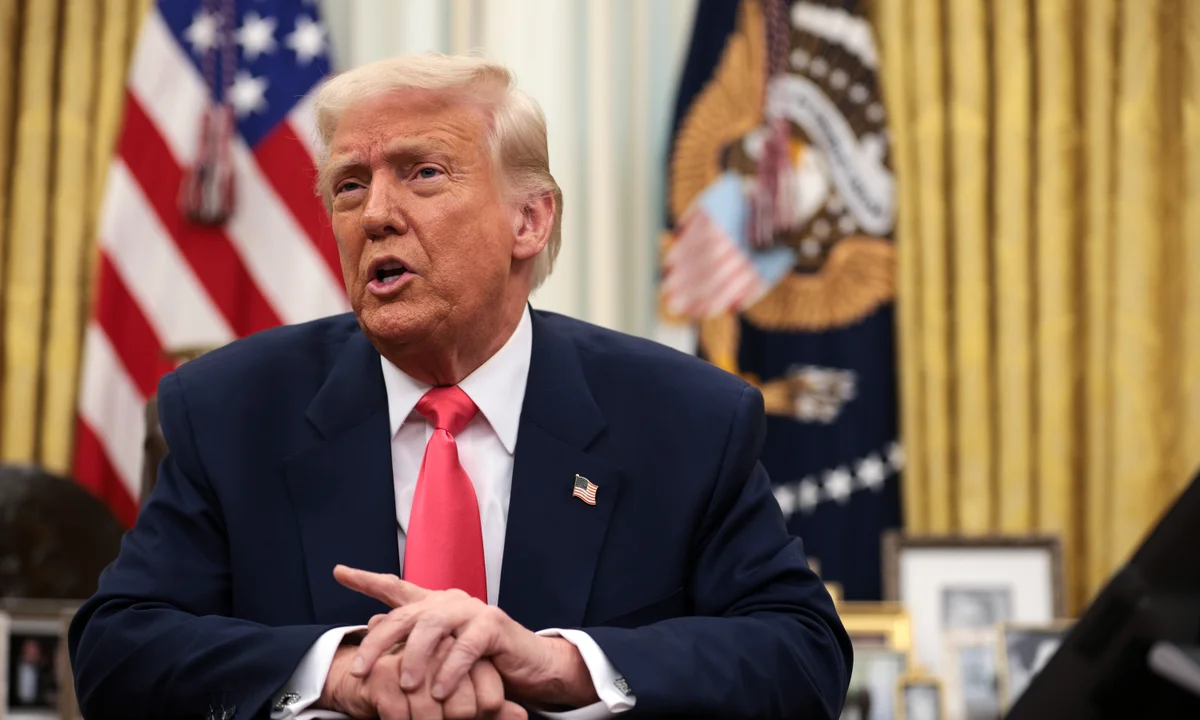
The US-Iran war has entered one of its most confusing and consequential phases yet — where what is said publicly and what is actually happening behind closed doors appear to be two entirely different stories.
On Tuesday, US President Donald Trump made a stunning claim: that Iran had “agreed to never have a nuclear weapon.” He went further, saying Washington was actively in negotiations with Tehran — and that Iran had already handed America a “significant prize” connected to the Strait of Hormuz, one of the world’s most critical waterways through which nearly a fifth of all global oil passes.
It was the kind of statement that, if true, would represent a seismic shift in Middle East geopolitics.
Iran, however, had a very different version of events.
Tehran Calls Trump a Liar — “No Talks Took Place”
Iranian Parliament Speaker Mohammad Baqer Ghalibaf — widely believed to be the Iranian figure Trump had spoken with — flatly denied that any such conversation had taken place. He dismissed Trump’s claims entirely, going so far as to suggest the US President was fabricating the story to manipulate financial markets.
It was a remarkable public contradiction — two sides in an active military conflict offering completely opposite accounts of their diplomatic status, playing out in real time on the world stage.
Iran’s military advisor Mohsen Rezaei, who serves as advisor to Ayatollah Mojtaba Khamenei, went even further with the rhetoric. Speaking on state broadcaster IRNA, Rezaei issued a chilling warning — telling Washington that the “deadline to save America” was rapidly approaching.
“If you strike our infrastructure, it will no longer be an eye for an eye — it will be a head for an eye. You will be crippled,” Rezaei said, adding that Tehran would “paralyse and drown you in the Gulf.”
Strong words. And a reminder that even as diplomacy flickers, the war has not paused.
The Five-Day Pause — And What Comes Next
A day before Tuesday’s developments, Trump had announced that the US would pause its attacks on Iranian energy sites and power plants for five days — framing it as a window for diplomacy. He said the decision came after “productive talks” with Iran.
Tehran promptly denied that any productive talks had taken place.
The contradiction has become a pattern in this conflict — Trump projecting progress, Iran projecting defiance. Somewhere in the middle lies the truth, and the world is trying very hard to find it.
Pakistan Steps In as Mediator
As the fog of conflicting statements thickened, one country moved decisively into the diplomatic breach — Pakistan.
Prime Minister Shehbaz Sharif took to X on Tuesday to formally offer Pakistan as a host for negotiations between Washington and Tehran. The offer was precise, measured, and conditional — subject to agreement from both sides — but its intent was unmistakable.
Within barely an hour, Trump shared a screenshot of Sharif’s post on his Truth Social account. For those fluent in the language of modern diplomacy, that single repost was as close to an endorsement as you can get without an official statement.
Islamabad has now emerged as the most likely venue for any formal US-Iran negotiations — with reports suggesting Trump’s negotiators Steve Witkoff and Jared Kushner, along with possibly Vice President JD Vance, could travel to Pakistan as early as this week.
Trump Calls Modi — First Time Since the War Began
In another significant development, Trump also picked up the phone and called Indian Prime Minister Narendra Modi — their first conversation since the war broke out four weeks ago.
Modi confirmed the call on X, writing that India “supports de-escalation and restoration of peace at the earliest” and that keeping the Strait of Hormuz “open, secure and accessible is essential for the whole world.”
The call matters for multiple reasons. India imports a significant portion of its oil from the Gulf region, and any disruption to the Strait of Hormuz would have direct and painful consequences for Indian consumers — higher fuel prices, costlier fertilisers, and inflationary pressure across the economy. Modi’s words were diplomatic, but the subtext was clear — India has enormous skin in this game.

The Strait of Hormuz — Iran’s Most Powerful Card
Trump’s reference to Iran giving the US a “significant prize” linked to the Strait of Hormuz is worth examining closely. The Strait is Iran’s most potent piece of leverage in any negotiation. Roughly 21 million barrels of oil pass through it every day. A blockade — or even a credible threat of one — sends global energy markets into a spiral.
If Iran has indeed made any kind of commitment regarding the Strait, even informally, that would represent a meaningful concession. But with Tehran denying that any talks have taken place at all, verifying Trump’s claim remains impossible for now.
A War of Words, a War of Weapons
What Tuesday laid bare is the multi-layered nature of this conflict. There is a military war being fought with missiles and airstrikes. There is a diplomatic war being fought with statements, denials, and carefully timed social media posts. And there is an information war — where both sides are trying to shape global perception of who is winning, who is reasonable, and who is to blame.
Iran’s threat to “paralyse and drown” the US in the Gulf sits uncomfortably alongside Trump’s claim of a nuclear weapons agreement. Both cannot be true simultaneously. And yet both are being stated with complete conviction — by two nuclear-age powers locked in their most dangerous standoff in decades.
What happens next in Pakistan’s diplomatic experiment may well determine which version of reality prevails.

Russell T Davies Says ‘You’re Queer in 2026, You’re a Political Act’ — and His New Show ‘Tip Toe’ Is His Most Furious, Personal Work Yet…

Netflix’s Ted Sarandos Turns to Europe After Warner Deal Collapse… and Sends a Subtle Message to Regulators

The Writers of ‘Paradise’ Debated Hard Before Giving You That Jaw-Dropping Moment Early — Here’s Why They Finally Said ‘Do It…’

Rajasthan Royals Sold for Record $1.63 Billion — IPL’s First $1 Billion Franchise, Meet New Owner Kal Somani

Spencer Johnson Ditches PSL, Joins CSK for IPL 2026 — PCB Threatens Legal Action as Player Exodus Continues

1-Iran Issues Dire Warning to Israel and Defies Trump on Nukes: “We’re Ready to Strike Deep Inside”

Donald Trump’s net worth reveals the fortune behind the former US President and business mogul

“She Never Made It Out…” Albany House Fire Claims Woman’s Life as Family Pleads for Help to Bring Her Home

Caitlin Clark Sidelined with Quad Strain, Set to Miss Two Weeks of WNBA Action

“Tomás Rodríguez Net Worth 2025: Panama’s Gold Cup Goal‑Machine’s Surprising Fortune Revealed”

Miss Jamaica Suffers Terrifying Fall Off Miss Universe Stage; Rushed to Hospital on Stretcher in Viral Video

Moana Live-Action Teaser Sparks Outrage as Fans Call Disney’s Move a ‘Clear Money Grab’ — What Went Wrong?

Ryan Gosling’s Project Hail Mary Trailer Stuns Fans with a Mysterious Alien Ally and a Mission That Could Save Earth

Apple delays Jessica Chastain thriller The Savant about domestic extremism after recent US violence

Avatar 3, Fire and Ash trailer reveals Jake Sully’s family facing terrifying new Na’vi enemies with deadly fire powers
-

 Entertainment6 days ago
Cannes 2026 Hasn’t Announced a Single Film Yet — But the Whisper Network Is Already Pointing to These Names and It’s Exciting…
-

 Entertainment7 days ago
Amy Poehler and Sterlin Harjo Are Getting One of Television’s Highest Honours — and the Reason Why Says Everything About Where Storytelling Is Headed…
-

 Entertainment6 days ago
Almodóvar, Lars von Trier, Joel Coen and More — The Films That Could Own Cannes 2026 Are Already Generating Serious Buzz and the List Is…
-

 Entertainment1 week ago
Oscars 2026 Red Carpet Shockers: Zendaya’s Late Arrival, Jessie Buckley’s Grace Kelly Tribute… and Chase Infiniti Owning the Night
-
 Entertainment1 week ago
The Oscars Are Already Being Called Before They Happen and Scott’s Final Feinberg Forecast Reveals a Shocking Front-Runner That Nobody Saw Coming…
-

 Politics1 week ago
“Trump Reveals ‘Early Stage Breast Cancer’ Diagnosis of Susie Wiles… But Says Her ‘Strength Says Everything’”
-

 Entertainment6 days ago
Lollapalooza 2026 Just Dropped Its Most Surprising Lineup Yet — and the One Historic Thing Nobody Is Talking About Is the Real Story…
-

 Health1 week ago
“Kent Meningitis Tragedy: Second Student Dies as Outbreak Sparks Hospital Emergency…”