
Entertainment
Streaming Shocker: ‘His & Hers’ Knocks ‘Stranger Things’ Off the Throne… And No One Saw It Coming
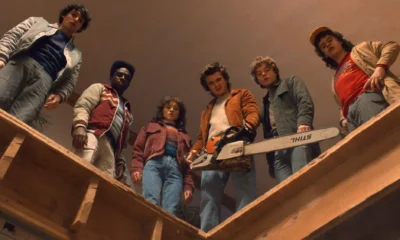
In a surprise twist shaking up streaming charts, His & Hers surges to No. 1, pushing Netflix’s long-dominant Stranger Things into second place.


For years, Stranger Things felt untouchable — the kind of cultural juggernaut that seemed immune to shifting audience tastes. But this week, streaming data delivered a wake-up call.
In a stunning upset, His & Hers has officially dethroned Stranger Things at the top of the streaming ratings, marking one of the most unexpected chart shake-ups of the year.
Industry analysts say the moment says less about Stranger Things losing relevance — and more about how fast viewer behavior is evolving.
A Quiet Series Turns Into a Breakout
Unlike splashy franchise releases backed by years of hype, His & Hers arrived with relatively modest expectations. No decade-long fandom. No supernatural lore. Just sharp writing, emotional tension, and characters audiences connected with almost instantly.
ALSO READ : “She Never Made It Out…” Albany House Fire Claims Woman’s Life as Family Pleads for Help to Bring Her Home
That connection proved powerful.
Within days, the series surged across recommendation feeds, fueled by word-of-mouth and social chatter rather than blockbuster marketing. Viewers didn’t just sample it — they binged it.
“This is the kind of rise you can’t manufacture,” one streaming strategist noted. “It happens when audiences feel like they’ve discovered something before everyone else.”
What This Means for ‘Stranger Things’
The fall from the top spot doesn’t signal trouble for Stranger Things. The Netflix flagship remains one of the most watched shows in streaming history and continues to pull massive numbers globally.
But the dethroning is symbolic.
For the first time in a long while, a non-franchise, relationship-driven series has overtaken a cultural phenomenon that once defined the streaming era. It’s a reminder that even giants can be momentarily eclipsed — not by spectacle, but by storytelling.
Streaming Audiences Are Changing
Executives across platforms like Netflix are watching this shift closely. Data shows viewers increasingly gravitating toward shows that feel current, relatable, and conversation-worthy — even if they lack blockbuster scale.

Shorter seasons, emotionally grounded narratives, and easy entry points are proving to be major advantages in an overcrowded content landscape.
In other words, audiences don’t just want bigger worlds anymore — they want sharper mirrors.
Social Buzz Beats Legacy Fame
Another key factor behind His & Hers’ rise is its dominance on social platforms. Clips, quotes, and character debates have flooded feeds, creating a loop of curiosity and discovery that older shows sometimes struggle to recreate.
While Stranger Things remains iconic, its latest streaming momentum reflects a broader truth: legacy hits must now compete weekly, not historically.
Every chart reset is a new battle.
A Sign of the Streaming Era’s Next Phase
This chart upset isn’t just about two shows trading places. It’s about a changing ecosystem where no title — no matter how beloved — is guaranteed permanent dominance.
For creators, it’s encouraging. For studios, it’s sobering.
And for viewers? It’s proof that the next obsession might already be waiting in your queue — quietly climbing while everyone’s still talking about the past.







Entertainment
Why Hollywood Is Quietly Skipping Cannes and Venice… Studios Are Ghosting Film Festivals for a Surprising Reason
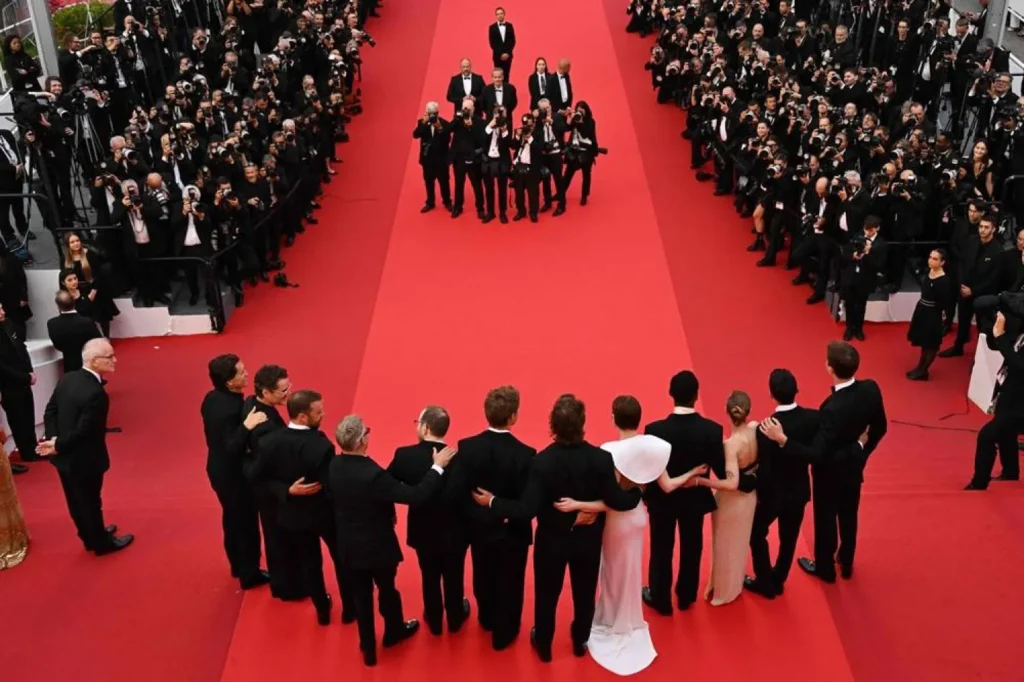
After a series of expensive misfires, major studios are pulling back from Berlin, Cannes, and Venice — replacing red carpets with data-driven, social-first marketing strategies.

For decades, the world’s biggest film festivals were Hollywood’s most glamorous launchpads. A standing ovation at Cannes could fuel Oscar buzz. A Venice premiere could crown a prestige contender. Berlin offered political weight and global credibility.
Now, something has changed.
Hollywood’s biggest studios are quietly ghosting film festivals, and insiders say it’s not snobbery — it’s strategy.
The End of the Red-Carpet Payoff
Events like Cannes Film Festival, Venice Film Festival, and Berlin International Film Festival remain culturally powerful, but studios are increasingly questioning their return on investment.
Between private jets, luxury hotels, security, talent entourages, and global press junkets, a single festival appearance can cost millions — with no guaranteed box-office upside.
ALSO READ : “She Never Made It Out…” Albany House Fire Claims Woman’s Life as Family Pleads for Help to Bring Her Home
After several high-profile festival darlings failed commercially, executives began asking an uncomfortable question: Are we paying for prestige, or wasting money chasing applause?
When Buzz Didn’t Convert to Tickets
In recent years, multiple studio-backed films debuted to glowing festival reactions — only to stumble in theaters. The disconnect between critical acclaim and audience turnout has forced studios to rethink their playbook.
“Standing ovations don’t sell tickets anymore,” one marketing executive admitted. “Algorithms do.”
Theatrical attendance has become increasingly unpredictable, and studios are now prioritizing measurable engagement over elite validation.
From Red Carpets to Social Feeds
Instead of flying stars to the French Riviera, studios are redirecting budgets into targeted digital campaigns, influencer partnerships, and viral social media moments designed to reach younger audiences directly.
Platforms like TikTok, Instagram, and YouTube now offer what festivals can’t: instant data, scalable reach, and real-time feedback.
A trending clip or meme can spark global conversation in hours — something even Cannes can’t replicate.
The Streaming Effect on Festival Strategy
The rise of streaming has further weakened the festival-first approach. With companies like Netflix and Amazon Studios focusing on subscriber growth rather than theatrical glory, the traditional festival circuit feels less essential.
For many releases, especially mid-budget titles, studios now see festivals as optional — not essential.
Festivals Aren’t Dead — But Their Role Is Changing
This doesn’t mean festivals are irrelevant. They still matter deeply for independent cinema, international films, and awards-season prestige plays.
But for big studios, the calculus has shifted. The question is no longer “Will Cannes like it?” — it’s “Will audiences click, share, and show up?”
As one executive put it, “We’re not anti-festival. We’re pro-survival.”
A Quiet, Calculated Retreat
Hollywood isn’t staging a dramatic exit from Berlin, Cannes, or Venice. There are no press releases announcing the retreat. Just fewer studio logos, fewer A-list premieres, and far more energy poured into digital rollouts.
It’s a subtle but telling transformation — one that signals how modern movie marketing is being reshaped by economics, data, and attention spans.
The red carpets will still roll out. The flashes will still pop.
But behind the scenes, Hollywood has already moved on.
Entertainment
“Deal Approved, But With a Catch”… Universal Music Wins EU Nod for Downtown Buy After Key Sell-Off
Universal Music secures European approval for its Downtown deal — but only after agreeing to divest a major royalty services arm, signaling how tightly regulators are watching the music business.

In a move that underscores just how closely regulators are scrutinizing power in the global music industry, Universal Music Group has received formal approval from the European Union for its acquisition of Downtown Music Holdings — but not without making a significant concession.
To get the deal across the line, Universal Music agreed to sell off Downtown’s royalty services arm, addressing concerns that the merger could concentrate too much influence over how artists, songwriters, and labels get paid.
Why Brussels Stepped In
EU competition authorities had been reviewing the transaction amid fears that Universal’s expanding footprint could reduce choice and competition in music administration and rights management — an area already dominated by a handful of global players.
ALSO READ : “She Never Made It Out…” Albany House Fire Claims Woman’s Life as Family Pleads for Help to Bring Her Home
At the heart of the review was the question of market power. With Universal already representing a vast share of global recorded music, regulators were wary of allowing the company to also tighten its grip on royalty collection and distribution services.
By committing to divest the royalty services unit, Universal effectively reassured regulators that independent artists and labels would still have access to alternative providers.
A Strategic Compromise, Not a Retreat
Insiders say the divestment is less a retreat and more a calculated trade-off. Downtown’s broader portfolio — including artist services, publishing support, and distribution tools — still fits neatly into Universal’s long-term strategy.
For Universal, the deal strengthens its infrastructure without triggering the kind of regulatory roadblocks that have stalled other high-profile media mergers.
“This was about removing friction,” one industry analyst explained. “Universal gave up one piece to protect the bigger picture.”

What This Means for Artists and Songwriters
For creators, the decision is being watched closely. Royalty services are the plumbing of the music business — invisible when they work, disastrous when they don’t.
EU regulators made it clear that artist compensation and transparency were central to their concerns. By forcing a divestment, they aimed to prevent any single company from controlling too many stages of the revenue chain.
Whether this results in better outcomes for musicians remains to be seen, but the message from Brussels is unmistakable: consolidation will not go unchecked.
A Signal to the Global Music Industry
The approval sends a broader warning to major labels and music conglomerates worldwide. As streaming revenues grow and catalogs become ever more valuable, regulators are increasingly willing to intervene.
For companies like Universal, expansion is still possible — but only with safeguards.
As one executive put it quietly, “This wasn’t a rejection. It was a reminder.”
The Deal Moves Forward — Carefully
With EU approval now secured, Universal can proceed with integrating the rest of Downtown’s operations. The sale of the royalty services arm will be closely monitored, ensuring it lands with a buyer capable of maintaining genuine competition.
In an era where music rights are among the most coveted assets in entertainment, this deal shows how growth, regulation, and compromise are now inseparable.
Entertainment
‘Sad Girlz’ Shakes Berlin With a Raw Question About Consent: “When Friendship Hurts More Than Love…”
Premiered with quiet intensity at Berlin, Sad Girlz turns the spotlight on two 16-year-olds navigating consent, loyalty, and the fragile lines that define teenage friendship.

At a time when coming-of-age cinema often leans on nostalgia or stylised rebellion, Sad Girlz arrives with something far more unsettling — honesty.
Premiering at the Berlin International Film Festival, the film quietly but firmly asks a question that many stories shy away from: What happens when consent becomes complicated not by romance, but by friendship?
A Story That Refuses Easy Answers
Sad Girlz centres on two 16-year-old girls whose bond feels unbreakable — until a single incident fractures the trust they thought was permanent. The film does not rush to label, judge, or dramatise for effect. Instead, it lingers in uncomfortable silences, half-spoken thoughts, and the emotional confusion that follows moments teenagers often lack the language to explain.
ALSO READ : “She Never Made It Out…” Albany House Fire Claims Woman’s Life as Family Pleads for Help to Bring Her Home
What makes Sad Girlz stand out is its refusal to present a “villain.” Consent, here, is not a legal checkbox or a dramatic confrontation. It is messy, emotional, and deeply personal — shaped by power dynamics, fear of abandonment, and the unspoken rules of teenage loyalty.
Why Berlin Paid Attention
Berlin has long been a home for films that challenge social norms rather than entertain them, and Sad Girlz fits squarely into that tradition. According to reactions emerging from the festival circuit, the film’s Berlin clip — shown exclusively during the festival — left audiences noticeably silent, a rare response that speaks louder than applause.
The film resonates particularly because it mirrors real conversations happening globally around consent, agency, and emotional accountability, especially among young people. Unlike louder, headline-grabbing films, Sad Girlz trusts its audience to sit with discomfort — and reflect.

Friendship as the Emotional Battleground
Romantic relationships often dominate conversations around consent, but Sad Girlz reframes the discussion. The emotional core lies in friendship — a space where boundaries are assumed rather than discussed, and where betrayal can cut deeper than heartbreak.
The film subtly exposes how societal expectations often pressure young girls to prioritise harmony over honesty. Saying “no” can feel like risking everything — popularity, safety, belonging. In that sense, Sad Girlz is not just a film about teenagers; it is about how early we learn to silence ourselves.
A Film That Trusts Its Audience
There is no dramatic score telling viewers how to feel. No monologues spelling out moral lessons. Sad Girlz works because it respects emotional intelligence — especially that of younger audiences who see their own experiences reflected without exaggeration.
This restraint is perhaps why the film has drawn critical interest beyond Berlin. It speaks in a whisper, but one that lingers long after the screen fades to black.
In a cinematic landscape crowded with spectacle, Sad Girlz reminds us that some of the most powerful stories are the quietest — and the most uncomfortable to face.

Why Hollywood Is Quietly Skipping Cannes and Venice… Studios Are Ghosting Film Festivals for a Surprising Reason

“Deal Approved, But With a Catch”… Universal Music Wins EU Nod for Downtown Buy After Key Sell-Off

Streaming Shocker: ‘His & Hers’ Knocks ‘Stranger Things’ Off the Throne… And No One Saw It Coming

‘Sad Girlz’ Shakes Berlin With a Raw Question About Consent: “When Friendship Hurts More Than Love…”

Isabelle Huppert and Berlin: Why the City Still Feels Like “Home” to Cinema’s Most Fearless Icon…

1-Iran Issues Dire Warning to Israel and Defies Trump on Nukes: “We’re Ready to Strike Deep Inside”

Donald Trump’s net worth reveals the fortune behind the former US President and business mogul

Caitlin Clark Sidelined with Quad Strain, Set to Miss Two Weeks of WNBA Action

“Tomás Rodríguez Net Worth 2025: Panama’s Gold Cup Goal‑Machine’s Surprising Fortune Revealed”

Elon Musk Breaks Ranks with Trump Over ‘Big, Beautiful’ Tax Bill

Miss Jamaica Suffers Terrifying Fall Off Miss Universe Stage; Rushed to Hospital on Stretcher in Viral Video

Moana Live-Action Teaser Sparks Outrage as Fans Call Disney’s Move a ‘Clear Money Grab’ — What Went Wrong?

Ryan Gosling’s Project Hail Mary Trailer Stuns Fans with a Mysterious Alien Ally and a Mission That Could Save Earth

Apple delays Jessica Chastain thriller The Savant about domestic extremism after recent US violence

Avatar 3, Fire and Ash trailer reveals Jake Sully’s family facing terrifying new Na’vi enemies with deadly fire powers
-

 Politics & Government1 week ago
Make Japan Strong Again Sanae Takaichi’s Bold Military Gamble That Could Redefine Asia.
-
 Entertainment7 days ago
NBC Olympics Broadcasters Break Silence on Savannah Guthrie’s Absence: “We Send Our Love and Prayers”
-
 Entertainment1 week ago
“Fight Tooth and Nail or Fade Away”… Indie Film Boss Warns Hollywood Could End Up as ‘Uber Drivers’ for Big Tech
-

 Uncategorized7 days ago
6 Shocking Signals US To Attack Iran This Weekend ‘Awaiting Trump’s Nod’ As Warships Surround Tehran.
-
Uncategorized1 week ago
Keke Palmer Saves the Neighborhood… but Can She Save ‘The ’Burbs’? Inside Peacock’s Risky Dark Comedy Reboot
-

 USA1 week ago
10 Skiers Missing After Massive Lake Tahoe Avalanche 6 Rescued as Storm Triggers High Danger Warning
-

 Entertainment1 week ago
Inside Netflix’s Most Dangerous Shoot Yet ‘One Climb, 19 Cameras… and No Second Takes’
-

 Entertainment1 week ago
Catherine Zeta-Jones Says Yes to ‘Cupid’… and Hollywood Is Watching What Comes Next