
Politics
Ex-CIA Director John Brennan Seeks to Block ‘Favored’ Trump Judge From Justice Department Inquiry
Brennan’s lawyers accuse Justice Department of judge-shopping in Russia-related probe

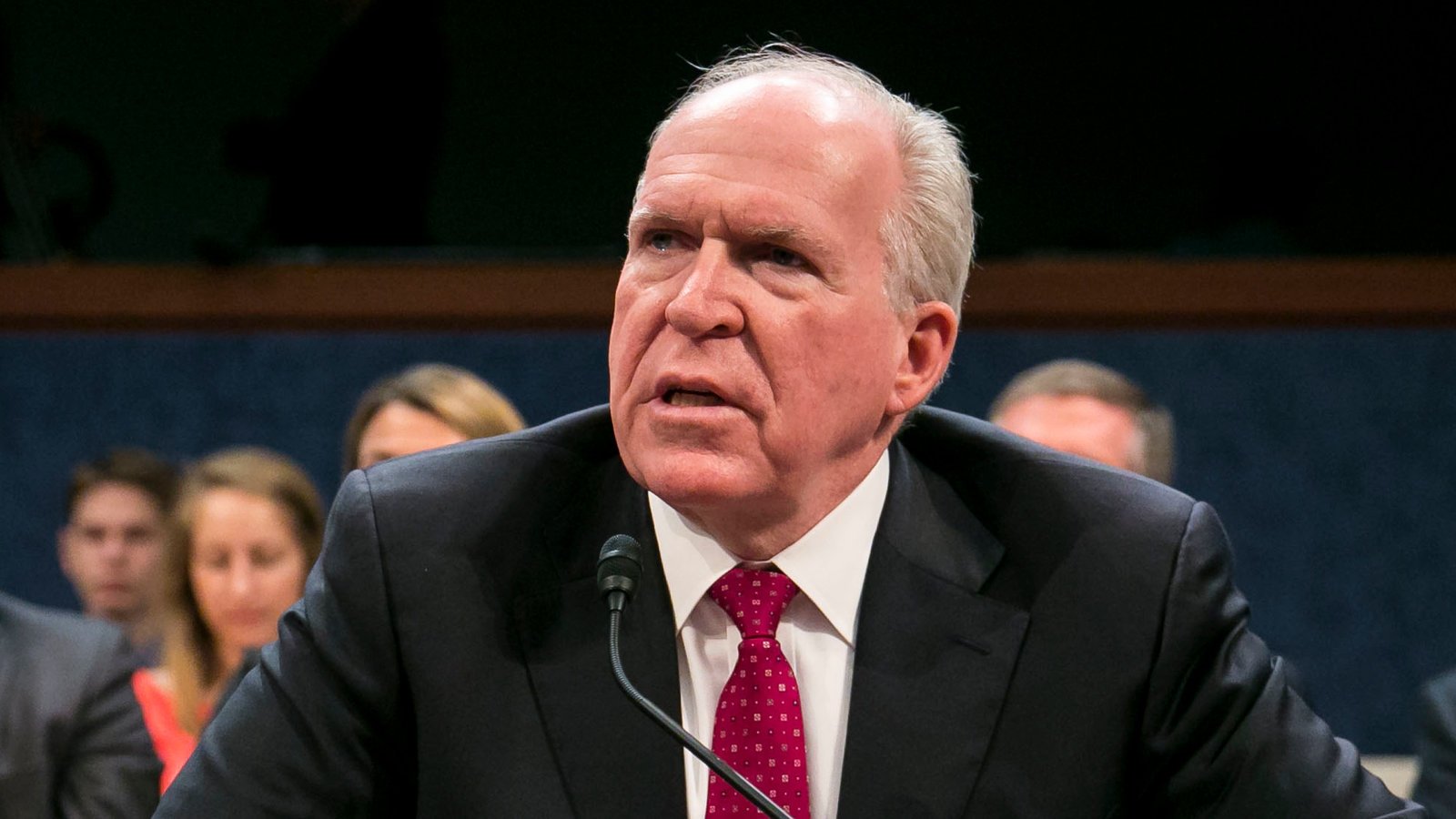
WASHINGTON — Lawyers for former CIA Director John Brennan have asked a federal judge to prevent the US Department of Justice from steering a criminal investigation into him toward a judge they describe as favorable to President Donald Trump.
The request, filed Monday, was addressed to Cecilia Altonaga, the chief judge of the Southern District of Florida. Federal prosecutors in that district are overseeing a grand jury investigation tied to the US government’s assessment of Russian interference in the 2016 presidential election.
Brennan and several other former intelligence and law enforcement officials have received subpoenas in the inquiry. Brennan’s attorneys say prosecutors have informed him that he is a target of the investigation.
Concerns over ‘judge-shopping’
In their letter, Brennan’s lawyers raised concerns that the Justice Department is attempting to “judge-shop” by maneuvering the case toward Aileen Cannon, a federal judge who previously issued rulings favorable to Trump and dismissed the classified documents case against him last year.
They urged Judge Altonaga to use her supervisory authority to ensure that any litigation connected to the investigation is assigned through neutral court procedures rather than prosecutorial influence.
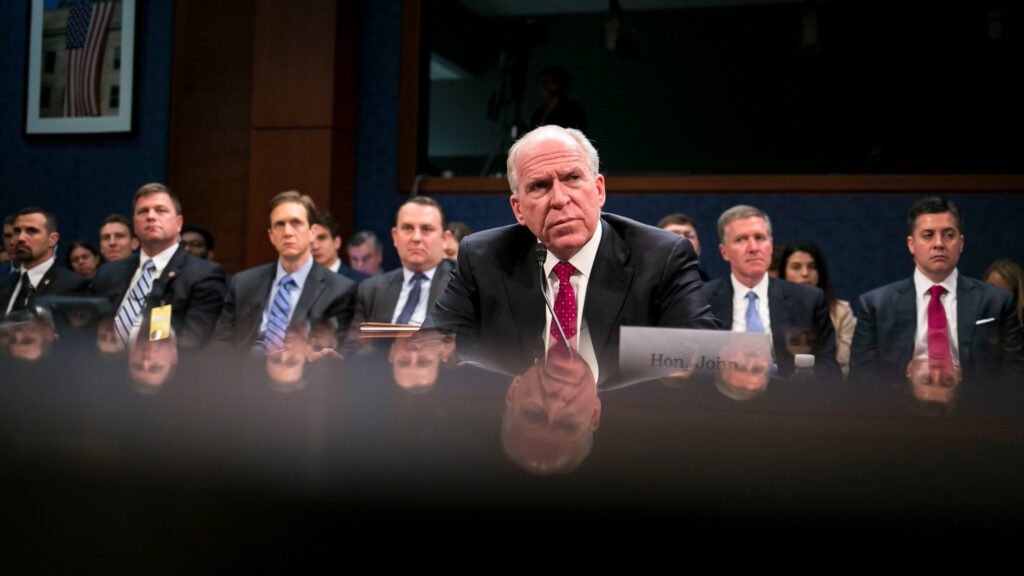
“We are seeking assurance that any litigation arising out of this grand jury proceeding will be heard by a judge who is selected by the court’s neutral and impartial processes, not by the prosecution’s self-interested maneuvering,” wrote Brennan’s attorneys, Kenneth Wainstein and Natasha Harnwell-Davis.
The letter was first reported by The New York Times.
What the investigation involves
Prosecutors have not publicly detailed what potential criminal conduct is under review. However, subpoenas issued last month sought records related to the Obama administration’s intelligence community assessment, released in January 2017, which concluded that Russia carried out a covert influence campaign to help Trump defeat Democratic nominee Hillary Clinton.
Trump was investigated during his first term over whether his campaign conspired with Russia but was not charged. He has repeatedly condemned the Russia investigation and has called for accountability for officials involved in it.
Florida venue questioned
Brennan’s legal team questioned why the investigation is based in Florida at all, arguing that the intelligence assessment at the heart of the probe was prepared by officials in the Washington, D.C. area.
They said the Justice Department initially explored multiple jurisdictions, including Pennsylvania, before settling on Florida — a move they described as “forum-shopping.”
The investigation is currently being handled by a grand jury in Miami, but Brennan’s lawyers warned that prosecutors may seek to move it to the Fort Pierce division, where Judge Cannon is the only sitting judge. They cited the Justice Department’s request for an additional grand jury in Fort Pierce as a cause for concern.

Broader political context
The dispute unfolds against the backdrop of Trump’s renewed presidency and his stated desire to pursue retribution against those he believes unfairly targeted him during the Russia investigation.
Earlier this year, Trump’s Justice Department secured an indictment against former FBI Director James Comey on false statement and obstruction charges related to the Russia probe. That case was later dismissed, and its future remains uncertain after a judge barred prosecutors from using key communications as evidence.
Legal experts note that judges overseeing grand jury proceedings can play a critical role in resolving disputes over subpoenas, testimony, and evidence — decisions that can significantly shape the direction of an investigation, even if no charges are ultimately filed.


Politics
Sen. Elizabeth Warren Calls It a ‘Cesspool of Corruption’ — Here’s Why Senators Are Now Fighting Back Against the DOJ’s Live Nation Deal That Left Every Fan Betrayed…
A group of powerful U.S. Senators says the Trump administration handed Ticketmaster a gift — and they’re introducing new legislation to make sure it never happens again.

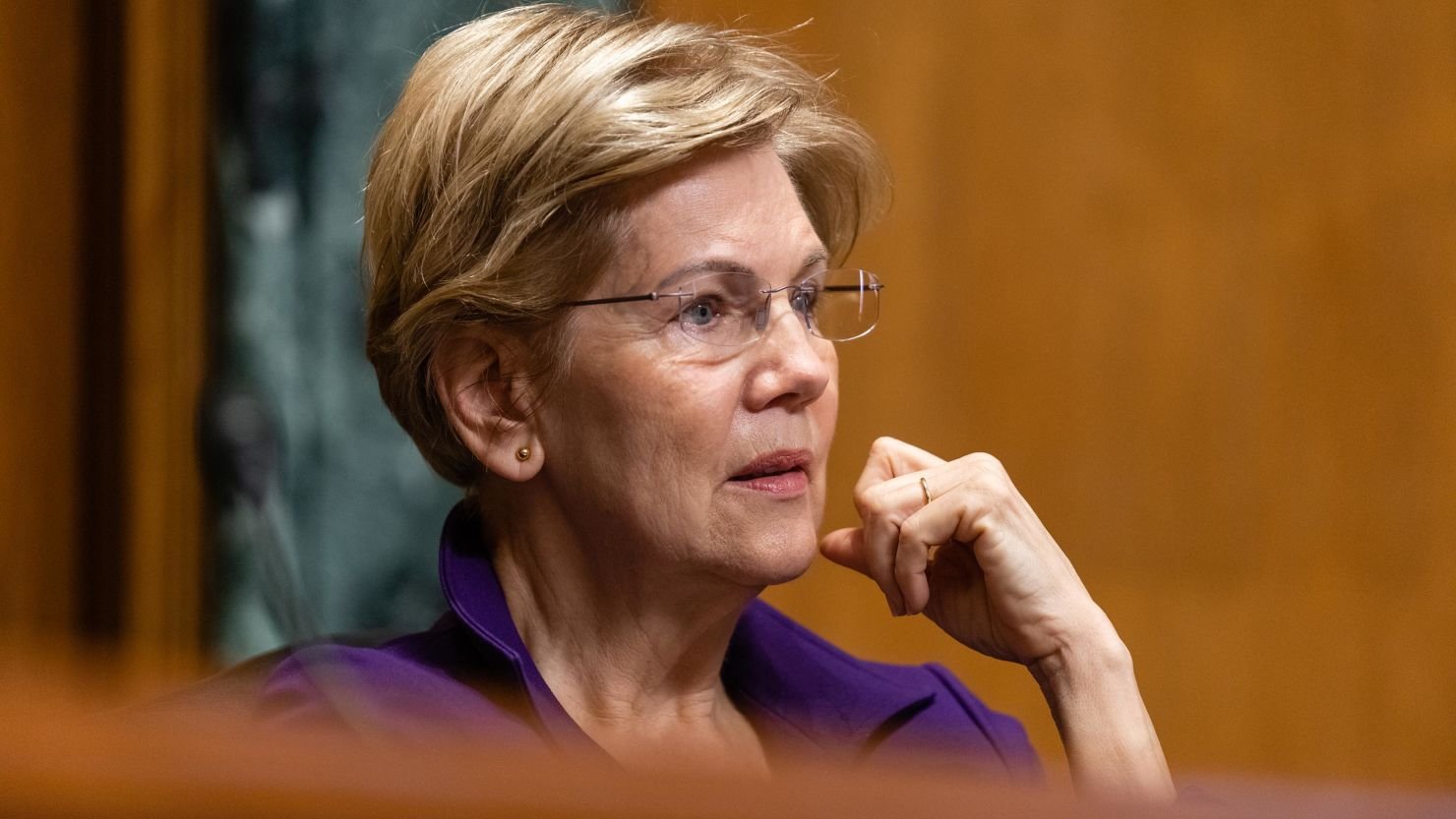
If you’ve ever stared at a concert ticket price and felt your stomach drop at the fees tacked on top — the service charges, the “facility fees,” the mysterious extras that somehow double the base cost — then what happened in Washington D.C. this week is very much your business.
Because a group of U.S. Senators just looked at the Department of Justice‘s recent settlement with Live Nation and Ticketmaster — the deal that was supposed to hold the concert industry’s most powerful monopoly accountable — and said, loudly and clearly: this is not good enough.
The Settlement That Sparked a Firestorm
The proposed legislation arrives after Live Nation and the DOJ reached a March 9 settlement over an antitrust lawsuit during the middle of the trial. The DOJ first sued Live Nation in 2024 and called to undo the decade-old merger between the company’s eponymous concert promotion and ticketing giant Ticketmaster, alleging the company operates as a vertically integrated monopoly that stifles competition and drives up costs for consumers. The Hollywood Reporter
Under the terms, the proposed agreement would require Live Nation to pay $280 million in civil penalties to the states involved in the case. The Hill
ALSO READ : “She Never Made It Out…” Albany House Fire Claims Woman’s Life as Family Pleads for Help to Bring Her Home
On paper, $280 million sounds significant. In practice, for a company the size of Live Nation, it is anything but. Sen. Elizabeth Warren (D-MA) wrote on X: “Donald Trump just betrayed every fan who’s been exploited by Ticketmaster. This fine is less than 1% of Live Nation’s revenue last year AND lets them continue to rip off fans with a 15% ‘Ticketmaster Tax.’ It’s wrong. We need to break up Ticketmaster and Live Nation.” Deadline
A slap on the wrist dressed up as accountability. And the senators weren’t about to let it slide.
Enter the Antitrust Accountability and Transparency Act
Sen. Amy Klobuchar found the DOJ’s recent settlement with the concert and ticketing giant so weak that she’s pitching legislation to strengthen settlement procedures altogether. Klobuchar introduced the Antitrust Accountability and Transparency Act alongside fellow Democratic Sens. Dick Durbin, Cory Booker, Mazie Hirono, Richard Blumenthal, Peter Welch, Sheldon Whitehouse, Elizabeth Warren and Chris Murphy. The Hollywood Reporter
In an interview with Variety last week, Klobuchar, a forceful and longtime advocate for a level playing field in the live-entertainment industry, called the settlement “weak” and “absolutely disrespectful to fans.” Variety
Her statement upon introducing the bill left nothing to the imagination: “When the government prosecutes antitrust violations, the goal should be to uphold the law, lower prices, and protect consumers and small businesses. In the recent settlement between the Department of Justice and Live Nation, it is clear the American people got the raw end of the deal.” U.S. Senate
Warren Drops the Sharpest Words Yet: ‘A Cesspool of Corruption’
If Klobuchar’s language was pointed, Elizabeth Warren‘s was a blowtorch. “Under Donald Trump, antitrust enforcement has become a growing cesspool of corruption. Giant mergers look like the newest way for Donald Trump to play political favorites while slashing choices and jacking up prices for Americans. This bill will protect consumers and workers by making sure the government doesn’t let giant companies like Ticketmaster or HPE off the hook based on influence-peddling,” said Senator Warren. U.S. Senate
These are not mild-mannered parliamentary concerns. This is a sitting U.S. Senator accusing the sitting president’s administration of using antitrust enforcement — the very mechanism meant to protect ordinary Americans from corporate monopoly — as a tool of political favoritism. That is a significant allegation, and Warren is making it on the record, in her name, without hedging.
The Troubling Story Behind the Settlement — A Fired Enforcer and ‘Pay-to-Play’ Accusations
The background to all of this is, frankly, alarming — and it goes well beyond the settlement itself.
Notably, even President Donald Trump‘s own Assistant Attorney General for Antitrust Gail Slater was ousted, reportedly in part because of her resistance to inappropriate pressure by Justice Department leadership over antitrust matters, including the case against Live Nation-Ticketmaster, which was recently settled mid-trial without the knowledge of the lawyers trying the case in court. Senate
Read that again: the settlement was reached without the knowledge of the government lawyers who were actively arguing the case in court. The judge overseeing the trial was furious. Judge Arun Subramanian was angry at the attorneys for both sides when the existence of the settlement was announced in open court, according to The New York Times. Deadline

One of the ousted officials, Roger Alford, warned that the administration is engaged in a “pay-to-play approach to antitrust enforcement” and that “the Department of Justice is now overwhelmed with lobbyists with little antitrust expertise going above the Antitrust Division leadership seeking special favors.” Senate
This is not opposition party spin. Roger Alford served as Deputy Assistant Attorney General for Antitrust under President Trump himself — and he is now one of the endorsers of the new Senate legislation.
What the New Bill Would Actually Do
The Antitrust Accountability and Transparency Act would extend reviews under the Tunney Act to the Federal Trade Commission, which currently only applies to the Justice Department. It would also require the government to explain how a proposed settlement remedies antitrust issues and to disclose previous settlement offers, the process for reviewing those offers, and any side-deals not included in the formal agreement. TheWrap
The bill would also empower state attorneys general by allowing them to intervene in Tunney Act hearings as a matter of right, and creates a process by which they can step in to fight and continue a case where the federal government chooses to voluntarily dismiss it. Variety
In plain English: no more backroom deals. No more settlements that blindside the lawyers doing the actual work. No more rubber-stamping arrangements that leave the public with less protection than they started with.
Rep. Jamie Raskin, ranking member of the House Judiciary Committee, is introducing companion legislation in the House. The Hollywood Reporter Former assistant attorney generals Jonathan Kanter, Bill Baer and Roger Alford have also endorsed the legislation. “These amendments make clear that courts have both the authority and the obligation to do more than rubber-stamp government settlements,” Kanter said. “Antitrust violations should not end in weak settlements that leave the public holding the bag.” The Hollywood Reporter
Why Concert Fans Are Watching Closely
Given how frustrated consumers have gotten with the state of live music in recent years, it’s not surprising lawmakers are keeping their foot on the gas against Live Nation even after a DOJ settlement, seeing the issue as an easy bipartisan win with constituents. The Hollywood Reporter
And they’re right. Ticket prices have become a defining consumer frustration of this generation — a symbol of how unchecked corporate power quietly drains ordinary people of money they don’t have to spare. The Live Nation-Ticketmaster saga has never been just a music industry story. It has always been a story about who the system is actually built to serve.
Right now, a group of senators is trying to answer that question differently. Whether they succeed is another matter. But they are asking it loudly — and that, at least, is a start.
Politics
“Let Me Earn Your Respect…”: Markwayne Mullin Faces Heated Questions, Regrets Past Remarks in Explosive DHS Hearing
From immigration enforcement promises to a fiery clash with Rand Paul, the Homeland Security hearing reveals a combative yet calculated side of Markwayne Mullin.

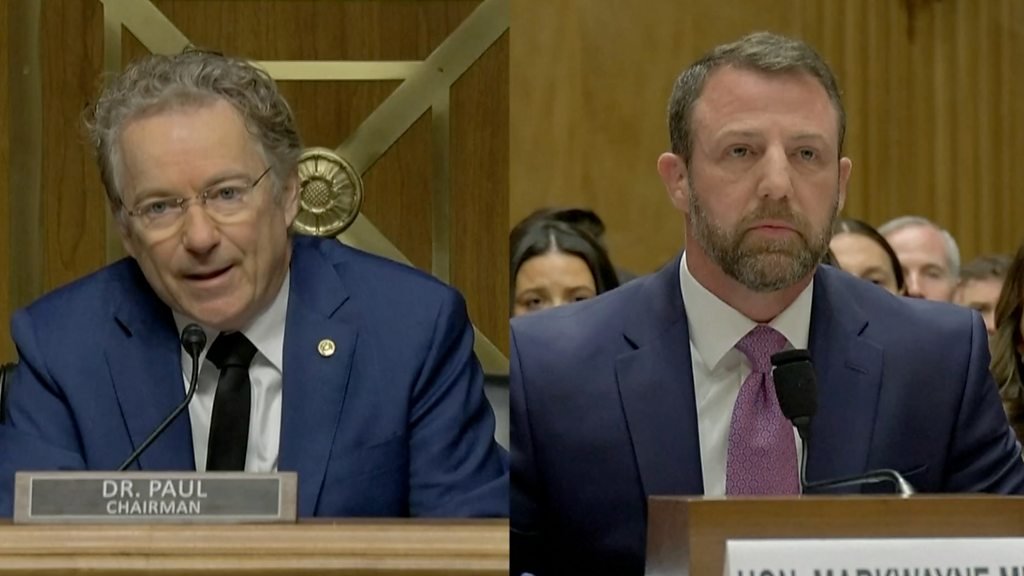
In a hearing that felt more like a political battleground than a routine confirmation process, Markwayne Mullin stepped into the spotlight — and didn’t shy away from controversy.
As the nominee to lead the Department of Homeland Security (DHS), Mullin faced a barrage of questions on immigration policy, agency conduct, and even his own past statements. What emerged was a mix of defiance, regret, and a clear attempt to reset his public image.
“We’re Playing With Fire”: Shutdown Overshadows Everything
Perhaps the most urgent issue looming over the hearing was the ongoing DHS funding crisis. With the department entering its fifth week without funding, Mullin painted a stark picture of the situation.
He warned that political gridlock in United States Congress is putting national security and public confidence at risk. More than 280,000 employees — including workers from the Transportation Security Administration — have been working without pay.
“These are people still showing up every day,” Mullin noted, hinting at the human cost behind the political standoff.
The impasse traces back to disagreements between lawmakers and the administration of Donald Trump, particularly over immigration reforms tied to DHS funding.

Immigration Policy Takes Center Stage
At the heart of the hearing was the future of Immigration and Customs Enforcement (ICE), an agency that has faced intense scrutiny in recent years.
Mullin attempted to strike a careful balance. He pledged a “better approach” to enforcement while insisting that constitutional safeguards would be respected — including the use of judicial warrants before entering homes.
This came under sharp questioning from senators like Richard Blumenthal, who raised concerns about alleged overreach by ICE agents.
Mullin pushed back firmly, rejecting claims of unlawful practices and accusing critics of exaggeration.
Regret Without Apology
One of the most emotional moments came when Mullin addressed his earlier remarks about Alex Pretti, a man killed during an encounter with federal agents.
Previously, Mullin had described Pretti in harsh terms. During the hearing, he admitted those comments were a mistake — but stopped short of issuing a full apology.
“I regret what I said,” he acknowledged, adding that he would wait for the investigation to conclude before addressing the family directly.
The moment underscored a recurring theme: Mullin is willing to adjust his tone, but not abandon his stance entirely.
A Republican Clash That Stole the Show
While Democrats challenged Mullin on policy, one of the most striking confrontations came from within his own party.
Rand Paul, a Republican known for his independent streak, launched a sharp critique of Mullin’s temperament — even referencing a past incident where Mullin appeared to justify an attack on him.
“Why should Americans trust a man with anger issues?” Paul asked bluntly.
Mullin didn’t back down.
“It seems like you fight Republicans more than you work with us,” he shot back, before adding a more conciliatory note: “Let me earn your respect.”
The exchange highlighted deep divisions, even among allies, over leadership style and accountability.
From Feud to Handshake
In a surprising twist, the hearing also delivered a moment of reconciliation.
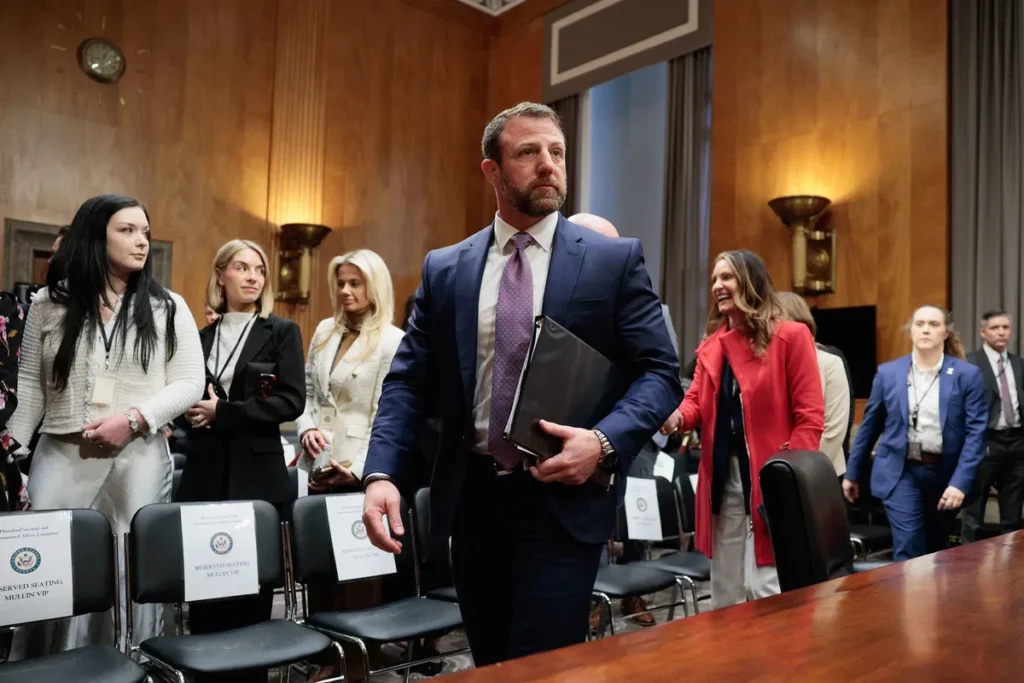
Sean O’Brien, leader of the powerful International Brotherhood of Teamsters, was present — a notable appearance given his past clash with Mullin.
Their previous encounter in 2023 nearly escalated into a physical altercation, becoming a viral moment in American politics.
But this time, the tone was different.
As Mullin entered the room, he greeted O’Brien with a handshake — a small but symbolic gesture that suggested old rivalries may be giving way to political pragmatism.
What Happens Next?
With a committee vote expected soon, Mullin’s nomination appears likely to advance, thanks in part to unexpected support from figures like John Fetterman.
Still, questions remain about how Mullin would lead DHS — especially at a time when immigration policy, internal morale, and political polarization are all under intense scrutiny.
A Test of Leadership Beyond Words
For all the sharp exchanges and headline-making quotes, the hearing ultimately came down to one question: Can Markwayne Mullin transform his combative reputation into effective leadership?
He insists he can.
“My goal is that we’re not the lead story every day,” he said.
In Washington, that might be the toughest promise of all.
For More Update- DAILY GLOBAL DIARY
Politics
‘After 26 Years, a New Face Emerges…’ Daniel Biss Wins Key Democratic Race for Schakowsky’s Seat
A crowded and competitive primary ends with Daniel Biss securing the Democratic nomination, setting up a high-stakes showdown in Illinois’ 9th District.
After more than two decades of political continuity, a major shift is unfolding in Illinois politics.
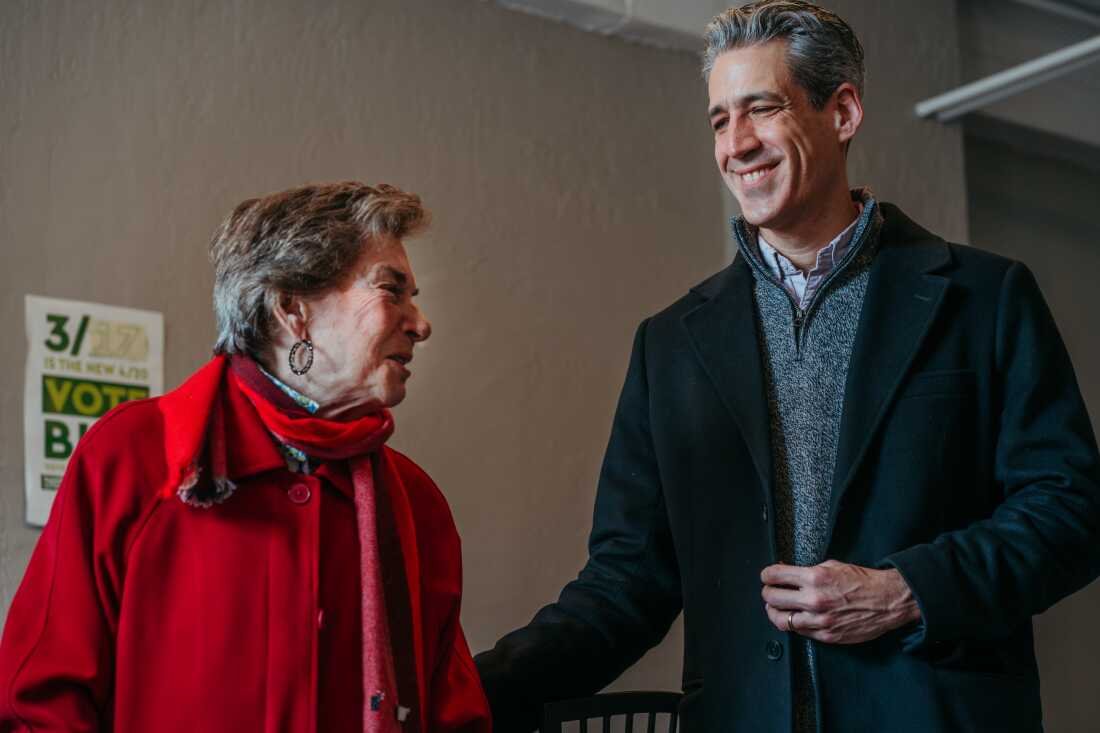
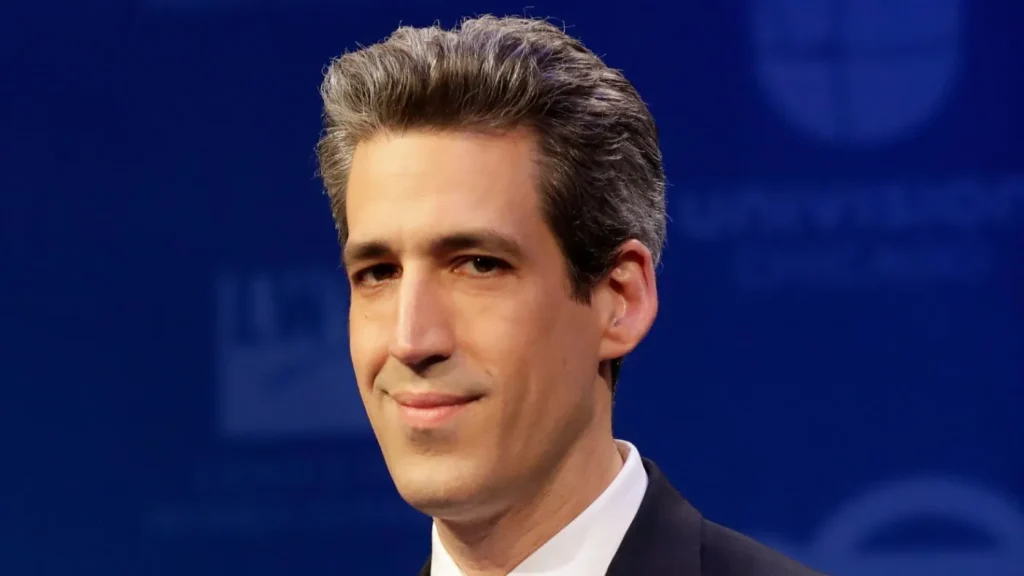
Daniel Biss has been projected to win the Democratic nomination for Illinois’ 9th Congressional District, marking a significant moment as longtime Congresswoman Jan Schakowsky prepares to step down.
The projection, reported by the Associated Press, comes after one of the most crowded and competitive Democratic primaries the state has seen in years.
A Seat Open After 26 Years
For the first time in over a quarter-century, Illinois’ 9th District is up for grabs.
Schakowsky, a veteran lawmaker known for her progressive stance and long-standing presence in Congress, announced her retirement—triggering a political scramble unlike anything the district has experienced in decades.
The district, which includes parts of northern Chicago and stretches into nearby suburbs, has traditionally leaned Democratic, making the primary race particularly crucial.
A Crowded Field, A Clear Winner
With 15 Democratic candidates entering the race, the competition was fierce from the start.
Among the notable contenders were former journalist Kat Abughazaleh, Illinois State Senator Laura Fine, and gun control advocate Phil Andrew—all of whom ran well-funded campaigns and gained significant visibility.
Yet, Biss managed to rise above the crowded field.
A former Illinois state senator himself, Biss brought both political experience and a strong base of support into the race. Crucially, he also secured an endorsement from Schakowsky, a factor that likely played a key role in consolidating Democratic voters.
Republican Side Takes Shape Too
While Democrats battled it out in a packed primary, Republicans also finalized their candidate.
John Elleson has been projected to win the GOP nomination, setting the stage for a general election contest later this year.
Though the district historically favors Democrats, the upcoming race could still draw attention, especially as national political dynamics continue to evolve.
Why This Race Matters
This isn’t just another congressional race—it’s a generational transition.
Schakowsky’s departure marks the end of an era, and Biss now represents a new chapter for the district. His victory signals not only voter preference but also the direction Democrats in the region may be heading.
With national issues like healthcare, economic policy, and gun reform dominating the conversation, the outcome of this race could reflect broader political trends across the country.
What Comes Next
With the primaries decided, all eyes now turn to the general election.
Biss will aim to maintain Democratic control of the district, while Elleson will look to challenge the long-standing political status quo.
For voters in Illinois’ 9th District, the decision ahead isn’t just about choosing a representative—it’s about shaping the future of a seat that has remained unchanged for 26 years.
And as the dust settles from a heated primary, one thing is clear: change has already begun.
For More Update- DAILY GLOBAL DIARY

Russell T Davies Says ‘You’re Queer in 2026, You’re a Political Act’ — and His New Show ‘Tip Toe’ Is His Most Furious, Personal Work Yet…

Netflix’s Ted Sarandos Turns to Europe After Warner Deal Collapse… and Sends a Subtle Message to Regulators

The Writers of ‘Paradise’ Debated Hard Before Giving You That Jaw-Dropping Moment Early — Here’s Why They Finally Said ‘Do It…’

Rajasthan Royals Sold for Record $1.63 Billion — IPL’s First $1 Billion Franchise, Meet New Owner Kal Somani

Spencer Johnson Ditches PSL, Joins CSK for IPL 2026 — PCB Threatens Legal Action as Player Exodus Continues

1-Iran Issues Dire Warning to Israel and Defies Trump on Nukes: “We’re Ready to Strike Deep Inside”

Donald Trump’s net worth reveals the fortune behind the former US President and business mogul

“She Never Made It Out…” Albany House Fire Claims Woman’s Life as Family Pleads for Help to Bring Her Home

Caitlin Clark Sidelined with Quad Strain, Set to Miss Two Weeks of WNBA Action

“Tomás Rodríguez Net Worth 2025: Panama’s Gold Cup Goal‑Machine’s Surprising Fortune Revealed”

Miss Jamaica Suffers Terrifying Fall Off Miss Universe Stage; Rushed to Hospital on Stretcher in Viral Video

Moana Live-Action Teaser Sparks Outrage as Fans Call Disney’s Move a ‘Clear Money Grab’ — What Went Wrong?

Ryan Gosling’s Project Hail Mary Trailer Stuns Fans with a Mysterious Alien Ally and a Mission That Could Save Earth

Apple delays Jessica Chastain thriller The Savant about domestic extremism after recent US violence

Avatar 3, Fire and Ash trailer reveals Jake Sully’s family facing terrifying new Na’vi enemies with deadly fire powers
-

 Entertainment6 days ago
Cannes 2026 Hasn’t Announced a Single Film Yet — But the Whisper Network Is Already Pointing to These Names and It’s Exciting…
-

 Entertainment7 days ago
Amy Poehler and Sterlin Harjo Are Getting One of Television’s Highest Honours — and the Reason Why Says Everything About Where Storytelling Is Headed…
-

 Entertainment6 days ago
Almodóvar, Lars von Trier, Joel Coen and More — The Films That Could Own Cannes 2026 Are Already Generating Serious Buzz and the List Is…
-

 Entertainment1 week ago
Oscars 2026 Red Carpet Shockers: Zendaya’s Late Arrival, Jessie Buckley’s Grace Kelly Tribute… and Chase Infiniti Owning the Night
-

 Entertainment1 week ago
The Oscars Are Already Being Called Before They Happen and Scott’s Final Feinberg Forecast Reveals a Shocking Front-Runner That Nobody Saw Coming…
-

 Politics1 week ago
“Trump Reveals ‘Early Stage Breast Cancer’ Diagnosis of Susie Wiles… But Says Her ‘Strength Says Everything’”
-

 Entertainment6 days ago
Lollapalooza 2026 Just Dropped Its Most Surprising Lineup Yet — and the One Historic Thing Nobody Is Talking About Is the Real Story…
-

 Health1 week ago
“Kent Meningitis Tragedy: Second Student Dies as Outbreak Sparks Hospital Emergency…”