
Entertainment
Only Murders in the Building Season 5 Review 7 Signs the Show May Finally Be Cracking
The beloved Disney+ comedy still charms with Steve Martin, Martin Short, and Selena Gomez — but too many missteps and overblown cameos raise the question: is it time to call curtains?

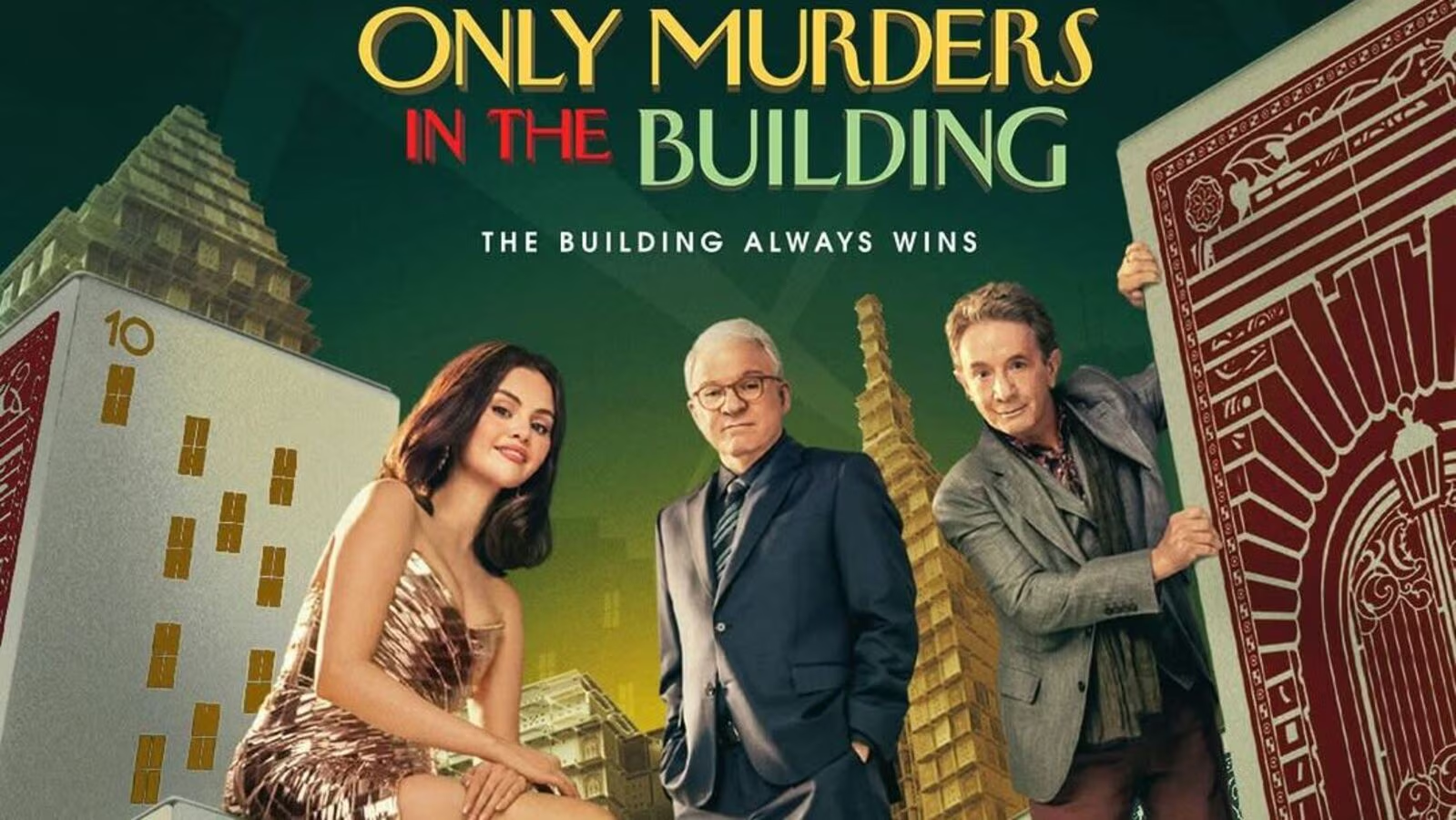
When Only Murders in the Building first premiered in 2021 on Disney+, it felt like a rare gem in the crowded world of streaming television. The murder-mystery comedy blended the timeless charm of Steve Martin (Wikipedia), the theatrical wit of Martin Short (Wikipedia), and the deadpan modernity of Selena Gomez (Wikipedia). Together, their chemistry built a cult following, turning the fictional Arconia apartment building into a cultural landmark.
Now, five seasons later, the cracks are starting to show. Season 5, currently streaming, offers the familiar blend of eccentric suspects, absurd clues, and witty one-liners — yet it also reveals a troubling question: how much longer can this whodunnit comedy stay fresh?
The Heart of OMITB Still Beats
What has always separated OMITB from countless other shows is its emotional undercurrent. Beneath the gags and true-crime podcast satire lies a story about unlikely friendships. Watching Charles Haden-Savage (Martin), Oliver Putnam (Short), and Mabel Mora (Gomez) stumble through life and crime scenes gave fans comfort during darker times.
This warmth hasn’t completely vanished. There are still moments of brilliance: a cleverly staged chase in the Arconia’s elevators, the return of running jokes about Oliver’s chaotic directing career, and tender exchanges between Charles and Mabel. Christoph Waltz (Wikipedia) guest-stars as one of the new billionaires, delivering the kind of eccentric energy that once made cameos by Sting (Wikipedia) or Amy Schumer (Wikipedia) so delightful.

Yet for every sharp scene, there are clunky misfires.
The Streep and Zellweger Problem
One of the show’s most controversial choices has been doubling down on celebrity casting. While Season 1 used cameos sparingly, Season 5 leans heavily on Meryl Streep (Wikipedia), reprising her role as Loretta, now Oliver’s wife. Streep is, of course, a legend, but her exaggerated mannerisms seem misplaced in OMITB’s quirky but grounded comedy. What once felt like a delightful surprise now feels like a distraction.
Similarly, Renée Zellweger (Wikipedia) appears as one of the billionaires tied to Lester the doorman’s murder. Instead of delivering layered comedy, her performance feels like — as critics noted — “a collection of mannerisms.” It’s a reminder that the show works best when guest stars enhance the trio’s dynamic rather than overshadow it.
A Case of Too Many Red Herrings
At the center of Season 5 is the murder of Lester the doorman (played by Teddy Coluca). Clues include a missing finger, a mafia connection, and even an elevator crank. Suspects range from Téa Leoni (Wikipedia) as an Italian widow to Dianne Wiest (Wikipedia) as Lorraine, Lester’s grieving wife.
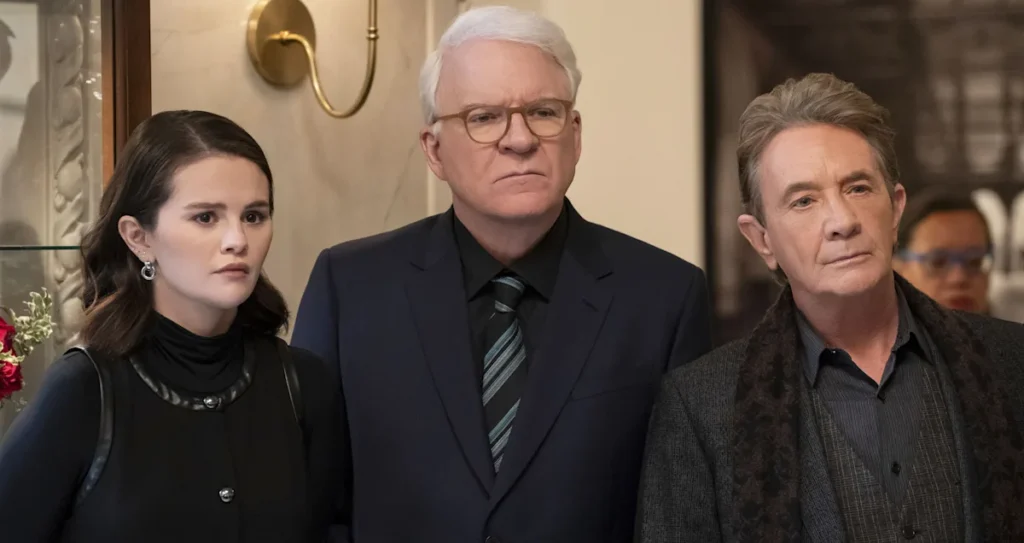
But the narrative feels scattered. The podcast that once anchored the show is pushed aside, the trio is often separated, and the action drifts outside the Arconia. The tightly woven magic of earlier seasons is replaced with sprawling storylines that lack cohesion. Even Oliver’s infamous snort — a gag wisely dropped in earlier seasons — has returned, testing patience.
Why Fans Still Won’t Let Go
Despite its flaws, OMITB remains addictive. Watching Martin, Short, and Gomez together is still worth the subscription. Their chemistry is rare, their timing impeccable, and their affection for one another palpable. As one fan wrote on X (formerly Twitter), “Even when the murder plots drag, I’d happily watch these three eat breakfast together for an hour.”
The show’s atmosphere — the art-deco halls of the Arconia, the blend of comedy and melancholy, the gentle reminder that friendship can bloom in unexpected places — continues to resonate. Ending the series now would feel premature. A thoughtful course correction in Season 6 could revive the energy that made OMITB a phenomenon.
Verdict: Cracks Are Showing, But Don’t Call It Dead
Is Only Murders in the Building past its prime? Maybe. Season 5 is uneven, weighed down by indulgent guest arcs and scattered storytelling. But its heart, its humor, and its cast still shine. Television history is full of shows that stumbled mid-run only to recover spectacularly.
If OMITB can strip back the gimmicks and return to its roots — tight mysteries, sharp cameos, and the golden trio at the center — it might just regain its crown. For now, fans will keep tuning in, hoping the Arconia hasn’t closed its doors for good.
Visit our site for more news www.DailyGlobalDiary.com




Entertainment
Netflix Boss Ted Sarandos Quietly Pivots to Europe After Warner Deal Falls Apart — and His Message to Regulators Is Hard to Miss…
With the Warner Bros. Discovery talks behind him, Netflix co-CEO Ted Sarandos pivots toward Europe—insisting there was “no political interference” while quietly lobbying against tighter media rules.

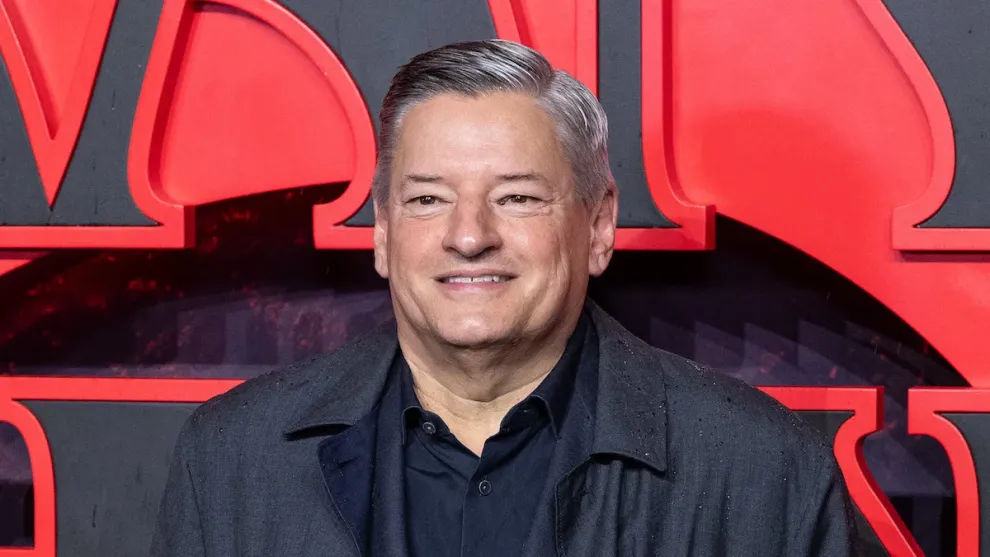
In the ever-evolving world of global streaming, strategy shifts often reveal more than official announcements. This week, Ted Sarandos, co-CEO of Netflix, made headlines not just for what he said—but for where he’s heading next.
After stepping away from a potential deal involving Warner Bros. Discovery, Sarandos is now turning his attention firmly toward Europe. And if his recent comments are anything to go by, this pivot is as much about opportunity as it is about influence.
“No Political Interference”—But Plenty at Stake
In a candid conversation with Politico, Sarandos addressed speculation surrounding the failed discussions with Warner Bros. Discovery. He was quick to dismiss any political undertones, stating there was “no political interference” from Donald Trump or his allies during the talks.
That clarification, however, comes at a time when media consolidation and political scrutiny are deeply intertwined—especially in the United States. The streaming giant’s decision to step back from such a high-profile deal signals a calculated move rather than a missed opportunity.
ALSO READ : “She Never Made It Out…” Albany House Fire Claims Woman’s Life as Family Pleads for Help to Bring Her Home
Why Europe—and Why Now?
With Hollywood facing increasing competition, rising production costs, and regulatory debates, Europe has emerged as fertile ground for expansion. Sarandos’ latest outreach suggests Netflix is doubling down on its European ambitions—not just in content, but in policy influence.
The company has already invested heavily in European productions, from Spanish thrillers to German sci-fi hits. But now, the focus is shifting beyond storytelling to regulation.
Sarandos is reportedly engaging with European Union lawmakers, urging them to tread carefully when drafting new media rules that could reshape the streaming landscape. His message is simple: overregulation could stifle innovation and limit global competitiveness.
A Charm Offensive in Brussels
Industry insiders describe Netflix’s current approach as a “charm offensive.” By directly engaging policymakers in European Union, Sarandos aims to position Netflix not as a disruptive outsider, but as a collaborative partner in Europe’s digital future.
This comes as the EU considers stricter content quotas, taxation policies, and transparency requirements for streaming platforms. While these measures are designed to protect local industries, they could also complicate operations for global players like Netflix.
Sarandos’ diplomatic tone suggests a balancing act—supporting European creativity while pushing back against rules that might limit Netflix’s flexibility.
What the Warner Exit Really Means
The abandoned Warner Bros. Discovery discussions may ultimately prove to be a turning point. Rather than pursuing consolidation in the U.S., Netflix appears to be betting on organic growth and international expansion.
For a company that once revolutionized how audiences consume entertainment, this shift underscores a broader reality: the next phase of the streaming wars will be fought not just on screens, but in boardrooms and legislative halls.
The Bigger Picture
Netflix’s European pivot reflects a larger trend across the tech and media industries. As regulatory pressures intensify in the U.S., companies are increasingly looking abroad—not just for audiences, but for strategic leverage.
Sarandos’ remarks may have dismissed political interference, but they also highlight how deeply politics and media are intertwined today. Whether in Washington or Brussels, the rules of the game are being rewritten—and Netflix intends to have a seat at the table.
Entertainment
Steven Knight Admits He Nearly Brought Tom Hardy Back as a Ghost in ‘Peaky Blinders: The Immortal Man’ — and the Reason He Didn’t Will Surprise You…
The man who built Tommy Shelby’s entire world finally opens up about the Alfie Solomons ghost plot that never made it to screen — and what it would have meant for everything fans thought they knew.

There is something deeply fitting about a show built on secrets finally giving up one of its own. Peaky Blinders spent six seasons teaching its audience that nothing is ever quite what it seems — that the man you think is dead might walk back in the room, that the deal you think is done is never truly closed. And now, its creator has revealed that even the final film nearly contained a twist so audacious it would have rewritten years of storytelling in a single scene.
Steven Knight — the writer, creator, and architect of everything Birmingham’s most dangerous family ever did — has spoken publicly for the first time about a major plot idea he developed for Peaky Blinders: The Immortal Man that never made it to the final cut. And it involves the one character fans were most desperate to see return.
The Ghost of Alfie Solomons
Knight told The Hollywood Reporter: “I had an idea, which I haven’t really spoken about. Ever since he was shot on the beach at Margate in season four, you’ve only ever seen Tommy and Alfie together alone. I thought, Maybe he appears, and we realise he’s been dead all that time.” Film-News.co.uk
Read that again slowly. Tom Hardy‘s Alfie Solomons — the wild, unpredictable, endlessly quotable Camden gangster — was nearly revealed to have been a ghost. Not a survivor. Not a man faking his death. A ghost. A figment of Tommy Shelby‘s fractured, haunted mind, wandering through the wreckage of a life built on blood and war.
ALSO READ : Russell T Davies Says ‘You’re Queer in 2026, You’re a Political Act’ — and His New Show ‘Tip Toe’ Is His Most Furious, Personal Work Yet…
Knight felt the idea was believable, particularly given that Tommy had previously interacted with an apparition of his first wife Grace, played by Annabelle Wallis. Film-News.co.uk The framework was already there. The show had already established that Tommy Shelby exists in a world where the dead speak and the living carry wounds that never fully close.
And yet — Knight pulled back. He scrapped it. The version of The Immortal Man that streaming on Netflix right now does not contain Alfie Solomons in any form, ghost or otherwise.
The Character Who Refused to Die — Until Now
The irony, of course, is that Alfie Solomons has always been the character most resistant to death on a show that kills people for sport. Knight has previously admitted that Hardy “wouldn’t let Alfie die” when he killed him off in season four, recalling: “He kept texting, saying, ‘Alfie’s not dead.’ So back he came.” The Hollywood Reporter
That kind of creative negotiation — a beloved actor texting his showrunner to insist his character survived a gunshot to the head on a beach — tells you everything about what Tom Hardy brought to that role. Alfie Solomons was never supposed to be as central as he became. He was supposed to be a colourful antagonist. He became, for millions of fans, the show’s beating, unpredictable heart.
When asked whether an Alfie Solomons spinoff series had ever been discussed, Knight was candid: “No, I never have. I don’t think it would work. He’s so good, and he’s been so great with Alfie… But in terms of there being an Alfie Solomon series, no. We did do Taboo, and we’re talking about doing another Taboo. I hope that happens.” The Hollywood Reporter
The Film That Became a Farewell
Peaky Blinders: The Immortal Man premiered at Symphony Hall in Birmingham on 2 March 2026, released in select cinemas on 6 March, and dropped globally on Netflix on 20 March 2026. Wikipedia The film is set during the Blitz of 1940, with Tommy dragged out of self-imposed exile to confront a Nazi economic conspiracy — and, far more painfully, his estranged son.
Barry Keoghan plays Erasmus “Duke” Shelby, Tommy’s eldest son and the current leader of the Peaky Blinders, while Rebecca Ferguson and Tim Roth join the cast as new additions. Stephen Graham returns as Hayden Stagg, and Sophie Rundle reprises her role as Ada Thorne. Wikipedia
The film was directed by Tom Harper and has been met with overwhelming emotion from audiences. Knight described watching the ending in cinemas: “The ending where we say farewell to Tommy, having watched it in a couple of theaters now at premieres and screenings, people really get emotional about it. You can hear them sobbing, and that’s exactly what should happen.” Film-News.co.uk

On Rotten Tomatoes, the film holds a 92% critics’ score.
Is Tommy Shelby Really Gone?
There is one more thing Knight said that will keep fans up at night. When asked directly whether this is truly the end of Cillian Murphy‘s Tommy Shelby, he gave the kind of answer only a Peaky Blinders writer could give. “He may come back,” Knight told Entertainment Weekly. “You know, in Peaky, you may come back as a ghost.”
He was smiling when he said it. But then again — so was Alfie Solomons when he got shot on that beach.
What is confirmed is that the world of Peaky Blinders continues. A sequel series is in development, set in 1953 — over a decade after the events of The Immortal Man — with Duke Shelby expected to feature in the story. MovieWeb A new generation. A new Shelby. But the ghost of the old one, as Knight has now made very clear, is never truly far away.
Peaky Blinders: The Immortal Man is streaming now on Netflix.
Entertainment
‘Love Story’ Finale Leaves the World in Tears The Last Words Carolyn Said to JFK Jr. Before the Plane Went Dark Will Break Your Heart…
FX’s blockbuster limited series finally reached its inevitable, devastating conclusion — and how it handled the final moments of John F. Kennedy Jr. and Carolyn Bessette-Kennedy left millions of viewers absolutely shattered.

There are some stories you already know the ending to, and yet, when you watch them unfold on screen, something inside you still hopes — just for a second — that maybe this time, it’ll be different. That’s exactly the cruel, beautiful trap that Ryan Murphy and creator Connor Hines set for audiences with FX’s Love Story: John F. Kennedy Jr. & Carolyn Bessette. And on Thursday night, March 26, 2026, the nine-episode run came to its heartbreaking close, leaving no dry eyes and no question unanswered — except the one that has haunted America for over two decades: what if they had made it?
A Marriage Hanging by a Thread
As the finale opens, John and Carolyn are still recovering from the nasty fight they had the previous week, where John had packed up to stay at a hotel. TVLine Their marriage — once the envy of an entire generation — had crumbled under the weight of fame, paparazzi, and the impossible pressure of being a Kennedy. They bicker at couples therapy, where Carolyn confesses she’s been having nightmares about being Jackie O. in a JFK-style assassination. But when the therapist suggests a trial separation, both of them recoil at the very idea.
Carolyn had told John, “I cannot be the third person in my marriage,” behind the spectre of the media and the Kennedy mythos. Variety Yet the very thought of a month apart was enough to shock them both back into each other’s arms. They couldn’t live with the chaos — but they couldn’t live without each other either.
ALSO READ : “She Never Made It Out…” Albany House Fire Claims Woman’s Life as Family Pleads for Help to Bring Her Home
Sarah Pidgeon as Carolyn and Paul Anthony Kelly as John carry the weight of the entire episode on their shoulders, and they do it with a grace that is genuinely hard to watch. At a bar after their therapy session, they talk and remember the early days of their relationship, before headlines and cameras turned their lives upside down. Carolyn reflects, “If only we knew then how good we had it.”
Fighting for What’s Left
Both turn to family for support — John confides in his sister Caroline Kennedy (played by Grace Gummer), while Carolyn leans on her sister Lauren Bessette (played by Sydney Lemmon) — and each is encouraged to fight for the relationship. The Hollywood Reporter
And fight they do. Carolyn even makes a rare public appearance to support John at an event for George magazine. The two also recreate their first date at an Indian restaurant, where Carolyn finally explains what her “sign above her head” means, which she had referenced in the pilot: “Please handle with care, not as tough as she looks.” It’s one of the most quietly devastating scenes of the entire series — a woman finally letting her guard down, just when time is running out.
John and Carolyn reclaim a bit of their old spark while sharing a cigarette at a dive bar, setting the stage for steamy make-up scenes. But the next morning, John heads off to yet another meeting and invites her to yet another party, and Carolyn is left wondering if anything’s really changed.
July 16, 1999 — The Day Everything Stopped
About 20 minutes into the episode, the timeline shifts. The date appears on screen: July 16, 1999 — and everything starts to feel tighter. That’s the day the real-life tragedy occurred, when John, Carolyn, and Lauren boarded a plane bound for Martha’s Vineyard to attend a Kennedy family wedding.
The show circles back to where it began in the season premiere, with the two having a tense encounter on the tarmac before taking off with Carolyn’s sister Lauren also onboard. Gold Derby Carolyn wasn’t sure about going — she almost didn’t. But in the end, she chose to be there with her husband.
Inside the cockpit, John pilots toward what he thinks is the horizon — and then suddenly loses his sense of it. He urges Carolyn to go back to her seat, but she refuses, staying by his side as dials spin and light his face red. “It’s OK, just breathe. John, just breathe. Just breathe.” As he looks confounded by the moment, she looks serene.
Those were the last words. The screen goes black.
A Nation’s Grief, Reborn on Screen
What follows is the world’s reaction. Police officers show up to Caroline’s home to tell her and her husband Edwin Schlossberg (Ben Shenkman) that John’s plane has been reported missing. A call in the middle of the night wakes up Carolyn and Lauren’s mother, Ann Messina Freeman (Constance Zimmer). Newsstands across New York City show a meticulously replicated New York Daily News cover that reads: “LOST.” The Hollywood Reporter

As the Kennedys gather, former President Bill Clinton calls Senator Ted Kennedy (Donal Logue) — and it’s clear what the conversation means without it being said: they’ve been found, but not alive. The Hollywood Reporter
Grace Gummer then delivers what may be the single most devastating performance in the entire series. She cries and screams at Ed, unable to rationalize that John is gone. “Please don’t do this to me, I can’t do it again,” she sobs into his arms. She has already lost her mother, Jackie Kennedy Onassis (played by Naomi Watts), to cancer, along with her father, former President John F. Kennedy, who was assassinated. The Hollywood Reporter
Lauren Was on That Plane Too
One of the most powerful and often overlooked dimensions of the finale is its insistence on remembering Lauren Bessette — Carolyn’s older sister — who also perished that night and is too often reduced to a footnote in the larger Kennedy story.
When Ann and Ed meet to discuss burial plans, he repeatedly names only John and Carolyn, prompting her to respond: “You keep saying ‘Carolyn.’ May I remind you that I had not one, but two daughters on board that plane that he crashed.”
Ann and Caroline later have a tense sit-down, where Ann rants about Carolyn being blamed for the crash by the media, and Lauren being reduced to “practically a footnote.” She breaks down, asking: “How do you live in a world that doesn’t make sense?”
A Final Goodbye, and a Glimpse of What Could Have Been
They spread the ashes of John, Carolyn, and Lauren at sea. The camera pans over the peaceful New England coast — and then we see John and Carolyn cuddling on the beach one last time.
We hear Ann reading Henry Scott-Holland’s “Death Is Nothing At All” and Clare Harner’s “Do Not Stand at My Grave and Weep” at a negotiated funeral service. The final image is of John and Carolyn, entirely alone, embracing on a sand dune — happy, in the company of no one but each other.
It’s the ending they deserved and never got. And that’s exactly why it hurts so much.
A Cultural Phenomenon That Reignited a Generation’s Memory
Love Story has become FX’s most-watched limited series of all time, accumulating more than 25 million hours of viewing across Hulu and Disney+ in just its first five episodes. Searches for John F. Kennedy Jr. and Carolyn Bessette-Kennedy reportedly increased by more than 9,100% in the month after the premiere, while the hashtag #lovestory generated more than 21 million posts globally.
Love Story has proven to be a ’90s nostalgia gateway drug for younger audiences, who have flocked to the real New York locations that the couple visited and modeled themselves after Bessette’s look. Gold Derby
The series was not without controversy. In June 2025, Jack Schlossberg, nephew of John F. Kennedy Jr., criticized the series for not consulting the Kennedy family during development and accused the production of “profiting off” his uncle’s life “in a grotesque way.” Murphy later indicated he intended to donate to the John F. Kennedy Library.
None of that controversy could blunt the emotional impact of what Ryan Murphy, Connor Hines, Sarah Pidgeon, and Paul Anthony Kelly built together. This was television doing what it does best — reminding us that behind every headline, there were real people who laughed, fought, loved, and lost. And in the case of John and Carolyn, they did all of it in front of the entire world.
Just breathe. Two words. And yet, somehow, the most complete love story ever told.

Netflix Boss Ted Sarandos Quietly Pivots to Europe After Warner Deal Falls Apart — and His Message to Regulators Is Hard to Miss…

Steven Knight Admits He Nearly Brought Tom Hardy Back as a Ghost in ‘Peaky Blinders: The Immortal Man’ — and the Reason He Didn’t Will Surprise You…

‘Love Story’ Finale Leaves the World in Tears The Last Words Carolyn Said to JFK Jr. Before the Plane Went Dark Will Break Your Heart…

The Era of ‘Safe’ TV Is Finally Over And What Happened at Series Mania 2026 in Lille Is Proof That Something Big Is Coming…

Stranger Things Is Back And the New Show Coming to Netflix in April Has a Twist Nobody Saw Coming…

1-Iran Issues Dire Warning to Israel and Defies Trump on Nukes: “We’re Ready to Strike Deep Inside”

Donald Trump’s net worth reveals the fortune behind the former US President and business mogul

“She Never Made It Out…” Albany House Fire Claims Woman’s Life as Family Pleads for Help to Bring Her Home

“Tomás Rodríguez Net Worth 2025: Panama’s Gold Cup Goal‑Machine’s Surprising Fortune Revealed”

Caitlin Clark Sidelined with Quad Strain, Set to Miss Two Weeks of WNBA Action

Miss Jamaica Suffers Terrifying Fall Off Miss Universe Stage; Rushed to Hospital on Stretcher in Viral Video

Moana Live-Action Teaser Sparks Outrage as Fans Call Disney’s Move a ‘Clear Money Grab’ — What Went Wrong?

Ryan Gosling’s Project Hail Mary Trailer Stuns Fans with a Mysterious Alien Ally and a Mission That Could Save Earth

Apple delays Jessica Chastain thriller The Savant about domestic extremism after recent US violence

Avatar 3, Fire and Ash trailer reveals Jake Sully’s family facing terrifying new Na’vi enemies with deadly fire powers
-

 Entertainment6 days ago
Broadway Shake-Up: Samira Wiley Steps Away From ‘Proof’… Kara Young Steps In at the Last Moment
-

 Entertainment6 days ago
Cardi B vs Slow Sales: Rap Star Warns Canadian Fans Over Threat to Her Perfect Record
-

 Entertainment6 days ago
Cardi B Fires Warning to Canadian Fans… “Don’t Mess With My Sold-Out Record” as Ticket Sales Lag
-

 Entertainment6 days ago
A Shocking Shift for ‘Dune 3’: Villeneuve Promises a “Thriller”… With Zendaya & Pattinson at the Center
-
 Entertainment5 days ago
Russell T Davies Says ‘You’re Queer in 2026, You’re a Political Act’ — and His New Show ‘Tip Toe’ Is His Most Furious, Personal Work Yet…
-

 Entertainment6 days ago
Broadway Surprise: Samira Wiley Drops Out of ‘Proof’… Kara Young Takes Center Stage
-
 Sports5 days ago
NBA Top Shot Lawsuit Settlements Are Hitting Venmo Accounts — And the League Just Set a $165M Salary Cap for Next Season
-

 Automobile4 days ago
Tom Selleck’s Legendary ‘Magnum P.I.’ Ferrari Heads to Auction… and It’s the One Everyone Dreamed Of