
Business
Elon Musk Finally Reveals Tesla’s Cheaper EV And It’s Not What You Think…
Forget the Model 2—Musk says Tesla’s affordable EV is “just a Model Y,” as the company quietly begins production to combat slumping sales and fading tax credits


After months of mystery and speculation, Elon Musk has finally pulled the curtain back on Tesla’s much-hyped cheaper electric vehicle. And in a surprising twist, it’s not a new car at all.
“It’s just a Model Y,” Musk said flatly during Tesla’s Q2 earnings call this week. “Let the cat out of the bag there.”

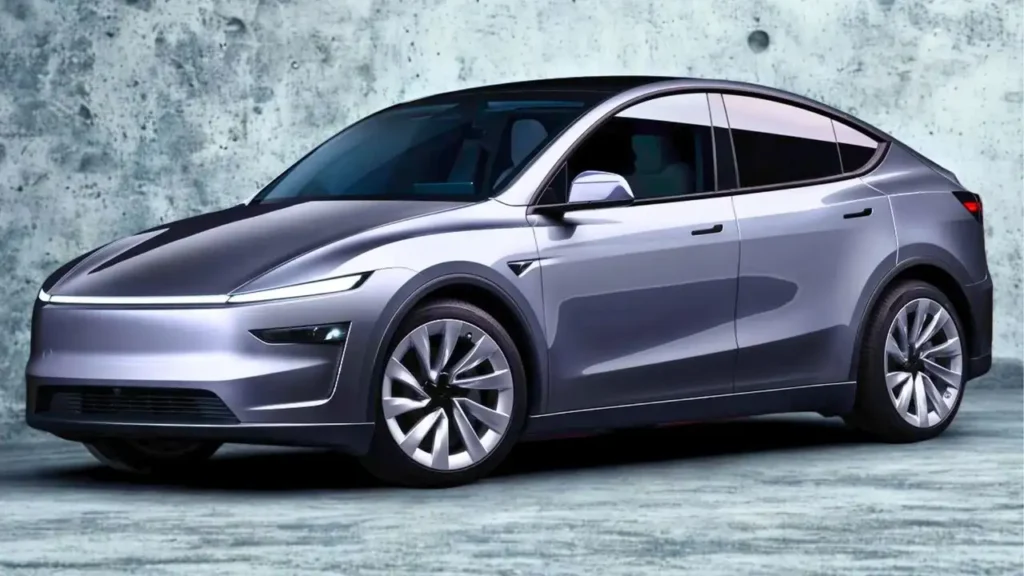
That “cat” was expected to be Tesla’s long-rumored “Model 2”, a $25,000 compact EV that would disrupt the market and open up a new chapter in affordable electric mobility. Instead, Musk confirmed the upcoming vehicle is simply a more affordable version of the existing Model Y — the company’s global best-seller.
So, What Exactly Is Tesla’s “Cheaper EV”?
Tesla began initial production of the cheaper Model Y variant in June 2025, with mass production expected in the second half of the year, according to the company’s earnings release.
The new variant is not a revolutionary redesign, but rather a cost-reduced trim of the same Model Y we already know. It’s expected to feature cheaper materials, potentially a smaller battery, and scaled-back interiors — think cloth seats, fewer software features, and no frills.
“The desire to buy the car is very high. Just people don’t have enough money in their bank account,” Musk said. “So the more affordable we can make the car, the better.”
Tesla’s Lars Moravy, Vice President of Engineering, said that volume production won’t ramp up meaningfully until late Q4, noting the company will keep pushing current models to avoid complexity during Q3 — especially as the $7,500 EV tax credit is set to expire after September 30.
Table of Contents
How Much Cheaper Will It Be?
Right now, the base Model Y starts at $44,990 (before incentives). Industry watchers believe the cheaper variant could land closer to $35,000, making it one of Tesla’s most accessible vehicles to date.
That price point could allow Tesla to unlock an entirely new customer base—but whether it will be enough to reignite growth remains to be seen.
Why Tesla Needs This EV Now More Than Ever
Tesla’s recent performance shows a clear loss of momentum. The company has struggled with:
- Declining deliveries of core models like the Model 3 and Model Y
- Underwhelming performance of its Cybertruck, with sales dropping 50% to just 4,300 units last quarter
- Slowing EV demand growth in the U.S. and abroad
- The looming expiration of the federal EV tax credit
Unlike competitors like Toyota, Volkswagen, or General Motors—who offer broad vehicle lineups across multiple price points—Tesla remains highly dependent on two models: the Model 3 and Model Y.
Without a compelling, lower-cost offering, Tesla risks being boxed out of a price-sensitive market that is now crowded with well-equipped alternatives from BYD, Hyundai, and even Ford.

Will This “Cheaper” Model Y Be Enough?
Musk’s confirmation squashes hopes for a groundbreaking new Tesla hatchback or a uniquely small, urban EV. While it may disappoint fans expecting innovation, it may prove a smart, pragmatic strategy to optimize existing production lines without incurring massive R&D or manufacturing costs.
Tesla has done this before — launching a stripped-down Model 3 variant in Mexico and a Model Y L with a third row in China earlier this year. This upcoming Model Y variant, rumored internally as Project E41, appears to be a continuation of that strategy.
Still, analysts remain cautious. A cheaper car might boost short-term sales, but can it solve Tesla’s bigger problems—from global competition to political controversy surrounding its CEO?
The Bottom Line
Tesla’s cheaper EV is not a new Tesla, it’s just a more accessible Model Y. And while that may seem underwhelming, it could be just what the company needs to survive a turbulent phase in the EV industry.
The question is, will this move help Tesla reclaim its dominance — or is it simply a temporary patch on deeper structural issues?
For more Update http://www.dailyglobaldiary.com








Business
Kohl’s Says ‘No More Store Closures’… CEO Breaks Silence After Dozens Shut Down
After a wave of shutdowns last year, the retail giant signals stability—but falling sales still raise questions about its future.

For months, uncertainty surrounded one of America’s most recognizable retail chains. Now, there’s finally some clarity.
Kohl’s has announced that it does not plan to shut down any additional stores in 2026—offering a sense of relief to employees, investors, and loyal shoppers who feared a deeper retail contraction.
The update comes after the company made headlines in early 2025 for closing 27 stores across 15 states, a move that sparked widespread speculation about the brand’s long-term survival in an increasingly digital-first shopping era.
“No Grand Plan to Close or Expand”
Speaking about the company’s direction, CEO Michael J. Bender made it clear that Kohl’s is entering a phase of consolidation rather than expansion.
“I would not anticipate any sort of grand plan of saying we’re taking stores out or adding stores,” Bender said, emphasizing that the focus has shifted inward—toward improving the stores that already exist.
Instead of chasing aggressive growth or cutting back further, the company is choosing a more measured path: optimizing performance, improving customer experience, and boosting productivity across its current footprint.
A Retail Giant Still Standing Strong
Despite recent challenges, Kohl’s still operates approximately 1,150 stores across the United States—a number that reflects both its scale and resilience.
More importantly, over 90% of these stores remain profitable, according to company leadership. In an era where brick-and-mortar retail continues to battle e-commerce dominance, that statistic offers a rare glimmer of stability.
Yet, the numbers tell a more complicated story.

Sales Decline Still a Concern
Kohl’s latest financial results paint a mixed picture. The company reported a 3.9% drop in fourth-quarter net sales, alongside a 2.8% decline in comparable sales. Looking at the full fiscal year, net sales fell by 4.0%, with comparable sales down 3.1%.
These figures highlight the ongoing pressure traditional retailers face as consumer behavior continues to shift.
From fast-fashion giants to online marketplaces like Amazon, competition has intensified, forcing legacy brands like Kohl’s to rethink their strategies.
Resetting the Business for the Future
Despite the dip in sales, Bender remains cautiously optimistic.
He described the past year as a period of “resetting” the company’s foundation—a time focused on restructuring operations, streamlining processes, and preparing for long-term stability.
“We are ending 2025 in a stronger position than we started,” he noted, suggesting that the company’s internal changes are beginning to take effect.
Rather than reacting impulsively to market pressures, Kohl’s appears to be taking a deliberate approach—prioritizing operational strength over rapid expansion or drastic downsizing.
A Shift in Retail Strategy
This shift reflects a broader trend across the retail industry.
Instead of opening new locations or aggressively closing underperforming ones, many retailers are now investing in improving existing stores—enhancing in-store experiences, integrating digital tools, and optimizing inventory management.
Kohl’s strategy aligns with this evolving mindset: stability first, growth later.
What It Means for Shoppers and Investors
For customers, the message is simple—your local Kohl’s store is likely here to stay, at least for now.

For investors, however, the story is more nuanced. While the absence of new closures signals confidence, declining sales remain a key concern that could influence future decisions.
The coming months will be critical in determining whether Kohl’s can translate its “reset” strategy into tangible growth.
The Road Ahead
Retail is no longer just about products—it’s about experience, convenience, and adaptability.
Kohl’s seems to understand that.
By choosing to stabilize rather than expand or shrink, the company is betting on its ability to evolve from within. Whether that bet pays off will depend on how effectively it can reconnect with modern consumers.
For now, though, one thing is clear: the era of rapid store closures—at least for Kohl’s—may be over.
For More Update – DAILY GLOBAL DIARY
Business
Canal+ CEO Says They Enter 2026 With ‘Strength and Confidence’ But the Sky Drama Deal and Secret AI Partnerships With OpenAI and Google Are Only Half the Story…
The French media giant is quietly reshaping the future of global streaming — with a blockbuster English-language content alliance, artificial intelligence deals with two of the world’s biggest tech firms, and a CEO who sounds like he’s just getting started.


There are moments in the media industry when a single announcement tells you everything about where the wind is blowing. And then there are moments like this — when a company drops three major strategic moves in one breath and dares you to keep up.
Canal+, the French pay-television powerhouse that has spent the last several years quietly building itself into a genuinely global content force, has kicked off 2026 with a set of announcements that should have every streaming executive in London, Los Angeles, and Silicon Valley paying close attention. A new English-language drama partnership with Sky, an artificial intelligence deal with OpenAI, and a separate cloud and AI arrangement with Google Cloud — all unveiled in the same strategic breath.
“We begin 2026 from a position of strength, clarity and confidence,” said Maxime Saada, the CEO of Canal+. “We now move into the execution phase of our strategy.”
That quote, measured and deliberate as it sounds, is actually quite significant. Because for Canal+, this is not the beginning of ambition — it is the moment ambition becomes action.
ALSO READ : “She Never Made It Out…” Albany House Fire Claims Woman’s Life as Family Pleads for Help to Bring Her Home
The Sky Partnership: A Bold Bet on English-Language Drama
For a French broadcaster, English-language drama is both a natural frontier and a historically tricky one to crack. The global appetite for prestige television — the kind of slow-burn, character-driven, visually rich drama that defines the modern golden age of streaming — is insatiable. But producing it, or co-producing it at the level required to compete with HBO, Netflix, and Apple TV+, requires partners with deep roots in the English-speaking world.
Enter Sky — the pan-European broadcasting giant that has quietly built one of the most respected drama production operations outside of America. Sky’s original content arm has delivered acclaimed series that punch well above their budget weight, earning international recognition and building loyal audiences across the UK, Germany, and Italy.
The details of the Canal+–Sky drama partnership have not been fully disclosed, but the intent is clear: combine Canal+’s financial muscle, its subscriber base across Africa, Europe, and beyond, and its content ambitions with Sky’s proven English-language production expertise. The result, if executed well, could be a genuinely formidable challenger to the American streaming giants in the prestige drama space.
For British and European television professionals, this is a significant moment. It signals that the era of American dominance in high-end English-language drama is not unchallenged — and that European broadcasters, working together rather than competing, might finally have found a model that works.
The AI Factor: OpenAI and Google Cloud Enter the Picture
If the Sky partnership is about content, the AI deals are about infrastructure — and increasingly, in the media industry, infrastructure is everything.
Canal+’s agreement with OpenAI and its separate arrangement with Google Cloud signal a broadcaster that is thinking seriously about what the next five years of media production, distribution, and personalisation actually look like. And the answer, it seems, involves artificial intelligence at every layer.

What might that look like in practice? Consider content discovery — the painfully unsolved problem of helping subscribers find what they actually want to watch among thousands of hours of programming. AI-driven recommendation engines, trained on viewing behaviour and content metadata, are already better than human curation at this task, and they are improving rapidly. Canal+ working with OpenAI could mean smarter, more personalised discovery tools that reduce churn and increase engagement — the two metrics that determine survival in the streaming wars.
Then there is production itself. Google Cloud‘s infrastructure offers tools for everything from post-production workflows to real-time subtitling and dubbing — capabilities that become critical when you are distributing content across dozens of languages and markets simultaneously. Canal+ operates in francophone Africa, Poland, and multiple other territories, making localisation not a nice-to-have but an operational necessity.
And beyond the practical applications, there is the strategic signal these partnerships send. Aligning with Sam Altman‘s OpenAI and Google — the two most prominent names in the current AI landscape — tells the market that Canal+ is not treating artificial intelligence as a buzzword. They are treating it as a core part of how they will compete.
Maxime Saada and the Long Game
The architect of this moment is Maxime Saada, who has led Canal+ through a period of significant transformation, including its listing on the London Stock Exchange following its separation from Vivendi, the French media conglomerate that was its parent company for years.
That separation was itself a statement of intent — a declaration that Canal+ was ready to be judged on its own merits, its own strategy, and its own results. The London listing gave it access to international capital markets and raised its profile among global institutional investors who might previously have overlooked it as simply a division of a larger French conglomerate.
Saada’s language in this latest announcement — “execution phase” — is the language of a CEO who has spent time building the foundation and is now ready to construct on it. It implies that the difficult internal work — restructuring, strategic planning, partnership negotiations — is largely done, and that 2026 will be defined by delivery rather than design.
That is a high bar to set publicly. But the pieces Canal+ has assembled suggest the confidence may be warranted.
Why This Matters Beyond the Business Pages
Media industry deals of this kind can feel abstract — numbers, partnerships, strategic frameworks that seem removed from what actually ends up on screen. But the Canal+–Sky drama alliance and the OpenAI and Google Cloud agreements will, if successful, have very tangible effects on what audiences watch, how they discover it, and how quickly they can access it in their own language.
For European content creators, these deals represent opportunity — more commissions, more co-productions, more routes to international audiences. For subscribers, they could mean better recommendations, faster localisation, and higher-quality drama. For the broader media landscape, they signal that the streaming wars are entering a new phase: one where artificial intelligence and international partnerships, rather than simply budget size, determine who wins.
Canal+ is not the loudest voice in that conversation. But right now, it might just be one of the most interesting ones.
Business
David Zaslav Was Mocked, Written Off and Called a Failure So How Did He Just Pull Off a $111 Billion Deal That Left the Entire Media Industry Speechless…
The Warner Bros. CEO who spent years absorbing Hollywood’s fiercest criticism has struck a blockbuster merger with David Ellison’s Skydance — and the message it sends about who wins and who gets left behind in the new media order is brutally clear.

There is a particular kind of satisfaction that comes from being underestimated. Ask David Zaslav. For the better part of three years, the chief executive of Warner Bros. Discovery has been one of the most criticised, lampooned, and openly dismissed figures in all of Hollywood. Cancelled films. Shelved projects. Brutal cost-cutting. A streaming strategy that seemed to change direction with every quarterly earnings call. The jokes wrote themselves — and in an industry that runs on perception, the perception of Zaslav was, for a long time, not good.
And yet. Here we are in 2026, and David Zaslav just closed a $111 billion deal with David Ellison — the son of Oracle founder Larry Ellison and the head of Skydance Media — that has fundamentally reshaped the landscape of global entertainment. The people who were laughing are not laughing anymore.
This is a story about a deal. But it is also a story about power, survival, and what the media industry is quietly becoming — something leaner, harder, and far less forgiving for anyone who isn’t already at the very top.
The Deal That Changes Everything
The merger between Warner Bros. Discovery and Skydance Media — valued at approximately $111 billion — is not just the biggest media deal in recent memory. It is a statement about the direction of travel for the entire entertainment industry.
ALSO READ : “She Never Made It Out…” Albany House Fire Claims Woman’s Life as Family Pleads for Help to Bring Her Home
Skydance, under David Ellison‘s leadership, has built a reputation for backing large-scale, commercially reliable content — franchise films, action tentpoles, the kind of reliably profitable IP that studios can build release schedules around. Its portfolio includes co-productions on multiple Mission: Impossible films and Top Gun: Maverick, the latter being one of the most commercially successful films of the last decade. Ellison knows what audiences will pay to see, and he has the financial backing — courtesy of the Ellison family fortune — to act on that knowledge at scale.
Warner Bros. Discovery, meanwhile, owns one of the most valuable content libraries in the history of media. HBO, CNN, DC Comics, Warner Bros. Pictures, Cartoon Network, TNT, Max — the breadth of what Warner controls is staggering. The problem has never been the assets. The problem has been the debt, the integration challenges following the merger of WarnerMedia and Discovery, and the brutal economics of trying to compete in streaming while simultaneously managing a legacy television business in structural decline.
Ellison’s money and Skydance’s operational philosophy — disciplined, commercially focused, unburdened by the legacy costs that have weighed on Warner — could be exactly what the combined entity needs to actually execute on the promise of what Warner’s asset base represents.
Zaslav’s Long Game
To understand why this deal feels like a vindication for Zaslav, you have to understand what the last few years have actually looked like from inside Warner Bros. Discovery.
When Zaslav took over following the WarnerMedia–Discovery merger in 2022, he inherited a company carrying approximately $50 billion in debt. The streaming wars were at their most intense and most expensive. Netflix had just reported its first subscriber loss in a decade, sending shockwaves through an industry that had been spending recklessly on content in the belief that growth was infinite. Disney was haemorrhaging billions through Disney+. Apple and Amazon were throwing money at content with the casualness of companies for whom entertainment is a side project rather than a core business.

Zaslav made a calculation that most of his peers were too scared — or too invested in the prevailing wisdom — to make: that the streaming land-grab model was unsustainable, that profitability had to come before scale, and that a company carrying $50 billion in debt could not afford to keep spending like it had no debt at all.
The decisions that flowed from that calculation were painful and unpopular. Cancelling completed films rather than releasing them — a move that generated enormous controversy and genuine outrage from filmmakers — was part of a tax and write-down strategy that made financial sense even as it made terrible headlines. Merging HBO Max and Discovery+ into a single platform. Cutting staff. Restructuring divisions. Every move was scrutinised, second-guessed, and frequently condemned by an industry that had grown accustomed to a different kind of media mogul — one who led with vision statements rather than balance sheets.
But the balance sheet was always the point. And the $111 billion deal with Ellison is, in no small part, a product of the financial discipline Zaslav imposed during those difficult years. You cannot attract a partner of Skydance’s ambition to a company that is drowning in unmanaged debt and operational chaos. Zaslav made Warner Bros. Discovery a viable partner. That is what all those painful decisions were ultimately for.
The Bigger Picture: The Rich Get Richer
Step back from the personalities and the deal mechanics for a moment, and what this merger actually represents is something more structural and, frankly, more concerning for the broader health of the media industry.
The entertainment landscape is consolidating at a pace and scale that would have seemed extraordinary even a decade ago. Comcast, which owns NBCUniversal and Sky, is a behemoth. Disney controls Marvel, Lucasfilm, Pixar, National Geographic, and one of the most powerful distribution networks on the planet. Paramount has its own merger conversations ongoing. Sony continues to operate as a major independent force.
And now Warner Bros. Discovery and Skydance will combine into something even larger, even more capitalised, and even more capable of absorbing the kind of losses that would destroy smaller competitors.
What does this mean for everyone else? Largely, it means getting squeezed. Independent studios face a marketplace where the companies buying their content, distributing their films, and competing for their talent are bigger, richer, and more strategically coordinated than ever before. Streaming platforms that cannot reach the scale of Netflix or the combined Warner–Skydance entity will struggle to justify their content spend to investors. Creators who are not attached to major franchise IP will find it harder to get projects greenlit at the budgets those projects deserve.
The consolidation logic is, from a pure capital perspective, entirely rational. Scale reduces costs, increases negotiating leverage, and creates the kind of financial resilience that allows companies to weather the inevitable downturns in content performance. But the cultural costs are real. Diversity of ownership tends to produce diversity of content. When fewer and fewer companies control what gets made and how it gets seen, the range of stories available to audiences — and the range of voices given the resources to tell them — narrows accordingly.
What Comes Next
David Ellison will take a significant leadership role in the combined company, bringing with him both the Skydance operational culture and the financial resources that come with the Ellison family backing. Zaslav is expected to remain central to the transition, though the longer-term leadership structure of the merged entity will be one of the most closely watched questions in Hollywood over the coming months.
For Warner’s creative divisions — and particularly for HBO, which remains the crown jewel of the entire enterprise — the key question is whether the merger accelerates or inhibits the kind of bold, auteur-driven programming that has made the brand synonymous with prestige television. Skydance‘s commercial instincts and HBO‘s creative independence have not always pointed in the same direction. How that tension gets managed will determine whether this deal ultimately serves audiences or merely shareholders.
But for David Zaslav, whatever comes next, the verdict on this chapter of his career has already been rendered — not by the critics, not by the industry gossips, not by the Hollywood trades that spent three years cataloguing his every misstep. It has been rendered by a $111 billion deal that nobody saw coming.
The last laugh, it turns out, is the only one that counts.

Russell T Davies Says ‘You’re Queer in 2026, You’re a Political Act’ — and His New Show ‘Tip Toe’ Is His Most Furious, Personal Work Yet…

Netflix’s Ted Sarandos Turns to Europe After Warner Deal Collapse… and Sends a Subtle Message to Regulators

The Writers of ‘Paradise’ Debated Hard Before Giving You That Jaw-Dropping Moment Early — Here’s Why They Finally Said ‘Do It…’

Rajasthan Royals Sold for Record $1.63 Billion — IPL’s First $1 Billion Franchise, Meet New Owner Kal Somani

Spencer Johnson Ditches PSL, Joins CSK for IPL 2026 — PCB Threatens Legal Action as Player Exodus Continues

1-Iran Issues Dire Warning to Israel and Defies Trump on Nukes: “We’re Ready to Strike Deep Inside”

Donald Trump’s net worth reveals the fortune behind the former US President and business mogul

“She Never Made It Out…” Albany House Fire Claims Woman’s Life as Family Pleads for Help to Bring Her Home

Caitlin Clark Sidelined with Quad Strain, Set to Miss Two Weeks of WNBA Action

“Tomás Rodríguez Net Worth 2025: Panama’s Gold Cup Goal‑Machine’s Surprising Fortune Revealed”

Miss Jamaica Suffers Terrifying Fall Off Miss Universe Stage; Rushed to Hospital on Stretcher in Viral Video

Moana Live-Action Teaser Sparks Outrage as Fans Call Disney’s Move a ‘Clear Money Grab’ — What Went Wrong?

Ryan Gosling’s Project Hail Mary Trailer Stuns Fans with a Mysterious Alien Ally and a Mission That Could Save Earth

Apple delays Jessica Chastain thriller The Savant about domestic extremism after recent US violence

Avatar 3, Fire and Ash trailer reveals Jake Sully’s family facing terrifying new Na’vi enemies with deadly fire powers
-

 Entertainment5 days ago
Cannes 2026 Hasn’t Announced a Single Film Yet — But the Whisper Network Is Already Pointing to These Names and It’s Exciting…
-

 Entertainment6 days ago
Amy Poehler and Sterlin Harjo Are Getting One of Television’s Highest Honours — and the Reason Why Says Everything About Where Storytelling Is Headed…
-

 Entertainment5 days ago
Almodóvar, Lars von Trier, Joel Coen and More — The Films That Could Own Cannes 2026 Are Already Generating Serious Buzz and the List Is…
-

 Entertainment1 week ago
Oscars 2026 Red Carpet Shockers: Zendaya’s Late Arrival, Jessie Buckley’s Grace Kelly Tribute… and Chase Infiniti Owning the Night
-
 Entertainment1 week ago
The Oscars Are Already Being Called Before They Happen and Scott’s Final Feinberg Forecast Reveals a Shocking Front-Runner That Nobody Saw Coming…
-

 Politics1 week ago
“Trump Reveals ‘Early Stage Breast Cancer’ Diagnosis of Susie Wiles… But Says Her ‘Strength Says Everything’”
-

 Entertainment5 days ago
Lollapalooza 2026 Just Dropped Its Most Surprising Lineup Yet — and the One Historic Thing Nobody Is Talking About Is the Real Story…
-

 Health1 week ago
“Kent Meningitis Tragedy: Second Student Dies as Outbreak Sparks Hospital Emergency…”