
World News
Ukraine war day 1296 Cheap Gerbera drones spark Poland crisis with 7 shocking revelations
Zelenskyy slams allies for “statements but no action” as Russia’s plywood-made Gerbera drones violate Poland’s skies.

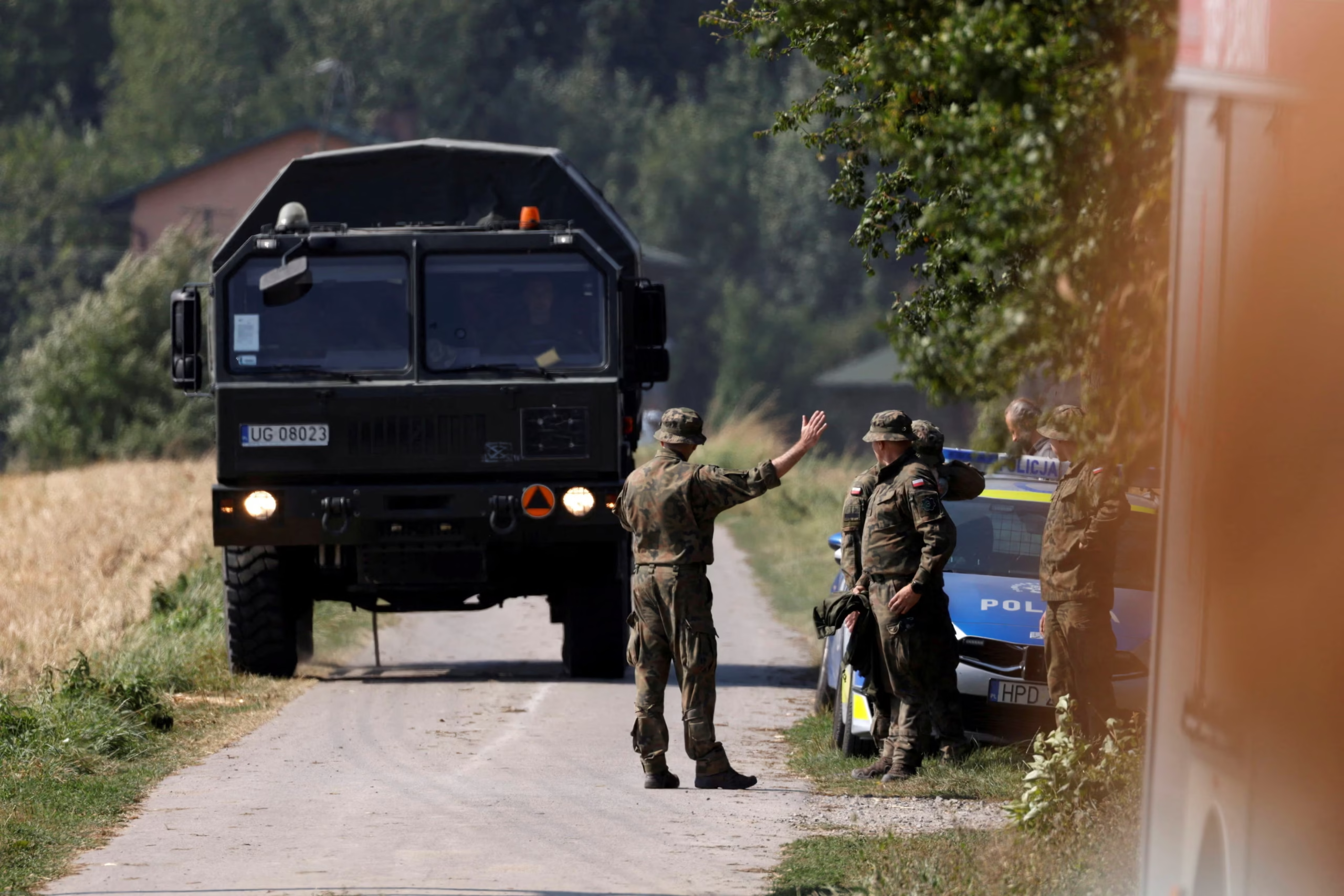
The Ukraine war has entered day 1,296 with another dangerous escalation—this time inside the airspace of Poland, a NATO member. According to Polish military officials, drones that crossed the border on Wednesday included Russia’s Gerbera UAVs, a cheap plywood-and-foam aircraft similar to Iran’s Shahed drones.
The incident is being described as one of the most unsettling developments since Russia’s invasion of Ukraine began in 2022. The use of these drones, sometimes as decoys and sometimes as flying bombs, raises fresh questions about Russia’s strategy and NATO’s response.
What is the Gerbera Drone?
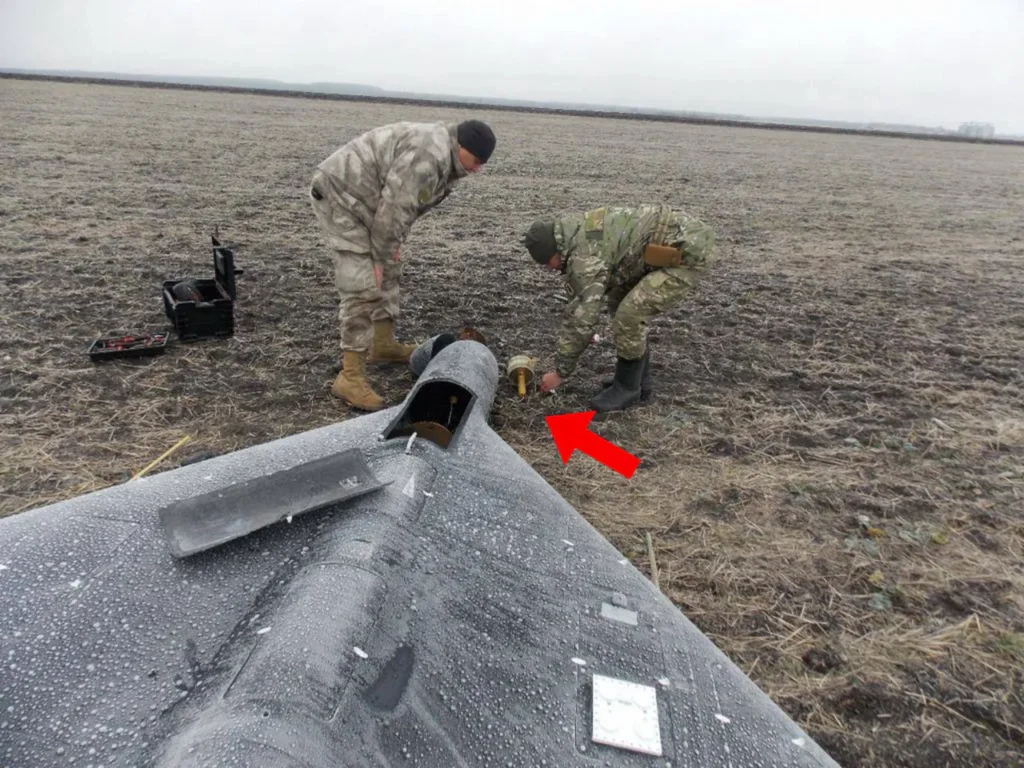
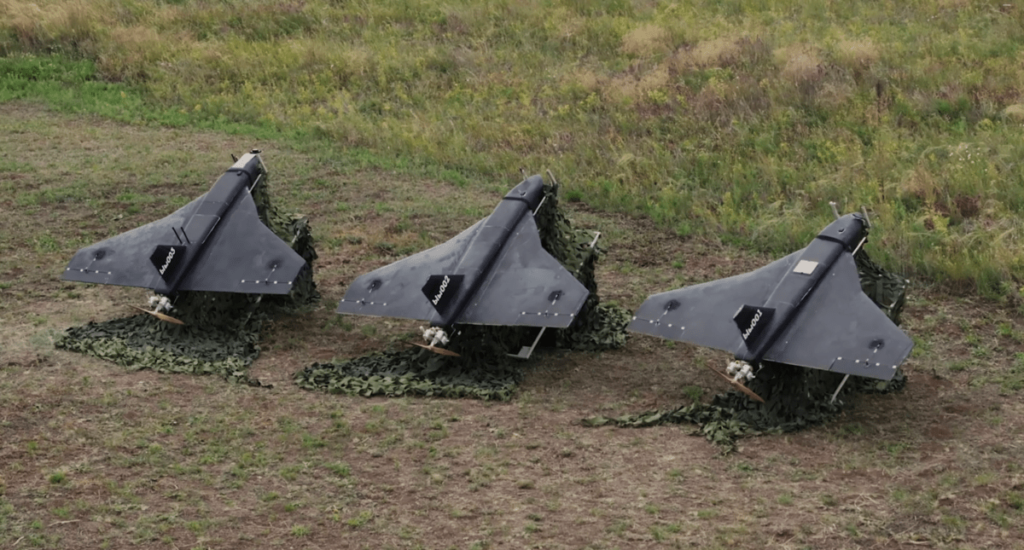
The Gerbera UAV is a low-cost, long-range drone reportedly assembled in Yelabuga, Russia, using kits supplied by a Chinese manufacturer. Made largely from plywood and foam, it is powered by a small rear motor and propeller. Its crude design is deceptive—Ukrainian intelligence says it can be fitted with a small warhead or used for reconnaissance.
Western analysts note that Russia often deploys Gerbera drones in swarms to overwhelm Ukrainian air defenses. This mirrors tactics already seen with Iranian-supplied Shahed drones. Despite China’s denial, shipments of components have been documented, and smuggled electronics from US and European firms have been discovered in downed drones.
Zelenskyy’s Anger
In his daily address, Volodymyr Zelenskyy delivered one of his sharpest rebukes of western leaders yet.
“There have been more than enough statements, but so far there has been a lack of action,” Zelenskyy said. “The Russians are testing the limits of what is possible. They are recording how NATO countries react.”
Zelenskyy reiterated his call for a joint European air shield, insisting only coordinated defenses can protect against future waves of drones. He warned that if dozens have already appeared, “no one can guarantee there won’t be hundreds.”
European Reactions
German defense minister Boris Pistorius told parliament that the drones’ flight path was deliberate:
“There is absolutely no reason to believe this was a course correction error. They were armed and could have caused damage at any time.”
Meanwhile, the UK’s defense secretary John Healey announced Britain will mass-produce low-cost interceptor drones, based on Ukrainian designs, to help counter Russian UAV attacks. The announcement will be detailed at the DSEI arms trade show in London, following talks with defense officials from Poland, Italy, France, and Germany.
Trump vs. NATO Allies
In the United States, reactions were split. President Donald Trump posted on social media:
“What’s with Russia violating Poland’s airspace with drones? Here we go!”
His comment appeared to downplay the seriousness, compared with strong statements from European leaders and even his own ambassador to NATO, Matthew Whitaker, who declared: “We stand by our NATO Allies and will defend every inch of NATO territory.”
The Oil Sanctions Puzzle
Beyond drones, the war is hitting global energy markets. Analysts say Indian buyers are demanding larger discounts on Russian crude due to sanction risks. Some Russian exporters have threatened to redirect cargoes to China instead.
The European Union lowered its price cap for Russian oil to $47.60 a barrel from $60, while the United States under Trump refused to support the cut. Critics argue sanctions coordination among G7 allies has collapsed. Ursula von der Leyen, the EU Commission chief, hinted at a faster phase-out of Russian fuels.
NATO Strengthens the North
As a direct signal to Moscow, the US State Department approved a $1.07 billion arms sale of advanced air-to-air missiles to Finland, now a NATO member after abandoning decades of neutrality. Congress must still sign off, but the deal underscores NATO’s readiness to bolster defenses along Russia’s border.
Why Poland Matters
Poland has been one of Ukraine’s strongest supporters, hosting millions of refugees and sending tanks and artillery. A violation of its airspace is not just a technical breach—it is a geopolitical alarm bell. The Gerbera drones may look like toys, but NATO leaders know they could be carrying deadly payloads.
This incident also coincides with Russian-Belarusian military drills in Belarus, raising fears the exercises could be dress rehearsals for further escalation.
Final Word
Day 1,296 of the Ukraine war reminds the world that this conflict is far from “frozen.” From cheap plywood drones to billion-dollar missile sales, the stakes keep rising.
For Zelenskyy, the message is urgent: Europe must move from statements to action. For NATO, the challenge is clear—how to respond to Russia’s creeping provocations without stumbling into a wider war.
Stay with Daily Global Diary for the latest updates, analysis, and frontline reports.








World News
Iran Bombs Qatar’s Ras Laffan and India Is Counting the Cost — ‘88% Import Dependent on Crude Oil, Half on Gas…’
The attack on the world’s largest LNG export facility isn’t just bad news for Qatar — it could hit Indian households, fuel prices, and some of the country’s biggest energy companies harder than anyone expected.


When Iran fired missiles at Qatar’s Ras Laffan Industrial City in retaliation for an Israeli strike on its South Pars gas facility, the shockwaves were felt immediately across global energy markets. But thousands of kilometres away, in New Delhi, Mumbai, and countless Indian households dependent on LPG cylinders and CNG vehicles, a quieter but equally serious crisis is now unfolding.
For India — a nation that imports over 88% of its crude oil and nearly 50% of its natural gas — the attack on Ras Laffan is not a distant geopolitical event. It is a direct hit on the country’s energy jugular.
Why Qatar Matters So Much to India
Let the numbers speak.
Qatar is India’s single largest supplier of LNG and its largest supplier of LPG. In 2024-25 alone, India imported energy from Qatar worth a staggering $11.08 billion — forming the backbone of a bilateral trade relationship worth $14.14 billion in total.
Three Indian companies sit at the heart of this energy dependence:
- Petronet LNG Ltd (PLL) — imports approximately 7.5 million tonnes per annum (MTPA) of LNG from Qatar
- GSPC — imports 1 MTPA of LNG from Qatar
- GAIL India — imports under 1 MMTPA of LNG from Qatar
Beyond LNG, Qatar also supplied approximately 5 million metric tonnes of LPG to Indian firms — including the country’s major oil marketing companies (OMCs). Add to that exports of ethylene, propylene, ammonia, urea, and polyethylene, and the full picture of India’s Qatar dependence becomes starkly clear.
Two Problems — and the Second One Is Far Worse
Before the Ras Laffan strike, India’s energy crisis from the Gulf war was painful but theoretically temporary. The Strait of Hormuz blockade had disrupted transportation — a logistical problem that would ease once the waters reopened.
Now, the calculus has changed entirely.
The damage to the Ras Laffan Gas-to-Liquids facility is a structural problem — not a logistical one. Even when the war ends, India’s gas imports from Qatar will depend on how long it takes to repair and restore the facility. That could take months, not weeks.
As one official put it plainly: “Even after the war ends or eases, problems for India will depend on the extent of damage done by the Iranian strike at Ras Laffan.”

The Domestic Crunch: CNG, PNG and Empty Industrial Pipelines
The impact is already being felt on Indian streets.
India produces about 90 Million Metric Standard Cubic Metres per day (MMSCMD) of natural gas domestically, but consumes approximately 189 MMSCMD. The import shortfall of roughly 30 MMSCMD — previously sourced from Gulf suppliers — has been directly affected by a force majeure declaration from a major Qatari processing facility.
The government has been diverting available natural gas to serve domestic consumers through PNG (Piped Natural Gas) and CNG (Compressed Natural Gas) for vehicles — leaving commercial and industrial consumers facing severe shortages.
Meanwhile, state-run oil marketing companies have already raised LPG rates, and despite the Indian crude oil basket crossing a punishing $146 per barrel, petrol and diesel pump prices are being held artificially — a situation that cannot last indefinitely.
Brent crude, which was already at $103.42 a barrel, surged a further 5.6% to $113.39 in a single afternoon following the Ras Laffan attack — a move that has further widened the gap between international benchmarks and India’s already elevated import costs.
India Scrambles for Alternatives
The government is not sitting still. Indian refiners and energy officials have been actively diversifying procurement away from the Gulf — securing LPG and LNG cargoes from:
United States, Norway, Canada, Algeria — and other non-Gulf sources.
Previously, approximately 60% of India’s LPG came from Gulf nations including Qatar, UAE, Saudi Arabia, and Kuwait, with 40% produced domestically. That ratio is now being urgently rebalanced.
But diversification takes time, involves higher costs, and longer shipping routes — all of which will ultimately be passed on, in some form, to the Indian consumer.
Beyond Energy: The Full Scale of the Qatar Trade Relationship
The damage goes beyond fuel. Qatar is also a significant source of organic chemicals ($369.86 million), plastics ($222.47 million), and fertilisers ($208.4 million) for India.
On the export side, India sends cereals, iron and steel products, machinery, gems and jewellery, vehicles, and electrical equipment to Qatar — a trade lane worth $1.68 billion annually that is now under serious threat.
Key Indian exports to Qatar in FY25 included cereals ($165.03 million), iron and steel articles ($154.04 million), nuclear reactors and boilers ($151.73 million), gems and jewellery ($113.76 million), and vehicles and parts ($95.49 million).
A prolonged war in the Gulf does not just raise petrol prices in Mumbai — it disrupts an entire web of trade, investment, and supply chains that millions of Indians depend on, often without realising it.
The Bottom Line
India finds itself caught in the crossfire of a war it had no hand in starting. The attack on Ras Laffan has transformed what was already a difficult energy situation into a potentially prolonged crisis — one that will test the government’s ability to secure alternative supplies, manage prices, and shield ordinary citizens from the full cost of a conflict raging thousands of kilometres away.
The war in the Gulf is no longer just someone else’s problem. For India, it arrived the moment those missiles hit Ras Laffan.
World News
US F-35 Fighter Jet Makes Emergency Landing After ‘Suspected Iranian Fire’ Mid-Combat Mission — ‘The Aircraft Landed Safely…’
A fifth-generation American stealth jet was flying a live combat mission over Iran when something forced it down — and the US military is now investigating exactly what hit it.

In what could mark a significant and dangerous escalation in the ongoing Iran-US conflict, a United States F-35 fighter jet was forced to make an emergency landing at a US air base in the Middle East on Thursday — after coming under what is believed to be Iranian fire mid-mission.
The incident was first reported by CNN, citing two sources familiar with the matter, and has since sent shockwaves through military and foreign policy circles watching the conflict closely.
What We Know So Far
Captain Tim Hawkins, spokesperson for US Central Command (CENTCOM), confirmed that the aircraft — a F-35 stealth fighter jet, America’s most advanced frontline combat aircraft — was “flying a combat mission over Iran” when it was forced to divert and land.
Hawkins confirmed the aircraft landed safely and added that the incident is currently under investigation.
Two sources familiar with the matter told CNN that the jet came under what is suspected to be Iranian fire — though the exact nature of the fire, whether anti-aircraft artillery, a surface-to-air missile, or another weapon system, has not yet been officially confirmed.
Why This Matters: The F-35 Is Not Just Any Jet
The Lockheed Martin F-35 Lightning II is the most expensive weapons programme in US military history and is considered virtually undetectable by conventional radar systems due to its advanced stealth technology. The fact that one was apparently targeted — and forced to make an emergency landing — raises serious and immediate questions.
If Iran was indeed responsible, it would suggest Tehran either possesses — or has recently acquired — air defence capabilities sophisticated enough to detect, track, and engage an F-35 in active stealth mode. That is not a capability Iran was widely believed to hold.
The development also directly contradicts earlier assessments that Iran’s military infrastructure had been significantly degraded following Operation Midnight Hammer in June 2025.

The Bigger Picture: Escalation at Every Turn
This incident comes amid an already deeply volatile situation. The Trump administration has been conducting active military operations over Iran while simultaneously claiming — through Director of National Intelligence Tulsi Gabbard — that Iran’s nuclear enrichment programme has been “obliterated” and poses no active threat.
Yet US combat jets continue to fly missions over Iranian airspace. And now, one has come back damaged.
President Donald Trump famously said he was “shocked” when Iran struck back after the initial US attacks — despite intelligence reports suggesting retaliation was a likely outcome. The question now being asked in Washington and beyond is: what comes next?
Iranian forces have already targeted US bases across the Gulf region, struck Qatar, Saudi Arabia, the UAE, Bahrain, and Kuwait, and closed the Strait of Hormuz — one of the world’s most critical oil shipping lanes.
A US F-35 being hit — if confirmed — would represent a dramatic new chapter in this conflict.
No Statement from Tehran — Yet
At the time of writing, Iran has not officially claimed responsibility for the incident. However, Iranian officials have repeatedly stated that any military aggression against the country will be met with a direct and forceful response — and the Islamic Republic has a documented history of following through.
The Pentagon and CENTCOM are expected to release further details as the investigation progresses.
This is a developing story. Daily Global Diary will update as more information becomes available.
World News
Noida Man Promised Singapore, Europe, Vietnam Tours — Then Pocketed ₹12 Lakh and Cancelled Every Ticket: ‘He Was Doing This for Years…’

It looked like the perfect holiday deal — Singapore, Vietnam, Nepal, Europe — all packaged neatly, promoted with glossy social media ads, and priced to attract. Hundreds fell for it. But there were no flights, no hotels, and no holidays. Just a man sitting in a Greater Noida apartment, cancelling every ticket he booked and pocketing the refunds for himself.
Noida Cybercrime Police arrested Aditya Raj, 33, from his residence at Amrapali Golf Homes Society in Greater Noida on Tuesday evening, in connection with a travel fraud scheme that allegedly duped victims of nearly ₹12 lakh across multiple states.
How He Did It — And Why It Worked
The scam was deceptively simple. Raj — a native of Bihar — ran targeted advertisements on social media platforms promoting what he called “premium vacation packages” to popular international destinations including Singapore, Nepal, Vietnam, and Europe.
Once victims were interested and confirmed their bookings, Raj would ask them to transfer money directly into his personal bank accounts. The moment the payment cleared, the scheme kicked into its final phase — he would cancel the tickets and claim the refunds himself, leaving victims with nothing but a confirmation message and unanswered calls.
Deputy Commissioner of Police (Cyber) Shavya Goel confirmed the details, stating:
“The accused was running advertisements claiming to offer premium vacation packages” and had been “luring victims through social media” for the past couple of years.
So far, four formal complaints from across the country have been registered against him — though investigators believe the actual number of victims could be higher.
The Arrest: Electronic Surveillance Cracked the Case
Cybercrime officers used a combination of electronic surveillance and local intelligence inputs to zero in on Raj, eventually tracking him to his flat at Amrapali Golf Homes Society in Greater Noida.
At the time of his arrest, police recovered:
- Three mobile phones
- One laptop
The devices are expected to reveal the full scale of his operations — including the bank accounts used to receive payments and process refunds.
The Legal Case Against Him
The case has been registered under multiple sections of the Bharatiya Nyaya Sanhita (BNS) — India’s newly enacted criminal code — including:
- Section 318 — Cheating
- Section 319 — Cheating by personation
- Section 238 — Causing disappearance of evidence or giving false information to screen an offender
Additionally, Section 66 of the Information Technology Act has been invoked, covering computer-related offences — reflecting the online nature of the fraud.

A Growing Threat: Fake Travel Packages on Social Media
This case is far from isolated. Fake travel package scams have been growing rapidly across India, especially on platforms like Instagram, Facebook, and WhatsApp — where anyone can run targeted ads with little to no verification.
The formula is always similar: polished visuals, too-good-to-be-true prices, urgent limited-time offers, and a request to transfer money directly rather than through a verified booking platform.
Cybercrime experts consistently advise travellers to only book through verified and registered travel agencies, use credit cards or payment gateways that offer fraud protection, and always verify IATA registration before handing over money to any travel operator.
How to Protect Yourself
If you come across suspiciously cheap international tour packages on social media, here’s what to check before paying:
- Verify the agency’s IATA registration
- Never transfer money to personal bank accounts
- Search for reviews and complaints on consumer forums like MouthShut or Google Reviews
- Report fraud to the National Cyber Crime Reporting Portal at cybercrime.gov.in or call 1930

Iran Bombs Qatar’s Ras Laffan and India Is Counting the Cost — ‘88% Import Dependent on Crude Oil, Half on Gas…’

‘If Only I’d Had a Word With Trump…’ — The Iran War Is Now Causing a Cricket Ball Shortage in England, and the ECB Is Rattled

US F-35 Fighter Jet Makes Emergency Landing After ‘Suspected Iranian Fire’ Mid-Combat Mission — ‘The Aircraft Landed Safely…’

Noida Man Promised Singapore, Europe, Vietnam Tours — Then Pocketed ₹12 Lakh and Cancelled Every Ticket: ‘He Was Doing This for Years…’

Indian-Origin Man Sital Singh Sentenced to 4 Years for Scamming Elderly Americans Out of Millions — ‘They Lost Everything They Saved…’

1-Iran Issues Dire Warning to Israel and Defies Trump on Nukes: “We’re Ready to Strike Deep Inside”

Donald Trump’s net worth reveals the fortune behind the former US President and business mogul

“She Never Made It Out…” Albany House Fire Claims Woman’s Life as Family Pleads for Help to Bring Her Home

Caitlin Clark Sidelined with Quad Strain, Set to Miss Two Weeks of WNBA Action

“Tomás Rodríguez Net Worth 2025: Panama’s Gold Cup Goal‑Machine’s Surprising Fortune Revealed”

Miss Jamaica Suffers Terrifying Fall Off Miss Universe Stage; Rushed to Hospital on Stretcher in Viral Video

Moana Live-Action Teaser Sparks Outrage as Fans Call Disney’s Move a ‘Clear Money Grab’ — What Went Wrong?

Ryan Gosling’s Project Hail Mary Trailer Stuns Fans with a Mysterious Alien Ally and a Mission That Could Save Earth

Apple delays Jessica Chastain thriller The Savant about domestic extremism after recent US violence

Avatar 3, Fire and Ash trailer reveals Jake Sully’s family facing terrifying new Na’vi enemies with deadly fire powers
-

 Entertainment1 week ago
BBC Boss Finally Explains Why the Racial Slur Was Never Cut From the BAFTA Broadcast — “No One in the Truck Even Heard It…”
-

 Entertainment1 week ago
While Her Brother David Ellison Takes Over Paramount, Megan Ellison Is Quietly Building Something at Annapurna That Hollywood Should Be Very Nervous About…
-

 Sports1 week ago
“Last-Minute Heartbreak for Rayados…”: Juárez Snatch 2–2 Draw as Estupiñán Penalty Cancels Monterrey’s Lead
-

 Entertainment1 week ago
Billy Porter Says He Was “Dead for Three Days” During Secret Health Battle — What He Revealed About Coming Back From the Edge Will Break Your Heart…
-

 Entertainment1 week ago
Pixar Legend Andrew Stanton Is Back Directing Live-Action And He Quietly Admits He Cut a Political Scene That Would Have ‘Changed Everything’… Plus His Toy Story 5 Update Will Make Fans Very Happy
-

 Entertainment1 week ago
Harvey Weinstein Breaks His Silence From Rikers Island and Says ‘I’m Dying Here’ — But His Shocking Promise About Innocence Will Leave You Speechless…
-

 Business1 week ago
ITV’s Ad Revenue Falls 5% and Analysts Are Worried — But Behind Closed Doors, Sky Deal Talks Are Giving Executives a Reason to Stay Very, Very Calm…
-

 Business1 week ago
“Tesla Is Not Going Away…”: After a Rough 2025, A Surprising Data Point Gives Tesla Investors a Reason to Smile