
Entertainment
Universal Music Clears a Major EU Hurdle… But Only After Letting Go of a Key Arm
The world’s biggest music company secures European approval for its Downtown deal — but the green light comes with a strategic sacrifice.


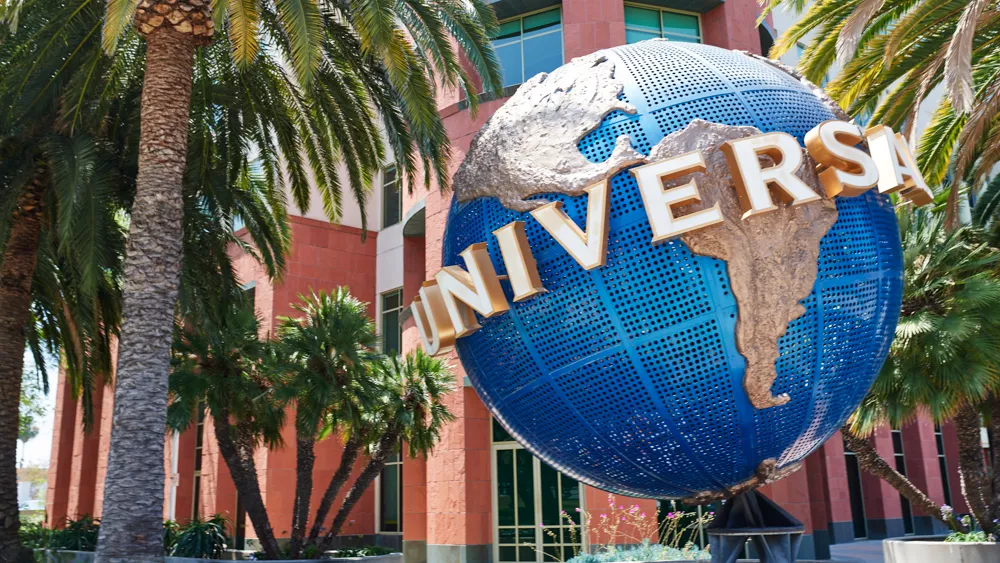
In a move that underscores how closely regulators are watching consolidation in the global music business, Universal Music Group has received approval from the European Union for its proposed deal involving Downtown Music Holdings — but not without conditions.
To secure the EU’s sign-off, Universal Music agreed to sell off its royalty services arm, a concession that highlights growing regulatory concern over market dominance, data control, and artist-facing services in the streaming era.
Why the EU Stepped In
European regulators have become increasingly cautious about large music corporations expanding into adjacent services that influence how artists are paid, tracked, and monetized. Universal’s growing footprint — from recorded music to publishing, distribution, and royalty management — raised concerns about competitive imbalance.
ALSO READ : “She Never Made It Out…” Albany House Fire Claims Woman’s Life as Family Pleads for Help to Bring Her Home
By agreeing to divest its royalty services business, Universal effectively reassured regulators that the Downtown transaction would not concentrate too much power within a single ecosystem.
Industry analysts see this as a clear message: scale alone is no longer enough — transparency and separation of influence now matter just as much.
What the Downtown Deal Represents
Downtown Music has built a reputation as a services-first company, offering publishing administration, distribution, and artist support without operating as a traditional label. Universal’s interest in Downtown reflects a broader shift in the industry, where infrastructure and data are becoming as valuable as hit records.
The EU’s approval suggests regulators are willing to allow strategic expansion — but only when safeguards are put in place to preserve competition and protect independent creators.
A Strategic Trade-Off, Not a Retreat
Universal’s decision to sell its royalty services arm should not be mistaken for a step back. Instead, it appears to be a calculated trade-off: relinquish one segment to strengthen positioning elsewhere.
For Universal, securing EU approval keeps the Downtown deal on track and avoids prolonged regulatory uncertainty — something global investors and partners closely watch.
What This Means for Artists and the Industry
For artists and independent rights holders, the divestment may actually be a positive development. Separating royalty services from a major label reduces the risk of conflicts of interest and reinforces the idea that creator-facing infrastructure should remain competitive and neutral.
More broadly, the decision signals a new regulatory phase for the music business — one where acquisitions are possible, but only if companies demonstrate restraint.
The Bigger Picture
As streaming reshapes how music is created, distributed, and paid for, regulators are no longer focused solely on charts and market share. They are examining systems — who controls the data, who sets the rules, and who benefits long-term.
Universal Music’s EU approval may look like a routine business milestone on paper. In reality, it marks a subtle but significant recalibration of power in the global music economy.
And it’s a reminder that even the industry’s biggest player must sometimes give something up to move forward.







Entertainment
Streaming Shocker: ‘His & Hers’ Knocks ‘Stranger Things’ Off the Top… and the Numbers Tell a Bigger Story
In a surprising ratings twist, His & Hers has overtaken Stranger Things, signaling a quiet but significant shift in what streaming audiences are choosing to watch right now.

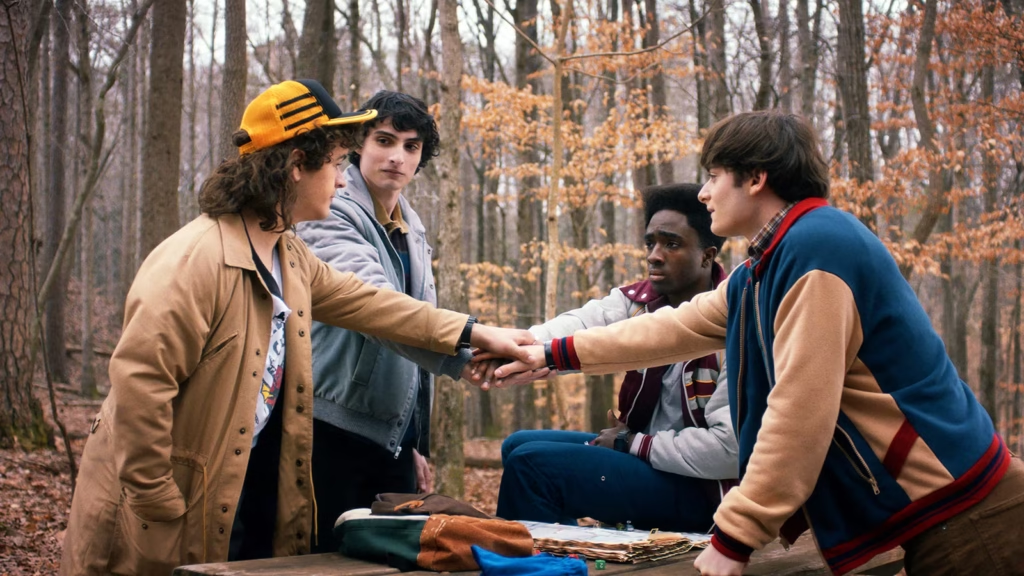
For years, dethroning Stranger Things has felt almost impossible. The series became more than a hit — it was a cultural habit. Yet this week’s streaming ratings delivered a curveball that few saw coming.
According to the latest industry data, His & Hers has surged ahead, overtaking Stranger Things to claim the top spot across key streaming metrics. It’s a moment that says as much about audience behavior as it does about the shows themselves.
A Quiet Rise That Became a Statement
Unlike the heavily marketed juggernaut that Stranger Things has been since its debut, His & Hers rose without deafening promotion. Its ascent has been steady rather than explosive — powered largely by word-of-mouth and viewer curiosity rather than spectacle.
That contrast matters. Streaming audiences, increasingly overwhelmed by blockbuster content, appear to be gravitating toward stories that feel intimate, grounded, and emotionally precise.
ALSO READ : “She Never Made It Out…” Albany House Fire Claims Woman’s Life as Family Pleads for Help to Bring Her Home
What the Ratings Really Reveal
While Stranger Things remains a global phenomenon and a flagship title for Netflix, its temporary dethroning is less about decline and more about diversification. Viewers are no longer anchored to a single franchise. Instead, they are sampling more widely — and rewarding fresh narratives.
Industry analysts note that His & Hers benefited from strong completion rates, repeat viewing, and sustained engagement — metrics that now matter more than opening-week hype.
Why ‘His & Hers’ Connected
At its core, His & Hers leans into character-driven storytelling. It doesn’t rely on nostalgia or visual effects. Instead, it builds tension through perspective, relationships, and moral ambiguity — elements that resonate deeply in an era where viewers want stories that reflect emotional realism.
This shift mirrors a broader trend in streaming: audiences are seeking content that feels personal rather than monumental.
What This Means for Streaming Giants
For platforms like Netflix, moments like this are not setbacks — they’re signals. Signals that viewers are evolving, that algorithms must adapt, and that success can come from quieter, riskier projects as much as from tentpole franchises.
Stranger Things may reclaim the top spot again — history suggests it likely will. But His & Hers has already made its mark by proving that dominance in streaming is no longer permanent.
In today’s attention economy, surprise is the new currency.
Entertainment
Streaming Shocker: ‘His & Hers’ Knocks ‘Stranger Things’ Off the Top… and the Numbers Tell a Bigger Story
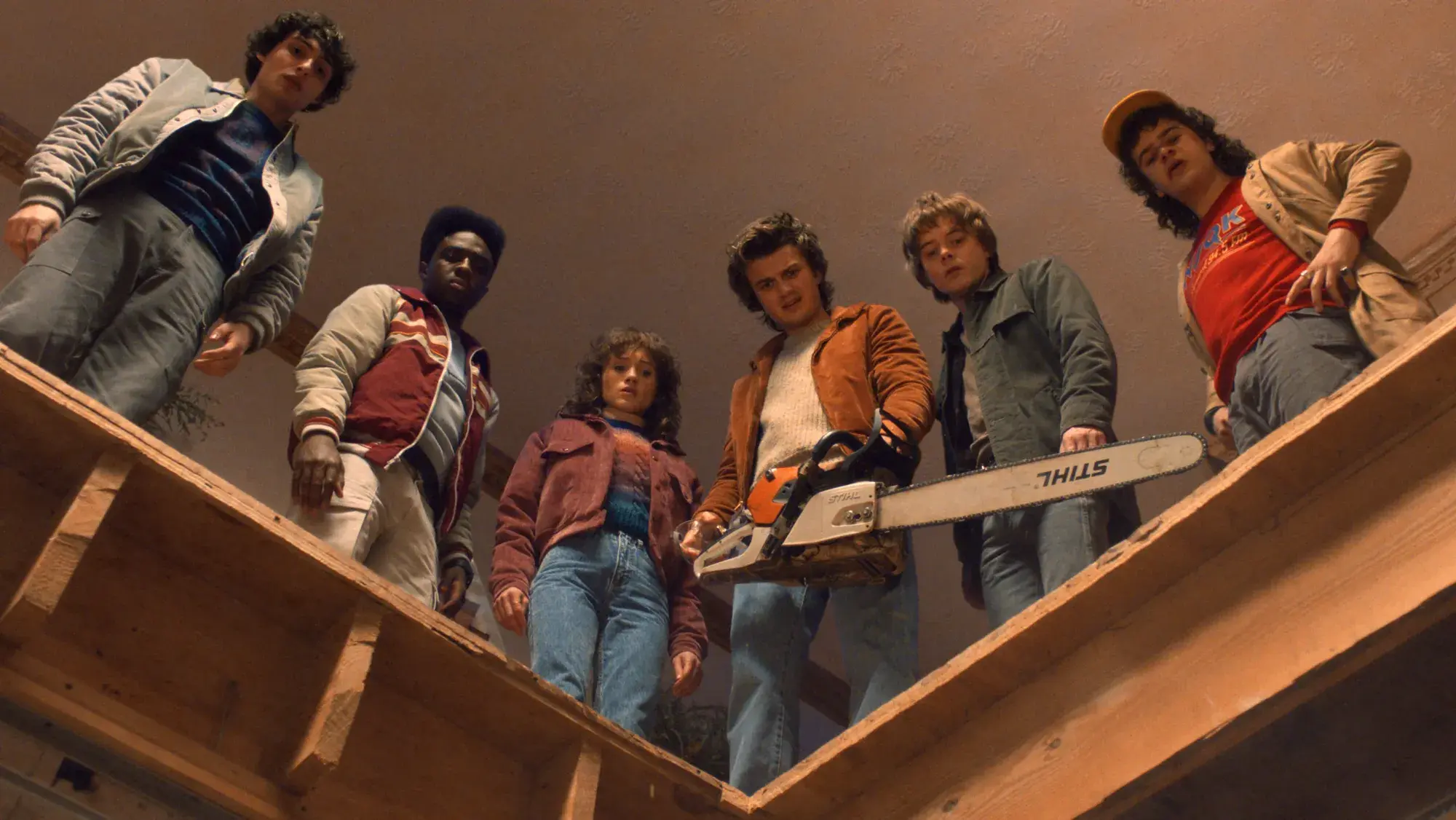
For years, dethroning Stranger Things has felt almost impossible. The series became more than a hit — it was a cultural habit. Yet this week’s streaming ratings delivered a curveball that few saw coming.
According to the latest industry data, His & Hers has surged ahead, overtaking Stranger Things to claim the top spot across key streaming metrics. It’s a moment that says as much about audience behavior as it does about the shows themselves.
A Quiet Rise That Became a Statement
Unlike the heavily marketed juggernaut that Stranger Things has been since its debut, His & Hers rose without deafening promotion. Its ascent has been steady rather than explosive — powered largely by word-of-mouth and viewer curiosity rather than spectacle.
ALSO READ : “She Never Made It Out…” Albany House Fire Claims Woman’s Life as Family Pleads for Help to Bring Her Home
That contrast matters. Streaming audiences, increasingly overwhelmed by blockbuster content, appear to be gravitating toward stories that feel intimate, grounded, and emotionally precise.
What the Ratings Really Reveal
While Stranger Things remains a global phenomenon and a flagship title for Netflix, its temporary dethroning is less about decline and more about diversification. Viewers are no longer anchored to a single franchise. Instead, they are sampling more widely — and rewarding fresh narratives.
Industry analysts note that His & Hers benefited from strong completion rates, repeat viewing, and sustained engagement — metrics that now matter more than opening-week hype.

Why ‘His & Hers’ Connected
At its core, His & Hers leans into character-driven storytelling. It doesn’t rely on nostalgia or visual effects. Instead, it builds tension through perspective, relationships, and moral ambiguity — elements that resonate deeply in an era where viewers want stories that reflect emotional realism.
This shift mirrors a broader trend in streaming: audiences are seeking content that feels personal rather than monumental.
What This Means for Streaming Giants
For platforms like Netflix, moments like this are not setbacks — they’re signals. Signals that viewers are evolving, that algorithms must adapt, and that success can come from quieter, riskier projects as much as from tentpole franchises.
Stranger Things may reclaim the top spot again — history suggests it likely will. But His & Hers has already made its mark by proving that dominance in streaming is no longer permanent.
In today’s attention economy, surprise is the new currency.
Entertainment
“She’s Still Reeling…” Katherine LaNasa Opens Up About the Emotional Cost of Playing ‘Pitt’s’ Most Hyper-Vigilant Character

Some characters move on after the impact. Others carry it with them — quietly, constantly, and painfully. According to Katherine LaNasa, her character in Pitt belongs firmly in the latter category.
In recent reflections on her role, LaNasa described her character as “hyper-vigilant” — a state born not from paranoia, but from trauma. The pivotal punch that altered everything may be in the past, but its psychological echo, she says, is very much alive.
When Trauma Doesn’t Fade With the Scene
LaNasa explains that what makes the role compelling — and unsettling — is the absence of emotional closure. Her character doesn’t experience a neat recovery arc. Instead, she lives in a heightened state of awareness, constantly scanning for danger, reacting before thinking, bracing for impact that may never come.
ALSO READ : “She Never Made It Out…” Albany House Fire Claims Woman’s Life as Family Pleads for Help to Bring Her Home
That realism was intentional.
Rather than portraying trauma as a dramatic event followed by healing, Pitt allows it to linger — shaping behavior, relationships, and self-perception. LaNasa has emphasized that the character is not “broken,” but permanently altered.
Playing the Aftermath, Not the Moment
The punch itself, LaNasa notes, was never meant to be the climax. The aftermath was.
What audiences see now is a woman still recalibrating her sense of safety — someone whose instincts no longer rest. Her posture, tone, and reactions are all informed by a moment her body remembers even when her mind tries to move forward.
It’s a performance built on restraint rather than spectacle — a choice that mirrors real-world trauma responses far more closely than television often allows.
Why the Character Resonates
In an era where television frequently accelerates emotional recovery for narrative convenience, Pitt stands out by refusing that shortcut. LaNasa’s portrayal underscores how violence, even when brief, can reshape identity.

Viewers, particularly those familiar with trauma or high-stress environments, have responded to that honesty. The character’s hyper-vigilance is not exaggerated — it is recognizable.
A Role That Demands Emotional Precision
For LaNasa, the challenge wasn’t intensity — it was consistency. Maintaining a baseline of tension without tipping into melodrama required discipline and empathy.
She has spoken about approaching the role with respect for people who live in that state every day — first responders, survivors, caregivers — individuals whose nervous systems rarely power down.
In Pitt, that truth is not announced. It’s felt.
Still Reeling, Still Standing
The most striking aspect of LaNasa’s performance may be its refusal to offer easy reassurance. Her character survives, functions, even leads — but she does so while carrying the weight of what happened.
And that, LaNasa suggests, is the point.
Some punches don’t end when the fist drops. They linger — shaping who we become long after the bruises fade.

Streaming Shocker: ‘His & Hers’ Knocks ‘Stranger Things’ Off the Top… and the Numbers Tell a Bigger Story

Streaming Shocker: ‘His & Hers’ Knocks ‘Stranger Things’ Off the Top… and the Numbers Tell a Bigger Story

“She’s Still Reeling…” Katherine LaNasa Opens Up About the Emotional Cost of Playing ‘Pitt’s’ Most Hyper-Vigilant Character

Why All Eyes Are Suddenly on Uruguay… Locarno Pro’s ‘First Look’ Signals a Quiet Cinema Shift

Universal Music Clears a Major EU Hurdle… But Only After Letting Go of a Key Arm

1-Iran Issues Dire Warning to Israel and Defies Trump on Nukes: “We’re Ready to Strike Deep Inside”

Donald Trump’s net worth reveals the fortune behind the former US President and business mogul

Caitlin Clark Sidelined with Quad Strain, Set to Miss Two Weeks of WNBA Action

“Tomás Rodríguez Net Worth 2025: Panama’s Gold Cup Goal‑Machine’s Surprising Fortune Revealed”

Elon Musk Breaks Ranks with Trump Over ‘Big, Beautiful’ Tax Bill

Miss Jamaica Suffers Terrifying Fall Off Miss Universe Stage; Rushed to Hospital on Stretcher in Viral Video

Moana Live-Action Teaser Sparks Outrage as Fans Call Disney’s Move a ‘Clear Money Grab’ — What Went Wrong?

Ryan Gosling’s Project Hail Mary Trailer Stuns Fans with a Mysterious Alien Ally and a Mission That Could Save Earth

Apple delays Jessica Chastain thriller The Savant about domestic extremism after recent US violence

Avatar 3, Fire and Ash trailer reveals Jake Sully’s family facing terrifying new Na’vi enemies with deadly fire powers
-

 Entertainment1 week ago
Turning Point USA’s ‘Alternative Halftime’ Sparks Buzz ‘Not Bad Bunny, But a Message…’
-
 Entertainment1 week ago
Keke Palmer Takes on Suburbia ‘Saving the Block Is Easy… Surviving the Neighbors Is Not’
-

 Politics & Government6 days ago
Make Japan Strong Again Sanae Takaichi’s Bold Military Gamble That Could Redefine Asia.
-

 Entertainment5 days ago
NBC Olympics Broadcasters Break Silence on Savannah Guthrie’s Absence: “We Send Our Love and Prayers”
-

 Entertainment1 week ago
“Fight Tooth and Nail or Fade Away”… Indie Film Boss Warns Hollywood Could End Up as ‘Uber Drivers’ for Big Tech
-

 Entertainment1 week ago
Olivia Colman Reflects on Identity ‘I’ve Never Felt Massively Feminine’… and Why Her Honesty Is Resonating Now
-

 Entertainment1 week ago
Bad Bunny Turns Super Bowl Halftime Into a Cultural Takeover ‘No Noise, Just Power…’
-

 Entertainment1 week ago
Odessa A’zion Embraces ‘Crazy’ Roles—and It Might Be Her Breakout Moment