
World News
West Asia Conflict Could Wipe Out $194 Billion as UNDP Warns of Massive GDP Collapse in Arab Nations
GCC economies face the biggest blow as trade, investment, and energy exports take a severe hit


The ongoing conflict in West Asia is no longer just a geopolitical crisis—it is rapidly turning into a full-blown economic disaster. A new report by the United Nations Development Programme (UNDP) has issued a stark warning: Arab economies could lose up to $194 billion in GDP if the conflict continues to escalate.
Titled “Military Escalation in the Middle East: Economic and Social Implications for the Arab States Region,” the report highlights how the war—triggered by attacks involving the United States and Israel against Iran on February 28—is already sending shockwaves across the region.
GDP Set to Shrink Sharply
According to the UNDP, the GDP of Arab countries could contract by 3.7% to 6.0%, translating into losses ranging between $120 billion and $194 billion.
This decline reflects not just immediate disruptions but a broader collapse in investor confidence, reduced capital inflows, and weakening economic activity. The report notes that investment is expected to fall even more sharply than GDP due to heightened uncertainty.
Exports and imports across the region are also projected to drop significantly, signaling a breakdown in both regional and global trade linkages.
GCC Countries to Bear the Brunt
The report identifies the Gulf Cooperation Council (GCC) nations as the hardest hit. These include:
- Saudi Arabia
- United Arab Emirates
- Qatar
- Kuwait
- Oman
- Bahrain
These economies are particularly vulnerable due to their heavy reliance on energy exports and global trade flows.
Strait of Hormuz Disruption a Major Blow
One of the biggest economic shocks has come from disruptions in the Strait of Hormuz—a critical route through which a large portion of the world’s oil and gas shipments pass.
With vessel traffic collapsing and shipments stranded, energy exports from the Gulf have dropped sharply. On top of that, attacks on oil infrastructure such as refineries and storage depots have further limited production capacity.

For countries whose economies depend heavily on oil revenues, this is a devastating setback.
Trade and Investment in Freefall
The UNDP report warns that both cross-border trade and foreign investment are expected to decline dramatically. Businesses are becoming increasingly cautious, delaying or cancelling investments amid fears of prolonged instability.
This slowdown could reverse years of economic progress made by Arab nations, particularly those that had been diversifying away from oil dependency.
Rising Poverty and Social Impact
Beyond economic indicators, the human cost of the conflict is equally alarming. The report estimates that up to 4 million additional people could fall into poverty under high-intensity conflict scenarios.
The impact will be most severe in already fragile regions such as:
- Yemen
- Sudan
These countries, already struggling with economic instability and humanitarian crises, are expected to face even deeper challenges.
A Region at Risk of Long-Term Damage
The UNDP warns that if the conflict continues, the long-term consequences could be far more severe than immediate economic losses. Years of development gains in infrastructure, education, and poverty reduction could be undone.
Analysts believe that even if the conflict ends soon, recovery could take years due to damaged supply chains, reduced investor trust, and ongoing political uncertainty.
What Lies Ahead?
The report serves as a wake-up call for policymakers across the globe. With the potential for nearly $200 billion in losses and millions pushed into poverty, the stakes could not be higher.
As tensions continue to simmer in West Asia, the world is watching closely—not just for political outcomes, but for the economic ripple effects that could reshape the global landscape.


World News
Iran Threatens US Companies From April 1 as Microsoft Google Apple Face Direct Warning
IRGC issues chilling alert targeting 18 American firms in West Asia amid rising geopolitical tensions

Tensions in West Asia have taken a dramatic turn after Iran’s elite military force, the Islamic Revolutionary Guard Corps (IRGC), issued a direct and alarming warning to major American corporations operating in the region.
In a strongly worded statement released on Tuesday, the IRGC declared that it would begin targeting US-linked companies starting April 1, escalating the already fragile situation between Iran and the United States.
18 Major Companies on the Radar
The warning specifically names 18 American companies, many of which are global leaders in technology, finance, and manufacturing. Among those listed are:
- Microsoft
- Apple
- Intel
- IBM
- Tesla
- Boeing
Additional firms such as Dell Technologies, Hewlett Packard (HP), Cisco, Oracle, Meta Platforms, JPMorgan Chase, and General Electric were also included in the list.
According to the IRGC, these companies “should expect destruction of their units” in response to what it described as acts of aggression against Iran.
Deadline Set for April 1
The threat is not vague. The IRGC specified a clear timeline, stating that actions could begin at 8 pm Tehran time on April 1 — which corresponds to approximately 10:30 pm IST in India.
In an unusually direct warning, the group also urged employees of these corporations to leave their workplaces immediately to ensure their safety.
Why Are Tech Companies Being Targeted?
One of the most striking elements of the statement is its emphasis on technology and artificial intelligence firms. The IRGC accused these companies of playing a crucial role in modern warfare, particularly in surveillance, drone operations, and target identification.
Companies such as OpenAI and Anthropic were mentioned alongside Google and Microsoft as key players in advancing AI technologies that could be used in military operations.
While these claims remain contested and unverified, they reflect a growing global concern: the increasing role of AI in defense and conflict scenarios.
West Asia on Edge
The potential impact of these threats is particularly significant in regions like the Gulf, where many of these corporations maintain major offices and operational hubs. Cities such as Dubai and Abu Dhabi host large corporate presences for companies like Microsoft and Apple.
Any escalation could disrupt not only business operations but also regional stability and global markets.
Escalation Triggered by Assassinations
The IRGC’s warning comes in the wake of fresh violence. Earlier in the day, Iran confirmed the death of senior military official Jamshid Eshaghi in a reported US-Israeli airstrike.

Eshaghi, a key figure in Iran’s military financial operations, was previously sanctioned by the United States for allegedly facilitating oil shipments used to fund regional groups. His killing adds to a growing list of high-profile Iranian figures lost in the ongoing conflict.
Among those previously reported killed are Iran’s Supreme Leader Ali Khamenei and influential political figure Ali Larijani, signaling a deepening crisis.
A Pattern of Threats or a Real Turning Point?
While the IRGC has issued similar warnings in the past, analysts note that this time is different. The inclusion of a specific deadline and named corporate targets has raised the level of concern significantly.
Some experts believe the move could be part of a broader psychological strategy aimed at pressuring the United States and its allies. Others warn that even a limited strike could trigger wider retaliation, potentially pulling the region into a larger conflict.
What Happens Next?
As April 1 approaches, governments, corporations, and security agencies are closely monitoring the situation. The stakes are high—not just for the companies involved, but for global stability.
For now, the world watches and waits. Whether this threat materializes into action or remains a strategic warning could define the next chapter in one of the most volatile geopolitical flashpoints of our time.
World News
Iran World Cup Venue Row Ends as FIFA Chief Gianni Infantino Refuses US Schedule Change
Despite political tensions and safety concerns, FIFA confirms Iran will play all Group G matches in the United States

In a firm and decisive move, FIFA has rejected Iran’s request to shift its World Cup venues, putting an end to days of uncertainty and speculation. FIFA president Gianni Infantino made it clear that the tournament schedule will remain unchanged, and Iran’s matches will go ahead in the United States as originally planned.
Speaking during halftime of Iran’s international friendly against Costa Rica in Turkey, Infantino stated,
“The matches will be played where they are supposed to be, according to the draw.”
His statement sends a strong message that global football’s governing body is not willing to alter tournament logistics despite mounting geopolitical pressure.
Iran’s Request and Rising Tensions
Iran had formally requested FIFA to relocate its matches away from the United States, citing escalating political tensions between the two nations since late February. The Football Federation of the Islamic Republic of Iran argued that the current situation could pose safety risks for players and staff.
The request included a proposal to move matches to Mexico, one of the co-hosts of the upcoming World Cup alongside Canada and the United States. The suggestion gained some traction after Mexico’s President Claudia Sheinbaum publicly expressed willingness to host Iran’s fixtures if needed.
However, FIFA remained unmoved.
Donald Trump’s Comments Add Fuel
The controversy intensified after remarks from Donald Trump, who stated that Iranian players would be allowed entry into the United States but questioned whether it would be appropriate given concerns around their “life and safety.”
Although Trump later clarified that there would be no restrictions on players entering the country, Iran’s football chief Mehdi Taj referenced the initial comments while pushing for a venue change.
Despite these developments, FIFA chose to stick strictly to its tournament planning framework.
Confirmed Match Schedule
Iran is placed in Group G and is set to play all three of its group-stage matches in the United States:
- Against New Zealand in Los Angeles on June 15
- Against Belgium in Los Angeles on June 21
- Against Egypt in Seattle on June 27
With FIFA’s latest decision, these fixtures will proceed without any changes.

Infantino’s Confidence in Iran’s Participation
Gianni Infantino struck a reassuring tone while addressing the situation.
“Iran will be at the World Cup. That’s why we’re here. We’re delighted because they’re a very, very strong team,” he said.
He further added that he had personally interacted with the players and coaching staff, emphasizing that everything appeared to be in order.
A Moment of Tribute Amid Tension
While the administrative battle unfolded off the pitch, Iran’s national team made a powerful statement on it. During a recent friendly against Nigeria in Belek, Turkey, players wore black armbands and carried school bags during the national anthem.
The gesture was meant to honor victims of a tragic airstrike that took place on February 28 in Minab, a city in southern Iran. The attack reportedly claimed at least 170 lives, including students and teachers, marking one of the most devastating incidents in the ongoing regional conflict.
Sports vs Politics Once Again
The episode once again highlights the delicate balance between global sports and international politics. While Iran sought a change citing safety concerns, FIFA’s refusal underscores its commitment to maintaining the integrity of the tournament structure.
For now, football takes center stage. But with geopolitical tensions simmering in the background, the spotlight on Iran’s World Cup journey will extend far beyond the pitch.
World News
Warren Buffett Breaks Silence on Bill Gates After Epstein Files Shock Revelation
Billionaire investor hints at strained ties, reflects on Gates Foundation donations and global nuclear risks

In a rare and candid interview, legendary investor Warren Buffett has revealed that he has not spoken to Bill Gates since the latest revelations tied to the infamous Jeffrey Epstein case surfaced.
Speaking to CNBC, Buffett’s remarks have sparked widespread discussion, as they hint at possible strain in one of the most prominent friendships in the business world.
A Silence That Speaks Volumes
When asked directly about his relationship with Bill Gates, Buffett avoided giving a clear answer. However, his admission that the two have not been in contact since the Epstein-related disclosures suggests that things may no longer be the same between them.
For decades, Buffett and Gates were seen as close allies—not just in business but also in philanthropy. Their partnership, especially through charitable initiatives, was often considered a model for billionaire giving.
Reflections on Gates Foundation Donations
Buffett also opened up about his long-standing association with the Bill & Melinda Gates Foundation, to which he has donated billions of dollars over the years.
While he made it clear that he does not regret those contributions, he admitted that he wishes certain events had unfolded differently. This subtle yet significant statement adds another layer of complexity to his relationship with Gates and the foundation.
When asked whether he would continue donating, Buffett said he would prefer to “wait and see what unfolds,” indicating a cautious approach moving forward.
Buffett’s Take on Epstein
Commenting on Jeffrey Epstein, Buffett did not hold back. He described the disgraced financier as someone who had a pattern of exploiting other people’s weaknesses.
His remarks underline the seriousness of the allegations surrounding Epstein and the ripple effects they continue to have on high-profile individuals linked to him.
The renewed scrutiny comes after the release of documents often referred to as the “Epstein files,” which have shed fresh light on past associations between Epstein and several global figures, including Bill Gates.
Beyond the Controversy: A Warning About Global Risks
Buffett didn’t limit his comments to personal relationships. He also shared concerns about the growing dangers in the global geopolitical landscape.

He pointed out that the world has become increasingly risky with the spread of nuclear weapons. Referring to countries like North Korea and Iran, Buffett warned that the situation would be extremely dangerous if more nations acquired nuclear capabilities.
“There was a time when people were deeply worried when only two countries had nuclear weapons,” he noted, referencing the Cold War era dominated by the United States and Russia. “Now there are nine.”
Still Watching the Markets at 95
At 95, Warren Buffett remains deeply engaged with the financial world. Though no longer serving as CEO of Berkshire Hathaway, he continues to monitor investments closely.
He highlighted one of Berkshire’s most successful bets—its massive investment in Apple, which has generated over $100 billion in gains. Apple, he confirmed, remains the company’s largest individual stock holding.
A Friendship Under Question
The evolving dynamic between Buffett and Gates is likely to remain under the spotlight in the coming months. From close collaborators in philanthropy to apparent distance following controversy, their relationship reflects how even the strongest alliances can be tested under public scrutiny.
For now, Buffett’s words leave more questions than answers—but one thing is clear: the ripple effects of the Epstein revelations are far from over.

Russell T. Davies Warns ‘We Are Absolutely Sliding Back’ on Queer Rights — and His New Show Has Something Urgent to Say About It…

Sony Just Bought a Supernatural Thriller That Over 20 Producers Were Desperately Fighting For — and the Plot Will Keep You Up at Night…

Steven Knight Finally Reveals the Tom Hardy Twist He Scrapped From ‘Peaky Blinders: The Immortal Man’ — ‘I Had an Idea Which I Haven’t Really Spoken About…’

‘Shōgun’ Season 2 Is Quietly Building Something Massive — Five New Faces Just Joined the Cast and Feudal Japan Is About to Get Even More Dangerous…

Marvel’s ‘Wonder Man’ Just Got Renewed for Season 2 — and It’s One of the Rarest Things to Ever Happen in the MCU’s Disney+ History…

1-Iran Issues Dire Warning to Israel and Defies Trump on Nukes: “We’re Ready to Strike Deep Inside”

Donald Trump’s net worth reveals the fortune behind the former US President and business mogul

“She Never Made It Out…” Albany House Fire Claims Woman’s Life as Family Pleads for Help to Bring Her Home

“Tomás Rodríguez Net Worth 2025: Panama’s Gold Cup Goal‑Machine’s Surprising Fortune Revealed”

Caitlin Clark Sidelined with Quad Strain, Set to Miss Two Weeks of WNBA Action

Miss Jamaica Suffers Terrifying Fall Off Miss Universe Stage; Rushed to Hospital on Stretcher in Viral Video

Moana Live-Action Teaser Sparks Outrage as Fans Call Disney’s Move a ‘Clear Money Grab’ — What Went Wrong?

Ryan Gosling’s Project Hail Mary Trailer Stuns Fans with a Mysterious Alien Ally and a Mission That Could Save Earth

Apple delays Jessica Chastain thriller The Savant about domestic extremism after recent US violence

Avatar 3, Fire and Ash trailer reveals Jake Sully’s family facing terrifying new Na’vi enemies with deadly fire powers
-
 Entertainment1 week ago
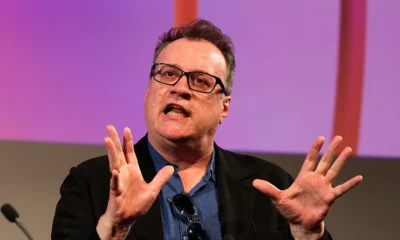
Russell T Davies Says ‘You’re Queer in 2026, You’re a Political Act’ — and His New Show ‘Tip Toe’ Is His Most Furious, Personal Work Yet…
-

 Entertainment1 week ago
Broadway Shake-Up: Samira Wiley Steps Away From ‘Proof’… Kara Young Steps In at the Last Moment
-

 Entertainment1 week ago
A Shocking Shift for ‘Dune 3’: Villeneuve Promises a “Thriller”… With Zendaya & Pattinson at the Center
-

 Entertainment1 week ago
Cardi B vs Slow Sales: Rap Star Warns Canadian Fans Over Threat to Her Perfect Record
-
 Sports1 week ago
NBA Top Shot Lawsuit Settlements Are Hitting Venmo Accounts — And the League Just Set a $165M Salary Cap for Next Season
-

 Entertainment6 days ago
Sean Penn Won His Third Oscar on Sunday — Then Vanished. Now We Think We Know Exactly Where He Was and Who He Was With…
-

 Entertainment1 week ago
Cardi B Fires Warning to Canadian Fans… “Don’t Mess With My Sold-Out Record” as Ticket Sales Lag
-

 Entertainment1 week ago
Broadway Surprise: Samira Wiley Drops Out of ‘Proof’… Kara Young Takes Center Stage