
Crypto
Malaysia plans bold crypto rule change that could let exchanges list tokens without SEC approval
In a sweeping new proposal, Malaysia’s Securities Commission may allow digital asset exchanges to list eligible cryptocurrencies without prior regulatory greenlight


Malaysia may soon become one of the most flexible crypto markets in Southeast Asia. In a surprising shift toward liberalization, the Securities Commission Malaysia (SC) has proposed a major revamp of its cryptocurrency listing framework — one that would allow exchanges to list certain digital assets without prior approval from the regulator.
Announced Monday, the proposed changes are designed to speed up token listings, increase accountability for exchange operators, and widen digital asset offerings for Malaysian investors. The public consultation phase is now open, and the SC is inviting feedback from stakeholders across the crypto industry.
“This aims to accelerate time-to-market, increase operator accountability and widen product offerings,” the commission wrote in its announcement.
Exchanges Could Get the Power to List Certain Tokens
Under the proposed framework, qualified crypto exchanges would have the authority to list specific digital assets — provided those assets meet strict criteria. Key requirements include:
A minimum of one year trading history on a FATF-compliant exchange- A publicly available security audit
- Transparent and traceable tokenomics
If adopted, this approach would shift the regulatory responsibility from pre-approval by the SC to post-listing oversight, making exchanges directly accountable for what they list — a bold regulatory experiment in the region.
High-Risk Tokens Under Scrutiny
While the SC is offering a path toward faster token listings, it’s also drawing a clear red line around higher-risk assets. The regulator is specifically seeking industry feedback on:
- Privacy coins like Monero, which pose challenges for anti-money laundering compliance due to their focus on anonymity
- Memecoins, often driven by internet culture and virality, which tend to exhibit extreme volatility
- Nascent utility tokens that have low market demand, which may leave investors more vulnerable to illiquidity and price manipulation
The SC warned that some of these categories could expose investors to money laundering, terrorism financing, and market instability, and may require special caution or outright restrictions.
New Governance, Custody Rules Coming Too
In addition to the listing reforms, the proposal includes tougher requirements for governance and asset custody:
- Crypto platforms would be required to segregate user assets from company funds
- Exchanges must implement policies for fund protection, including recovery procedures in the event of insolvency
- Each exchange must designate a Malaysia-based senior executive responsible for wallet management and compliance
- Platforms that hold customer funds must either become a registered digital asset custodian or work with one already licensed by the SC
These provisions reflect a growing trend toward institutional-grade risk management in crypto markets.
What This Means for Malaysia’s Crypto Future
Malaysia is already a regional player in the digital asset ecosystem. If these new rules are enacted, the country could become a magnet for token issuers and crypto startups seeking faster, more flexible listing routes. At the same time, the proposal tries to balance innovation with investor protection, particularly around risky or opaque tokens.
The proposal echoes global efforts by other regulatory bodies — including the SEC in the US and the Monetary Authority of Singapore (MAS) — to adapt to the rapidly evolving digital asset landscape. But Malaysia’s willingness to remove the pre-approval barrier could make it a standout.
The public can submit comments on the proposed framework until the consultation period closes later this quarter.


Tech
CoinFund President Slams Basel Rules for Quietly Crippling Crypto Growth
CoinFund president Chris Perkins warns that strict Basel Committee capital rules are driving banks away from crypto, creating a subtle but effective blockade.


Global banking regulators may not be banning crypto outright, but they might be silently choking its growth through rigid capital rules. That’s the warning from Chris Perkins, president of digital investment firm CoinFund, who says current banking standards are making cryptocurrencies “too costly to hold” for major financial institutions.
The Basel Committee on Banking Supervision (BCBS), which designs international banking standards, requires banks to set aside high capital reserves when dealing with crypto assets. According to Perkins, these rules drastically reduce a bank’s return on equity (ROE)—a key measure of profitability—making the economics of offering crypto services unattractive.
“It’s a different type of chokepoint,” Perkins told Cointelegraph. “It’s not direct. It’s a very nuanced way of suppressing activity by making it so expensive for the bank to do activities that they’re just like, ‘I can’t.’”
He added that banks naturally steer capital into high-ROE businesses rather than low-ROE ones, meaning that under the current Basel rules, crypto becomes a financial non-starter for traditional institutions.
Clash Between Old Finance and New Networks
This isn’t the first time Perkins has clashed with regulators. Back in April, he criticized the Bank for International Settlements (BIS)—the so-called “central bank of central banks”—for pushing know-your-customer (KYC) rules and legacy compliance standards onto decentralized finance (DeFi) protocols and stablecoins.
Perkins argued that such measures undermine the core principles of permissionless networks, where anyone can transact without centralized gatekeepers.
He further warned that the real risk to the financial system lies in the asymmetry between old and new infrastructures.
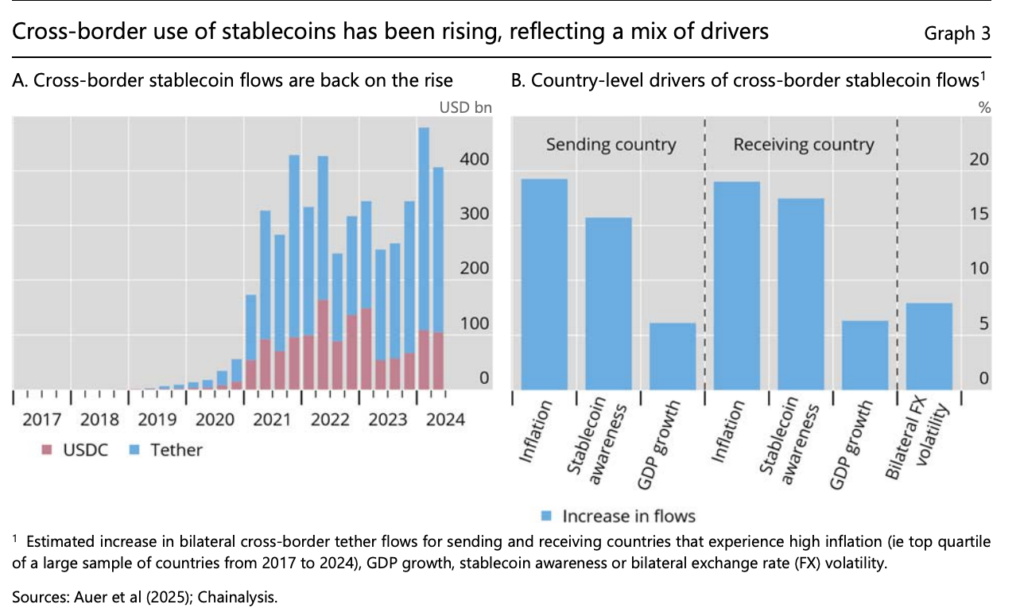
BIS Pushes CBDCs, Rejects Stablecoins
The BIS has consistently taken a hard stance against cryptocurrencies. In an April report, it claimed that digital assets could “destabilize the financial system” and even widen the global wealth gap. By June, the institution doubled down with a report titled “Stablecoin Growth: Policy Challenges and Approaches,” declaring that stablecoins fail as money and could create systemic risks.
At the same time, the BIS has been a loud advocate for central bank digital currencies (CBDCs)—a state-backed alternative to privately-issued crypto.
For crypto advocates like Perkins, this signals a coordinated effort to slow down decentralized networks while fast-tracking centralized digital currencies.
The Bigger Picture
Perkins’ remarks highlight a growing tension between traditional banking regulators and the crypto sector. While no outright bans are in place, the economic disincentives created by Basel’s capital rules could become one of the most effective “chokepoints” for the industry.
As governments and institutions push harder for CBDCs and regulated digital assets, the question remains: Will permissionless crypto survive in a world where holding it is made prohibitively expensive for the very banks that once powered global finance?
Crypto
16 Day Surge Spot Ether ETFs Add 453 Million in Inflows and Investors Say This Is Just the Beginning
Spot Ether ETFs continue their explosive streak with $453 million in inflows led by BlackRock as bullish momentum shows no signs of slowing

In an unprecedented run that has crypto bulls cheering, spot Ether ETFs have now notched their 16th consecutive day of net inflows, with Friday alone contributing a staggering $452.72 million, according to fresh data from SoSoValue. The bulk of that came from BlackRock’s iShares Ethereum Trust (ETHA), which alone pulled in $440.10 million, pushing its total assets under management to an industry-leading $10.69 billion.
The cumulative momentum of spot Ether ETFs has propelled total net assets across all U.S.-based funds to $20.66 billion, now representing 4.64% of Ethereum’s total market cap. With cumulative net inflows reaching $9.33 billion since their launch, Ether ETF adoption is clearly gathering pace—particularly among institutional investors betting big on Ethereum‘s long-term utility in DeFi, staking, and smart contracts.

With surging interest in stablecoins and tokenization, we expect strong ETH ETP inflows for a long time to come,” noted Matt Hougan, Chief Investment Officer at Bitwise, on X earlier this week.
BlackRock Dominates While Grayscale Lags
While BlackRock continues to dominate the leaderboard in the spot Ether ETF landscape, Bitwise’s ETHW trailed far behind with $9.95 million in inflows. Fidelity’s FETH also added a modest $7.30 million. On the flip side, Grayscale’s ETHE saw continued redemptions, logging a $23.49 million net outflow on the day, bringing its cumulative losses to a staggering $4.29 billion.
This divergence in performance among issuers is becoming increasingly pronounced, as investors flock toward more transparent and lower-fee funds offered by BlackRock and Fidelity, while older legacy products like Grayscale’s ETHE lose their shine.
Institutional Demand Outpacing Supply
What’s driving the surge in spot Ether ETFs? Experts say it’s a mix of improved regulatory clarity, Ethereum’s growing dominance in decentralized finance, and a belief that ETH will play a central role in future tokenized financial systems.
Matt Hougan estimates demand for Ether via ETFs and other exchange-traded products (ETPs) could reach $20 billion in the coming year, equivalent to 5.33 million ETH at current prices. That’s particularly significant when compared with Ethereum’s estimated issuance of just 0.8 million ETH in the same time frame — a mismatch that could lead to a supply squeeze.

We’re looking at a scenario where demand may outpace new ETH issuance by nearly 7X, said Hougan.
Spot Ether ETFs Outshine Bitcoin Counterparts
While spot Bitcoin ETFs also posted a rebound with $130.69 million in net inflows on Friday, they trailed Ether funds significantly. Bitcoin ETFs had seen three consecutive days of outflows earlier in the week totaling over $285 million, suggesting some rotation of investor interest toward Ethereum-based products.
Despite this, the cumulative total for spot Bitcoin ETF inflows remains higher, at $54.82 billion, with total net assets standing at $151.45 billion.
However, recent enthusiasm and performance metrics clearly favor spot Ether ETFs, especially as Ethereum’s broader use case continues to attract forward-thinking institutional players.
Will the 16-Day Streak Continue?
With daily inflows still going strong — including peak days like $726.74 million on July 16 — analysts are watching closely to see just how long this bullish streak in spot Ether ETFs can last. Since the streak began on July 2, total net inflows have more than doubled from $4.25 billion to over $9.33 billion.

And with Ethereum’s upcoming ecosystem upgrades, including developments around Layer 2 scaling, restaking, and more robust institutional-grade staking solutions, there’s reason to believe that investor appetite for spot Ether ETFs is far from satisfied.
Final Thoughts
This historic 16-day streak in spot Ether ETFs not only highlights a turning point in crypto investing but also shows how Ethereum’s evolving role in finance is driving real-world demand. While BlackRock leads the charge, the entire industry appears to be gaining ground in reshaping traditional portfolios.
If this trajectory holds, 2025 might just be the year Ethereum goes fully institutional.
Crypto
7 Big Wins as Ether ETFs Celebrate One Year with $16.6 Billion Milestone and Bullish Momentum
Ether ETFs close out their first year with strong inflows and over $16.6 billion in assets, fueling talk of staking and future crypto ETF innovations.

It’s been one year since Ether ETFs officially launched in the United States, and the celebration couldn’t have come at a better time. Marking their anniversary on July 23, the U.S.-based spot Ether ETFs have not only survived the rocky waters of the crypto market — they’ve thrived, now commanding over $16.6 billion in assets under management and locking in an impressive $8.69 billion in net inflows to date.
The U.S. Securities and Exchange Commission (SEC) gave the green light for spot Ether ETFs to trade in July 2024. Since then, major financial players like BlackRock, Fidelity, 21Shares, VanEck, Bitwise, Franklin Templeton, Invesco, and Grayscale have raced into the crypto ETF space with Ethereum-backed products.
And the market is clearly responding. Over the last 14 trading days alone, the funds saw nearly $3.9 billion in continuous inflows — a bullish streak that analysts say may just be the beginning.
“Nearly 1,000 ETFs have launched since these went live, and BlackRock’s Ether ETF leads all of them in inflows,” said Nate Geraci, president of NovaDius Wealth Management, on X. He added that six of the top seven best-ever daily inflows for Ether ETFs happened in just the past two weeks.

Ether ETFs gain serious momentum
The first anniversary was marked with a $332.2 million inflow on July 23 — the seventh-best day in the history of Ether ETFs. Just one week earlier, on July 16, the funds reached a record-breaking single-day inflow of $726.6 million.
That momentum has helped BlackRock’s iShares Ethereum Trust ETF (ETHA) pull in a massive $8.9 billion in net flows, making it the dominant force in the Ether ETF space. In contrast, Grayscale’s Ethereum Trust ETF (ETHE) has faced outflows of around $4.3 billion as its conversion from a trust to an ETF hasn’t been enough to keep investors on board.
“Investors are opting for newer ETFs with lower fees and better NAV tracking,” one analyst told Daily Global Diary. “BlackRock’s dominance just proves institutional confidence is shifting fast.”

Ether still lags behind Bitcoin ETFs
While Ether ETFs have had a stellar year, they’re still in the shadow of their older sibling: Bitcoin ETFs. Approved earlier in 2024, U.S. spot Bitcoin ETFs have raked in nearly $54.5 billion in net inflows, dwarfing Ethereum’s numbers.
Despite this, ETH is trading above $3,600, up 8% over the past 12 months, though still shy of its all-time high near $4,900 set in November 2021. The volatility hasn’t scared off long-term investors, many of whom see Ethereum’s upcoming roadmap — including staking and broader ecosystem growth — as reasons to stay bullish.
Staking could be the next big thing for Ether ETFs
What’s next for Ether ETFs? According to analysts, staking could be the major upgrade that propels the funds into a new growth phase.

The Ethereum blockchain offers rewards for those who lock up their assets to help secure the network — a process known as staking. Several ETF issuers are already pushing the SEC for permission to allow staking within their funds.
Approval could come as early as this month. If it does, it would likely spark another wave of inflows, giving investors access to yield-generating Ethereum exposure directly from regulated financial products.
In fact, the first ETF with staking was launched this month — a Solana-based fund issued by REX Shares and Osprey Funds. If Ethereum ETFs follow suit, it could be a game-changer for passive crypto investors.

“He-Man Wears a Suit…”: Why Nicholas Galitzine’s Masters of the Universe Trailer Has Fans Talking

Camilla Läckberg Isn’t Done Yet… The Queen of Swedish Noir Eyes Film, TV and a Bold Plan to ‘Conquer America’

“Screaming, Crying, Almost Throwing Up”… Sundance Insiders Reveal the Untold Chaos Behind America’s Most Influential Film Festival
From Swedish Noir to Hollywood Dreams Camilla Läckberg Has a Bigger Plan in Motion
When Sundance Nearly Fell Apart Insiders Recall the Chaos Behind the World’s Most Influential Film Festival

1-Iran Issues Dire Warning to Israel and Defies Trump on Nukes: “We’re Ready to Strike Deep Inside”

Donald Trump’s net worth reveals the fortune behind the former US President and business mogul

Caitlin Clark Sidelined with Quad Strain, Set to Miss Two Weeks of WNBA Action

Elon Musk Breaks Ranks with Trump Over ‘Big, Beautiful’ Tax Bill

“Tomás Rodríguez Net Worth 2025: Panama’s Gold Cup Goal‑Machine’s Surprising Fortune Revealed”

Miss Jamaica Suffers Terrifying Fall Off Miss Universe Stage; Rushed to Hospital on Stretcher in Viral Video

Moana Live-Action Teaser Sparks Outrage as Fans Call Disney’s Move a ‘Clear Money Grab’ — What Went Wrong?

Ryan Gosling’s Project Hail Mary Trailer Stuns Fans with a Mysterious Alien Ally and a Mission That Could Save Earth

Apple delays Jessica Chastain thriller The Savant about domestic extremism after recent US violence

Avatar 3, Fire and Ash trailer reveals Jake Sully’s family facing terrifying new Na’vi enemies with deadly fire powers
-
 Entertainment1 week ago
He-Man Wears a Suit Now… Nicholas Galitzine’s ‘Masters of the Universe’ Trailer Drops a Shock Fans Didn’t See Coming
-
 Entertainment1 week ago
Brazil Eyes Oscar History Again… ‘The Secret Agent’ Scores Best Picture Nomination as Wagner Moura Stuns Hollywood
-

 Entertainment5 days ago
“Comedy Needs Courage Again…”: Judd Apatow Opens Up on Mel Brooks, Talking to Rob Reiner, and Why Studio Laughs Have Vanished
-

 Entertainment1 week ago
Oscars Go Global in a Big Way as This Year’s Nominations Signal a New Era: ‘The Academy Is Finally Looking Beyond Hollywood…’
-

 Entertainment1 week ago
“Dangerously Kinky… and Darkly Funny”: Olivia Wilde and Cooper Hoffman Push Boundaries in ‘I Want Your Sex’
-

 Sports1 week ago
A Strong Night for Caleb Williams Ends With Doubts About the Bears’ Late Decisions
-

 Crime5 days ago
Man Accused in Tupac Shakur Killing Asks Judge to Exclude Critical Evidence
-

 Politics1 week ago
Why Bari Weiss Says Pulling a ‘60 Minutes’ Story Was the Right Call — Even If It Looked Radical