
News
Sherrone Moore Jailed Hours After Being Fired as Michigan Head Coach: Investigation Into Alleged Assault Underway
Former Wolverines head coach detained the same night he was terminated for an “inappropriate relationship” with a staff member; police confirm arrest in alleged assault case.

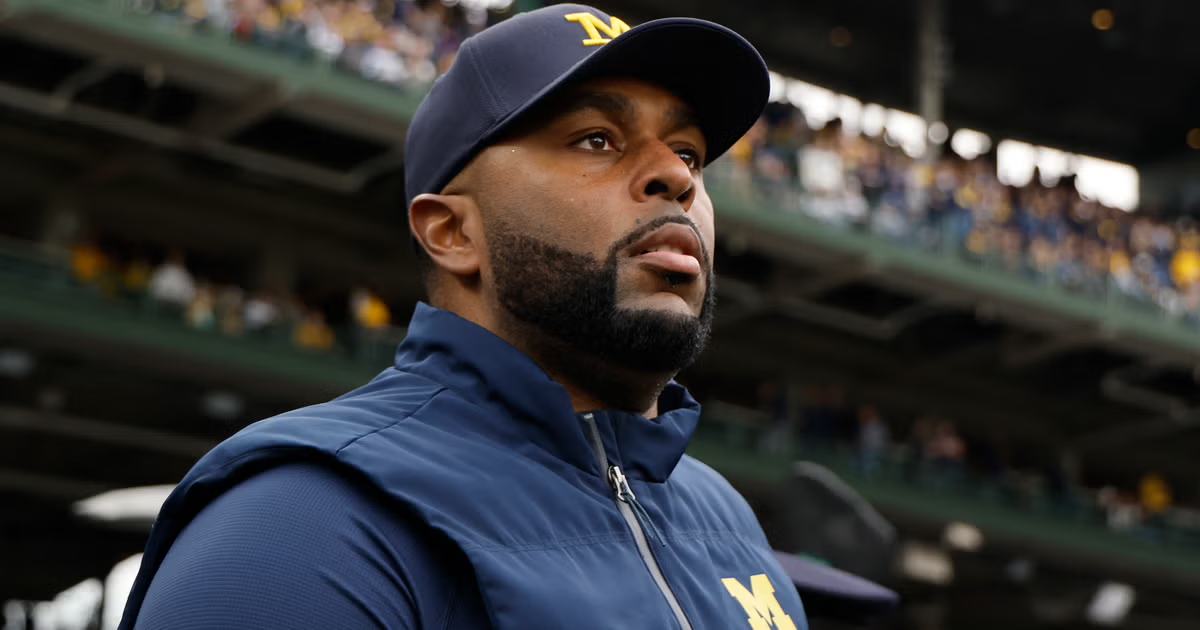
Former University of Michigan head football coach Sherrone Moore found himself behind bars on Wednesday night, just hours after being abruptly fired by the university. According to Washtenaw County Jail records, Moore was booked at 10:11 p.m. ET, and remained in custody through early Thursday morning. As of now, the jail system has not listed any formal charges, bond details, or upcoming court dates.
The unfolding situation has sent shockwaves through the college football world, not only because of Moore’s sudden dismissal but also because of the serious nature of the police investigation that followed.
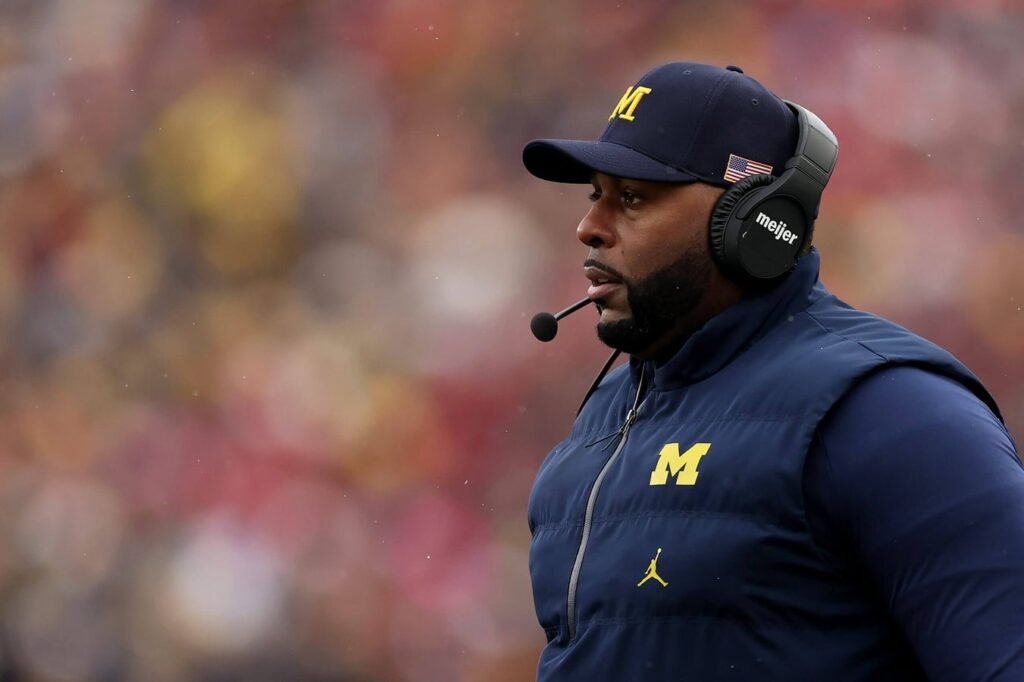
Police Confirm Arrest in Alleged Assault Case
Responding to media inquiries, Pittsfield Township Police released a statement saying officers were dispatched to the 3000 block of Ann Arbor Saline Road to investigate a reported assault.
The statement confirmed:
- A suspect was taken into custody
- The incident “does not appear to be random in nature”
- The investigation remains active
- Police are currently prohibited from releasing additional details
Notably, the press release did not name the suspect. However, ESPN reported earlier Wednesday that Moore had been detained in Saline, Michigan, before being transferred to Pittsfield Township police for further investigation.
Fired With Cause: University Confirms Policy Violation
Sherrone Moore’s arrest came on the heels of his immediate termination from the University of Michigan. In a sharply worded statement, the university announced that Moore was fired “with cause” after an internal investigation found credible evidence that he had engaged in an inappropriate relationship with a staff member.
The statement underscored the institution’s stance:
“This conduct constitutes a clear violation of University policy, and U-M maintains zero tolerance for such behavior.”
The abrupt firing ended Moore’s historic tenure as Michigan’s first Black head football coach, a position he assumed in 2024 after six seasons on the program’s offensive staff.
A Rapid Rise and a Sudden Fall
Moore’s ascent to head coach had been one of the most significant stories in college football. After Jim Harbaugh departed for the NFL’s Los Angeles Chargers’ job, Moore was promoted to lead the Wolverines. His tenure included:
- A 9-3 season record in 2024
- A dramatic win over Ohio State
- A bowl victory against Alabama
Before becoming head coach, Moore had twice taken over in Harbaugh’s absence during the 2023 season, leading Michigan to wins over Penn State, Maryland, and a pivotal victory against Ohio State.
However, Moore also faced setbacks. In 2024, he served a two-game suspension for his involvement in the NCAA investigation related to the Connor Stalions sign-stealing scandal, a saga that had already strained the program’s reputation.
The Wolverines Move Forward
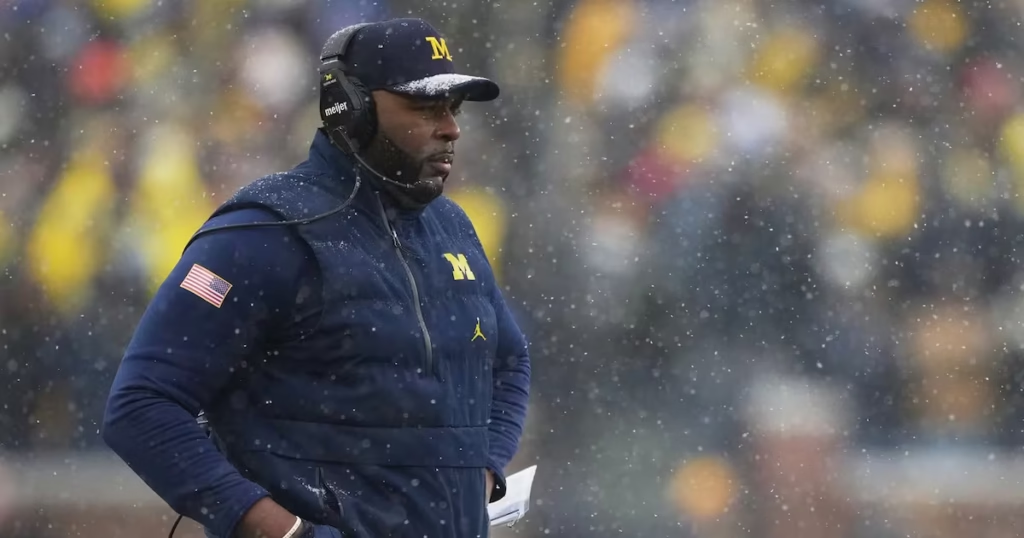
With Moore’s termination and arrest occurring within hours of each other, the University of Michigan announced that Biff Poggi would serve as interim head coach. The Wolverines are still scheduled to face the University of Texas in the Citrus Bowl on New Year’s Eve, though the leadership change adds new complications during a critical phase of preparation.
Unanswered Questions Loom
As the investigation continues, several key details remain unclear:
- What specific charges, if any, will Moore face?
- How is the alleged assault connected, if at all, to his termination?
- When will police release additional information?
For now, the incident has raised profound questions about Moore’s future in coaching and has cast a shadow over a football program already navigating controversy.












News
Democrats Demand Prosecution After ICE Agent’s Fatal Minneapolis Shooting Sparks National Outrage
As video of the Minneapolis shooting circulates, top Democrats clash with the Trump administration over accountability, immunity, and the future of ICE

A fatal shooting involving a U.S. Immigration and Customs Enforcement officer in Minneapolis has ignited a fierce political and moral debate across the country, with prominent Democrats calling for prosecution while the Trump administration defends the agent’s actions as self-defense.
At the center of the controversy is the death of Renee Nicole Good, a 37-year-old woman who was shot on Wednesday after masked federal officers approached her vehicle on a Minneapolis street. Video footage, widely shared online, shows officers surrounding Good’s car before it begins to move forward. Moments later, an officer opens fire. The vehicle then veers and crashes into parked cars.
The footage has prompted emotional reactions from Democratic leaders, who argue the shooting represents a dangerous lack of accountability within federal immigration enforcement.
Democrats Call It “Murder”
New York Representative Alexandria Ocasio-Cortez did not mince words while speaking to reporters on Capitol Hill. Calling the shooting a “murder,” she warned that ICE has evolved into what many critics long feared — an agency operating with excessive force and little civilian oversight.
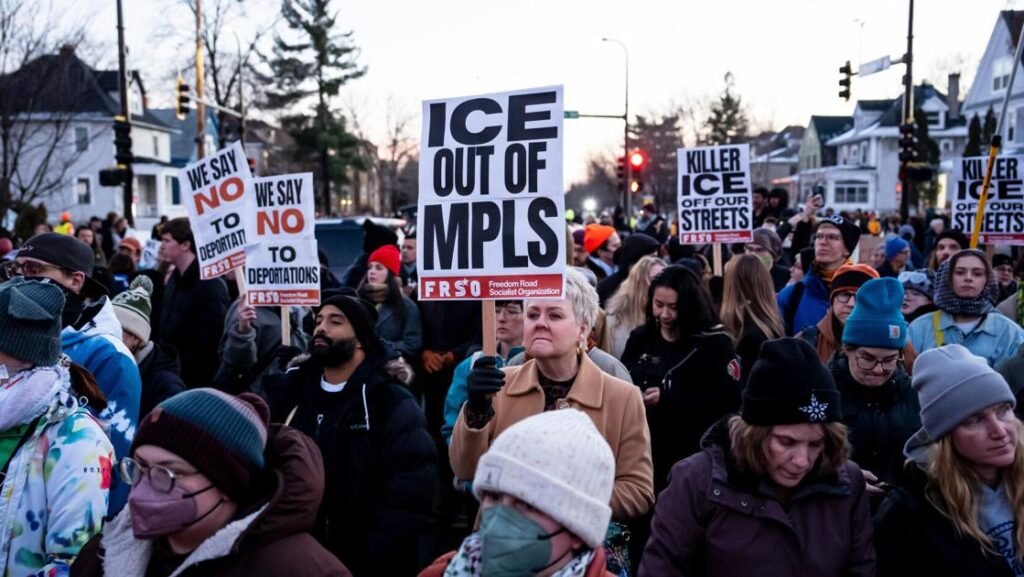
“What we saw is a murder, and murders in cold blood need to be prosecuted,” Ocasio-Cortez said, adding that ICE has increasingly acted like an “anti-civilian force” with no meaningful accountability.
California Congressman Ro Khanna echoed those sentiments after viewing the video. He described the incident as horrifying and called for the ICE agent involved to be arrested and put on trial.
“We cannot have a lawless agency continue in this country the way they are,” Khanna said. “There needs to be accountability.”
Minneapolis’ own representative in Congress, Ilhan Omar, condemned the shooting in even broader terms. In a statement, Omar labeled ICE’s conduct “unconscionable and reprehensible,” arguing that the incident crossed the line from law enforcement into state violence.
“This is not law enforcement. It is state violence,” Omar said, calling for a full investigation and legal action against the agency.
Legal Hurdles and Federal Immunity
Despite the outrage, whether the ICE agent will face criminal charges remains uncertain. As noted by Reuters, federal officers are typically shielded from state prosecution when performing duties authorized under federal law. For Minnesota to bring charges, prosecutors would need to prove that the agent acted outside his official responsibilities or that the use of force was clearly unlawful.
That legal reality has only intensified frustration among critics, who argue that immunity doctrines too often shield federal officers from consequences, even in fatal encounters.
Trump Administration Pushes Back
The Trump administration moved swiftly to defend the ICE agent. Homeland Security Secretary Kristi Noem said the officer acted in self-defense, claiming that Good attempted to use her vehicle as a weapon in what she described as an act of “domestic terrorism.”
President Donald Trump also weighed in, saying on Truth Social that he had reviewed the video and believed the officer fired in self-defense. Trump described Good as “very disorderly, obstructing and resisting,” and said the incident was under full review while reiterating his support for federal agents.
Minnesota Leaders Reject Federal Narrative
State and local officials in Minnesota have sharply rejected the administration’s explanation. Governor Tim Walz dismissed the Department of Homeland Security’s claims outright.
“I’ve seen the video. Don’t believe this propaganda machine,” Walz said, promising a full, fair, and expedited investigation to ensure accountability and justice.
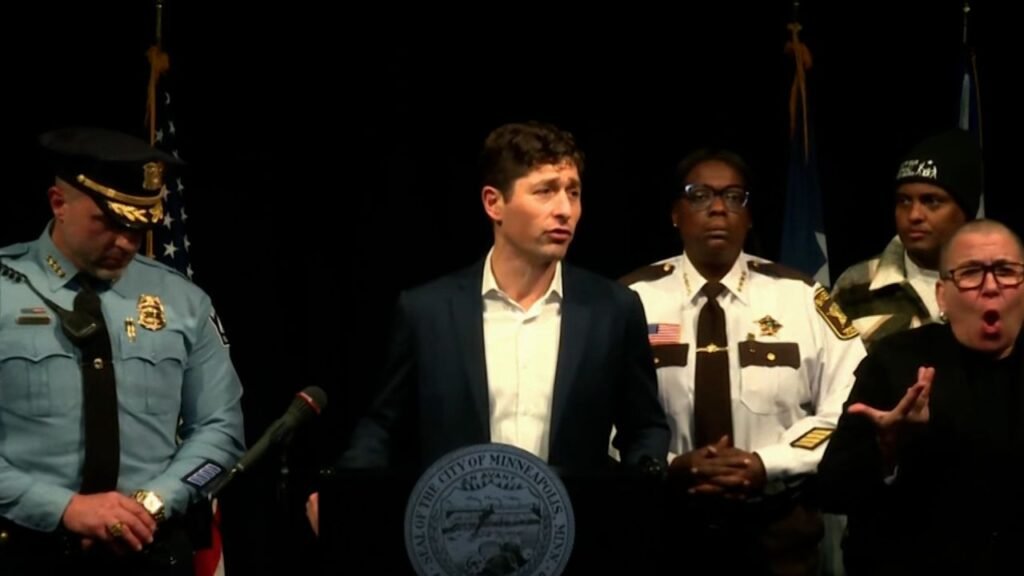
Minneapolis Mayor Jacob Frey was even more blunt. Speaking at a press conference, Frey flatly rejected DHS’s description of the shooting as self-defense.
“Having seen the video myself, I want to tell everybody directly that is bulls—,” Frey said. “This was an agent recklessly using power that resulted in somebody dying.”
The mayor went further, telling ICE to leave the city entirely. “We do not want you here,” Frey said. “Your stated reason for being in this city is to create safety, and you are doing the exact opposite.”
A Broader Reckoning
The Minneapolis shooting has become more than a single incident; it has evolved into a flashpoint in the national debate over immigration enforcement, federal power, and civilian safety. With Democrats demanding prosecution and Republicans defending the agent, the case underscores deep divisions over ICE’s role in American cities and whether federal officers should face greater oversight when deadly force is used.
As investigations move forward, the video evidence and public pressure may ultimately determine whether this case leads to charges — or becomes another chapter in a long-running struggle over accountability in federal law enforcement.
News
Eileen Higgins Becomes First Democratic Mayor of Miami in Nearly 30 Years, Marking a Historic Political Shift
The 61-year-old former county commissioner wins with 59% votes, becomes Miami’s first woman mayor, and signals a decisive new direction for the city
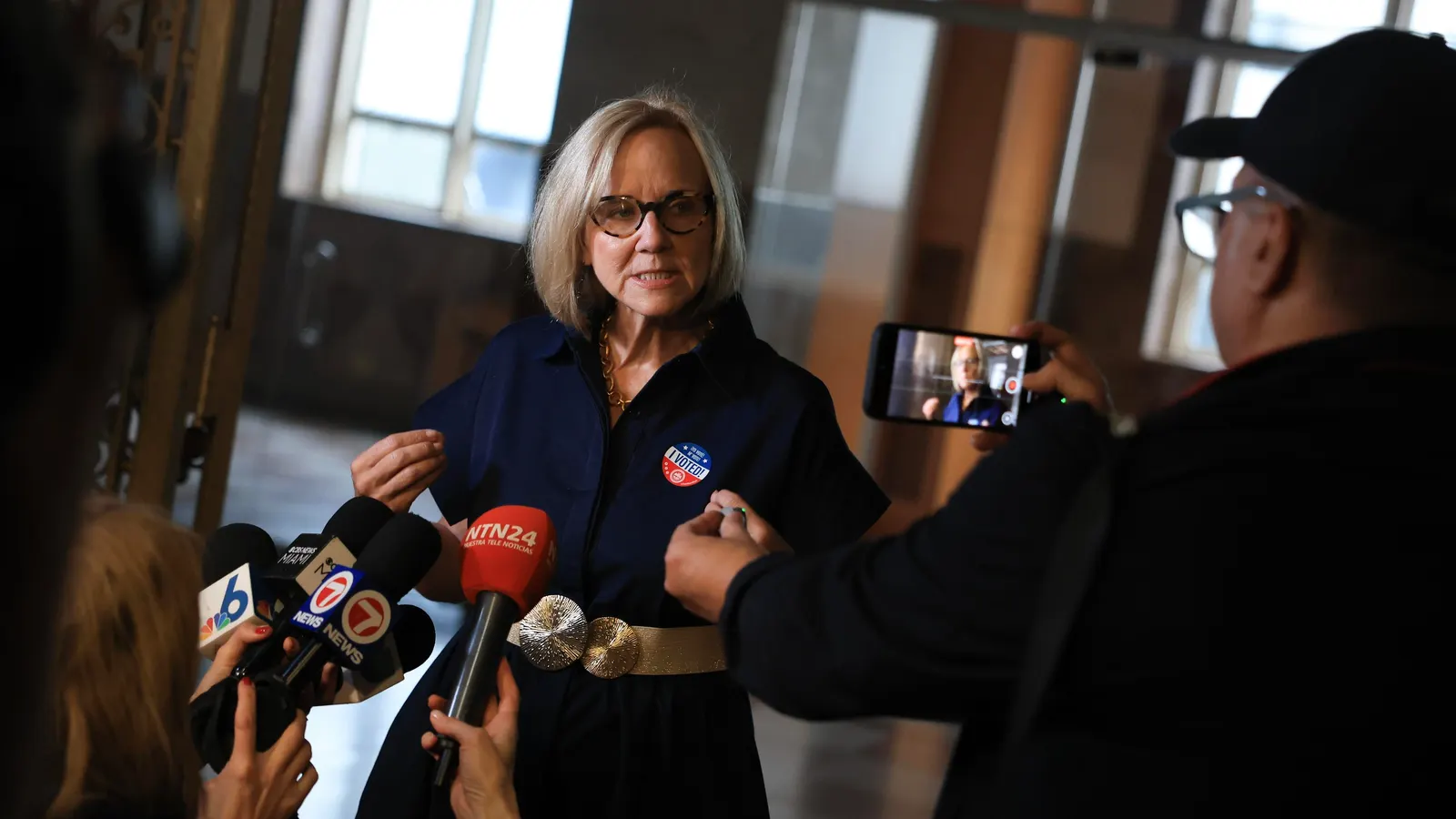
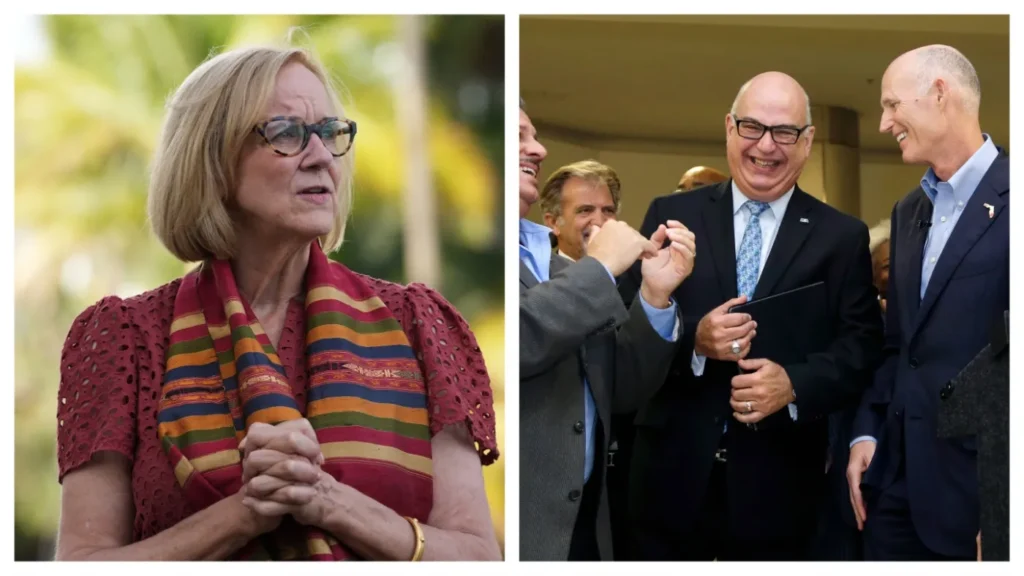
Miami has entered a new political era. Eileen Higgins, a Democrat and former county commissioner, has won the city’s mayoral race, becoming the first Democrat to hold the position in almost three decades and the first woman ever elected as mayor of Miami.
Her victory—securing 59% of the vote in a decisive runoff—defeated Republican candidate Emilio Gonzalez, who had received high-profile endorsements from former President Donald Trump and Florida Governor Ron DeSantis, but finished with 41%.
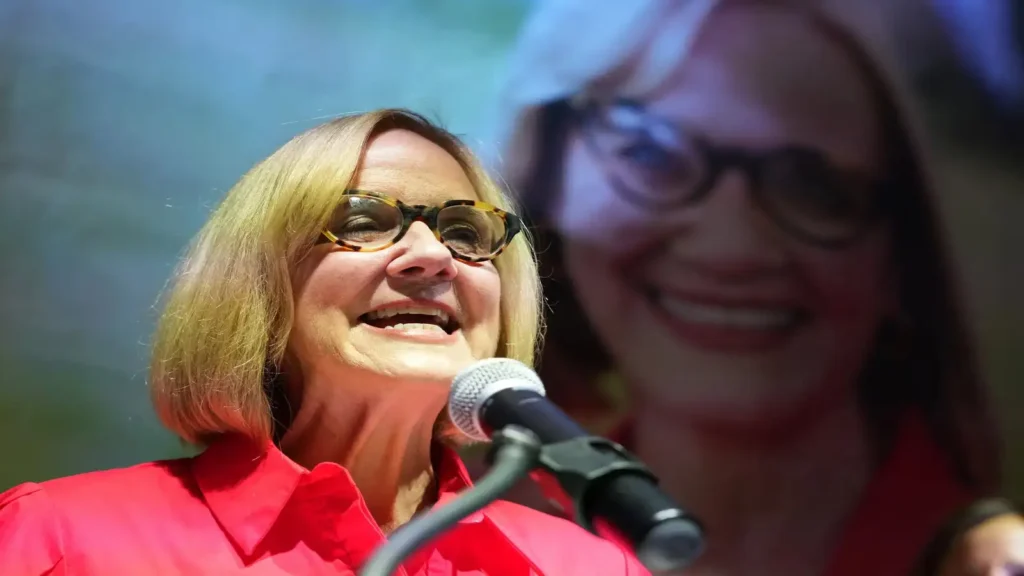
Speaking to supporters during her election night celebration, Higgins said,
“Miami chose a new direction… you chose competence over chaos.”
Her message echoed throughout a city that has long leaned Republican at the local political level, making her win even more significant.
A Historic Win and the Start of a New Chapter
At 61, Higgins has made history as Miami’s first female mayor, a milestone widely highlighted across U.S. media.
She told her supporters that the election results, while historic, are just the beginning.
“This marks the beginning of the work ahead,” she said.
Her priorities include addressing Miami’s growing concerns over immigration policies, affordable housing, governance, and inclusivity.
Higgins campaigned on promises to build a city “that belongs to everyone,” a clear contrast to the tone adopted by her opponent.
Her message resonated strongly among voters in a city where more than half of the population consists of immigrants or first-generation Americans.
Higgins vs Trump-Backed Gonzalez: A Clear Contrast
Although the race was technically non-partisan, the political contrast between the candidates was unmistakable.
- Gonzalez was openly backed by Donald Trump and Governor Ron DeSantis.
- Higgins was supported by prominent Democrats, including former U.S. Transportation Secretary Pete Buttigieg.
In an interview with El Pais, Higgins highlighted her opposing stance on immigration, saying,
“He [Trump] and I have very different points of view on how we should treat our residents, many of whom are immigrants.”
During the mayoral debate, she criticized the former president’s immigration enforcement policies as “inhumane and cruel.”
Still, she emphasized a willingness to collaborate on shared goals, telling CBS News,
“When we disagree, I’ll make my voice heard.”
Democrats Riding Momentum After Multiple Wins
Higgins’ victory follows a wave of Democratic wins in the first major elections of President Trump’s second term.
Recent victories include:
- Zohran Mamdani defeating independent Andrew Cuomo in the New York City mayoral race
- Abigail Spanberger flipping Virginia’s governor’s seat from Republican to Democrat
- Mikie Sherrill winning the governor’s race in New Jersey
Higgins now replaces outgoing mayor Francis Suarez, who briefly sought the Republican presidential nomination.
Miami’s mayoral win continues a trend of Democrats gaining ground in traditionally challenging territories.
News
Pantone Names “Cloud Dancer” as its 2026 Color of the Year: A Calm, Hopeful Shade for a Fast-Moving World
The softly balanced white tone reflects a cultural desire for serenity, fresh beginnings, and thoughtful simplicity.

Predicting the mood of a future year is no small task, but the Pantone Color Institute has been doing exactly that since 1999. For 2026, the global authority on color trends has selected a calm, airy shade of white — “Cloud Dancer” — as its official Color of the Year.
Pantone describes Cloud Dancer as “a billowy, balanced white imbued with a feeling of serenity.” At a time when technology saturates nearly every part of daily life, the institute believes this shade symbolizes a collective yearning to slow down, breathe, and reset.
A Color for New Beginnings
Leatrice Eiseman, executive director of the Pantone Color Institute, explained that the selection reflects the cultural push toward mindfulness.
As AI, automation, and digital intensity increase, Cloud Dancer represents a “calming influence in a frenetic society” and a reminder of the importance of measured consideration and quiet reflection.

Eiseman added that white is often associated with beginnings — and Cloud Dancer, specifically, “signifies our desire for a fresh start.”
How Pantone Chooses Its Color of the Year
Pantone’s team of color experts sifts through an entire year’s worth of cultural, political, fashion, and lifestyle influences. From macro trends to niche aesthetics, everything is analyzed through the lens of color psychology.
Laurie Pressman, Pantone’s vice-president, explained that even the name of the color plays a crucial role.
“The minute you hear a name describing color, you instantly conjure up an image,” she said.
Cloud Dancer’s name evokes softness, elevation, and calm — a deliberate choice reflecting emotional balance.
Why This Shade of White?
While white has always had a strong presence in fashion and design, Pantone’s choice is more nuanced.
Cloud Dancer strikes an equal balance between cool and warm undertones, creating comfort rather than sterility. Pressman noted that a brighter, harsher white would have felt “cold” and “isolating,” which runs counter to Pantone’s vision of optimism and natural authenticity.
This shade connects strongly to current fashion trends — such as billowy silhouettes, feathers, and textured natural fabrics.
Recent red carpet appearances have hinted at this shift:
- Diana Ross stunned at the Met Gala with a dramatic white feathered train.
- Emma Stone wore a Louis Vuitton bubble-hem white dress at the Venice Film Festival.
- Rosalía embraced clean, floaty white designs while promoting her album Lux.
Cloud Dancer in Interior Design
Beyond fashion, Cloud Dancer works seamlessly in home interiors. Eiseman characterizes it as:
“Clarity without coldness, structure without severity.”
It pairs naturally with wood, stone, ceramic finishes, and minimalist décor, creating peaceful spaces without feeling clinical.
Pantone’s Evolving Color Legacy
Pantone’s past selections reflect the emotional climates of their respective years:
- 2025: Mocha Mousse — a warm, comforting brown meant to soothe global tension
- 2024: Peach Fuzz — a soft, peaceful tone reflecting a desire for closeness and care
With Cloud Dancer, Pantone is signaling a future shaped by simplicity, reflection, and the pursuit of quiet optimism.

“He-Man Wears a Suit…”: Why Nicholas Galitzine’s Masters of the Universe Trailer Has Fans Talking

Camilla Läckberg Isn’t Done Yet… The Queen of Swedish Noir Eyes Film, TV and a Bold Plan to ‘Conquer America’

“Screaming, Crying, Almost Throwing Up”… Sundance Insiders Reveal the Untold Chaos Behind America’s Most Influential Film Festival
From Swedish Noir to Hollywood Dreams Camilla Läckberg Has a Bigger Plan in Motion
When Sundance Nearly Fell Apart Insiders Recall the Chaos Behind the World’s Most Influential Film Festival

1-Iran Issues Dire Warning to Israel and Defies Trump on Nukes: “We’re Ready to Strike Deep Inside”

Donald Trump’s net worth reveals the fortune behind the former US President and business mogul

Caitlin Clark Sidelined with Quad Strain, Set to Miss Two Weeks of WNBA Action

Elon Musk Breaks Ranks with Trump Over ‘Big, Beautiful’ Tax Bill

“Tomás Rodríguez Net Worth 2025: Panama’s Gold Cup Goal‑Machine’s Surprising Fortune Revealed”

Miss Jamaica Suffers Terrifying Fall Off Miss Universe Stage; Rushed to Hospital on Stretcher in Viral Video

Moana Live-Action Teaser Sparks Outrage as Fans Call Disney’s Move a ‘Clear Money Grab’ — What Went Wrong?

Ryan Gosling’s Project Hail Mary Trailer Stuns Fans with a Mysterious Alien Ally and a Mission That Could Save Earth

Apple delays Jessica Chastain thriller The Savant about domestic extremism after recent US violence

Avatar 3, Fire and Ash trailer reveals Jake Sully’s family facing terrifying new Na’vi enemies with deadly fire powers
-
 Entertainment6 days ago
He-Man Wears a Suit Now… Nicholas Galitzine’s ‘Masters of the Universe’ Trailer Drops a Shock Fans Didn’t See Coming
-
 Entertainment1 week ago
Brazil Eyes Oscar History Again… ‘The Secret Agent’ Scores Best Picture Nomination as Wagner Moura Stuns Hollywood
-
 Entertainment4 days ago
“Comedy Needs Courage Again…”: Judd Apatow Opens Up on Mel Brooks, Talking to Rob Reiner, and Why Studio Laughs Have Vanished
-

 Entertainment1 week ago
Box Office Shocker as Chris Pratt’s ‘Mercy’ Knocks ‘Avatar 3’ Off the Top but Nature Had Other Plans…
-

 Entertainment6 days ago
Oscars Go Global in a Big Way as This Year’s Nominations Signal a New Era: ‘The Academy Is Finally Looking Beyond Hollywood…’
-

 Entertainment1 week ago
Michael Bay Makes a Power Move… Blockbuster Director Signs with CAA in a Deal That’s Turning Heads
-
 Entertainment6 days ago
“Dangerously Kinky… and Darkly Funny”: Olivia Wilde and Cooper Hoffman Push Boundaries in ‘I Want Your Sex’
-
Entertainment1 week ago
Fans Didn’t Expect This Look… Nicholas Galitzine’s Masters of the Universe Trailer Sparks Debate