
Entertainment
‘Pluribus’ Ending Wasn’t Doom After All, Says Karolina Wydra… “There’s Strength in That Silence”
Fans saw danger in the final scene, but Karolina Wydra reveals why she believes season one ended with hope — not fear


The final seconds of Pluribus season one left viewers frozen. No dramatic music. No explosive twist. Just a lingering look — and a silence heavy enough to spark weeks of debate. Was it surrender? Was it a warning? Or was it something far more complicated?
Now, Karolina Wydra, who plays the quietly defiant Zosia, is offering an interpretation that reframes the entire ending — and it’s far more optimistic than many fans expected.
“I don’t see it as ominous,” Wydra explained in recent interviews. “I see it as clarity.”
The Look That Launched a Thousand Theories
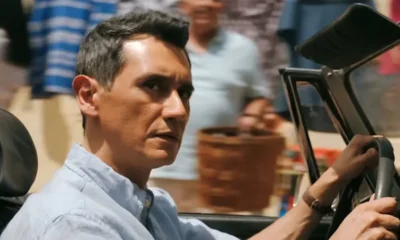
The season finale of Pluribus concludes with Zosia locking eyes with Carol, portrayed by Rhea Seehorn. It’s a wordless exchange, but one loaded with tension, power, and unresolved emotion.
ALSO READ : Younghoe Koo Explains Botched Field Goal After Slip: “The Ball Was Moving So I Pulled Up”
Online, viewers quickly labeled the moment “chilling” and “terrifying.” But Wydra insists that interpretation misses the deeper shift happening beneath the surface.
“That look isn’t fear,” she said. “It’s Zosia realizing she finally understands who Carol is — and what she’s capable of.”
Why Awareness Is Power in ‘Pluribus’
Throughout season one, Pluribus has been a study in subtle control rather than overt domination. The show thrives on restraint, letting silence speak louder than confrontation. According to Wydra, the finale stays true to that philosophy.
“Zosia spends the entire season sensing something is wrong but not being able to name it,” she explained. “In that final moment, she names it — internally. That’s powerful.”
For Wydra, awareness marks the beginning of agency. Once Zosia sees the full structure of control, she is no longer merely reacting to it.
Carol’s Calm Might Be Her Greatest Flaw
Much of the finale’s unease stems from Carol herself. Played with unsettling composure by Seehorn, Carol never raises her voice or makes explicit threats — and that’s precisely what makes her dangerous.

Wydra praised Seehorn’s performance, noting that Carol’s confidence borders on certainty. “Carol believes she has already won,” Wydra said. “And that belief can be risky.”
In Wydra’s view, Zosia’s final look isn’t submission — it’s calculation.
Why the Ending Is Quiet on Purpose
In an era of shocking cliffhangers and last-minute twists, Pluribus chose something riskier: ambiguity. The show’s creators trusted the audience to sit with uncertainty — and to question their own assumptions.
“That silence forces you to think,” Wydra said. “It asks the viewer to participate.”
Rather than closing a chapter, the finale opens a door — one that hints at consequences rather than comfort.
What This Means for the Future
While Wydra stopped short of teasing specific storylines, she suggested that the emotional balance of power has shifted. Zosia is no longer in the dark — and Carol may not realize that just yet.
“If season one was about survival,” Wydra reflected, “the next chapter is about choice.”
Hope Hidden in the Shadows
Calling the ending hopeful may sound counterintuitive, but for Wydra, hope doesn’t need optimism or victory. Sometimes, it’s simply the moment a character stops being blind.
And in Pluribus, that moment came not with a scream — but with a look.






Entertainment
Almodóvar, Lars von Trier, Joel Coen and More — The Films That Could Own Cannes 2026 Are Already Generating Serious Buzz and the List Is…
The 79th Cannes Film Festival hasn’t announced its lineup yet — but the whisper network is already working overtime. Here are the titles that cinephiles, critics, and industry insiders are watching most closely ahead of the world’s most prestigious film festival.

There is a specific kind of anticipation that only Cannes generates.
It is not the anticipation of the Oscars — which arrives wrapped in campaigns, screeners, and the carefully managed machinery of awards season. It is not the anticipation of Sundance — which carries the particular excitement of discovery, of unknown films and unknown filmmakers arriving from nowhere to change everything. The anticipation of Cannes is something older and more specific: the feeling that the world’s greatest filmmakers have spent the past year making the most ambitious work of their careers, and that in May, on the Croisette, in the grand auditorium of the Palais des Festivals, the results will finally be revealed.
The 79th Cannes Film Festival is approaching. The official selection has not yet been announced. But the films generating the most serious pre-selection buzz — the titles appearing on the shortlists of industry insiders, filtering through the whisper networks of international cinema — are already painting a picture of a festival that could be one of the most remarkable in recent memory.
Here is what the conversation looks like right now.
Pedro Almodóvar: The Master Returns
Any conversation about Cannes contenders begins, almost by reflex, with Pedro Almodóvar.
The Spanish auteur has one of the most extraordinary relationships with the Croisette in the history of the festival. His films have competed at Cannes repeatedly across four decades — winning the Palme d’Or for All About My Mother in 1999, the Best Screenplay prize for Talk to Her in 2002, and accumulating a body of Cannes history that is inseparable from his creative biography.
His most recent work — The Room Next Door — marked his first English-language feature and won the Golden Lion at the Venice Film Festival in 2024, demonstrating that at 75, Almodóvar is not coasting on reputation — he is still making films that win the top prizes at the world’s greatest festivals.
ALSO READ : “She Never Made It Out…” Albany House Fire Claims Woman’s Life as Family Pleads for Help to Bring Her Home
The question ahead of Cannes 2026 is whether his next project will be ready — and whether, if it is, he will choose the Croisette over Venice or Berlin as its premiere destination. If the film exists and Almodóvar points it toward Cannes, it immediately becomes one of the most anticipated screenings of the year.
Asghar Farhadi: The Iranian Master and the Weight of Truth
Asghar Farhadi is, by any serious measure, one of the most important filmmakers working anywhere in the world today.
The Iranian director has won the Academy Award for Best Foreign Language Film twice — for A Separation in 2012 and for The Salesman in 2017 — and has competed at Cannes multiple times, winning the Grand Prix for A Separation before its Oscar run.
His films operate in a register that is almost unique in contemporary cinema — intimate domestic dramas that use the specifics of Iranian middle-class life to explore universal questions about truth, guilt, loyalty, and the moral compromises that ordinary people make under pressure. They are films that respect their audience’s intelligence absolutely, that never tell you what to think, and that stay with you for days after watching because the questions they raise have no clean answers.
Farhadi has been working on new material, and his name appearing on the pre-Cannes conversation is neither surprising nor coincidental. The festival’s selection committee watches his work with the closest possible attention — and so does everyone else.
Joel Coen: Flying Solo Again
The announcement that Joel Coen had made The Tragedy of Macbeth — his first solo directorial project, separate from his longtime creative partnership with brother Ethan Coen — was one of the most discussed moments in recent film culture. The resulting film, shot in stunning black and white with Denzel Washington and Frances McDormand, was a bold, formally austere piece of cinema that divided some audiences and electrified others.
Now, with Joel Coen reportedly working on new material as a solo filmmaker, the Cannes whisper network is paying close attention. The Coen Brothers — together and separately — have one of the deepest relationships with international cinema of any American filmmakers of their generation. Barton Fink won the Palme d’Or in 1991. Fargo won Best Director in 1996.
If Joel Coen’s next solo project is ready for Cannes 2026, the selection committee will not need to be persuaded. The only question is whether the film will be finished in time — and whether Coen will want the specific pressure and glory of a Palme d’Or competition premiere.
Lars von Trier: The Provocateur Who Cannot Be Ignored
There is no filmmaker in the world quite like Lars von Trier — and there is no festival in the world quite like Cannes when Lars von Trier is in competition.
The Danish director has been one of the most discussed, most controversial, and most formally radical figures in world cinema for four decades. He co-founded the Dogme 95 movement, which briefly reshaped European filmmaking. He made Breaking the Waves, Dancer in the Dark — which won the Palme d’Or in 2000 — Melancholia, and the extraordinary, difficult, divisive The House That Jack Built.
His relationship with Cannes is, to put it mildly, complicated. He was declared persona non grata at the festival in 2011 after controversial remarks at a press conference — a ban that was eventually lifted. His returns to the Croisette have consistently generated the kind of conversation that the festival, whatever its official position, fundamentally depends on.
Von Trier has been working, and the titles circulating in pre-festival conversations suggest a project that, if selected, will generate controversy, critical debate, and the kind of visceral audience response — love, hatred, bafflement, awe — that reminds you why cinema at its most uncompromising is unlike any other art form.
The Wider Field: Names That Cannot Be Ignored
Beyond the headline names, the pre-Cannes 2026 conversation includes a constellation of filmmakers whose presence in any competition would elevate it significantly.
Joachim Trier — the Norwegian director whose The Worst Person in the World was one of the most warmly received competition films in recent Cannes history, winning Best Actress for Renate Reinsve in 2021 — is reportedly working on new material that has generated significant anticipation among those who have heard early details.
Mia Hansen-Løve, the French filmmaker whose Bergman Island and One Fine Morning established her as one of the most consistently brilliant directors working in European cinema, has a new project in development that industry sources consider a serious Cannes candidate.
Hirokazu Kore-eda — the Japanese master who won the Palme d’Or for Shoplifters in 2018 and whose subsequent international work has, if anything, deepened his ambition — is among the names appearing on multiple pre-selection lists.
And there is always the possibility — the Cannes wild card that the festival specialises in — of a filmmaker arriving from a country or a context that nobody was watching, with a film that nobody saw coming, that walks away with the Palme and changes the conversation about world cinema entirely.
That is, after all, what Cannes does best.
Why Cannes 2026 Feels Particularly Loaded
The 79th edition of the festival arrives at a moment when cinema itself is at something of a crossroads.
The theatrical experience is recovering — slowly, unevenly, but genuinely — from the disruptions of the pandemic years. The relationship between festivals and streaming platforms has stabilised into a new, still-contested equilibrium. The conversation about what cinema is for — what it can do that no other medium can, what stories it is the right form to tell — is more alive and more urgent than it has been in a long time.
Cannes, with its fierce commitment to theatrical cinema, its insistence on the primacy of the director’s vision, and its willingness to platform work that challenges and disturbs and refuses easy resolution, remains the festival that sets the terms of that conversation most forcefully.
The films of Almodóvar, Farhadi, Joel Coen, and Lars von Trier — if they arrive on the Croisette in May 2026 — will not just compete for a golden palm-shaped trophy. They will be part of a larger argument about the kind of cinema that the world needs, and the kind of world that cinema can help us understand.
That argument, conducted in a darkened theatre on the French Riviera, in front of an audience of critics and industry figures and passionate cinephiles from every corner of the planet, is one of the most important conversations that happens anywhere in the cultural world.
Cannes 2026 cannot come soon enough.
Entertainment
Cannes 2026 Hasn’t Announced a Single Film Yet — But the Whisper Network Is Already Pointing to These Names and It’s Exciting…
The 79th Cannes Film Festival hasn’t announced its lineup yet — but the whisper network is already working overtime. Here are the titles that cinephiles, critics, and industry insiders are watching most closely ahead of the world’s most prestigious film festival.
There is a specific kind of anticipation that only Cannes generates.
It is not the anticipation of the Oscars — which arrives wrapped in campaigns, screeners, and the carefully managed machinery of awards season. It is not the anticipation of Sundance — which carries the particular excitement of discovery, of unknown films and unknown filmmakers arriving from nowhere to change everything. The anticipation of Cannes is something older and more specific: the feeling that the world’s greatest filmmakers have spent the past year making the most ambitious work of their careers, and that in May, on the Croisette, in the grand auditorium of the Palais des Festivals, the results will finally be revealed.
The 79th Cannes Film Festival is approaching. The official selection has not yet been announced. But the films generating the most serious pre-selection buzz — the titles appearing on the shortlists of industry insiders, filtering through the whisper networks of international cinema — are already painting a picture of a festival that could be one of the most remarkable in recent memory.
Here is what the conversation looks like right now.
Pedro Almodóvar: The Master Returns
Any conversation about Cannes contenders begins, almost by reflex, with Pedro Almodóvar.
The Spanish auteur has one of the most extraordinary relationships with the Croisette in the history of the festival. His films have competed at Cannes repeatedly across four decades — winning the Palme d’Or for All About My Mother in 1999, the Best Screenplay prize for Talk to Her in 2002, and accumulating a body of Cannes history that is inseparable from his creative biography.
His most recent work — The Room Next Door — marked his first English-language feature and won the Golden Lion at the Venice Film Festival in 2024, demonstrating that at 75, Almodóvar is not coasting on reputation — he is still making films that win the top prizes at the world’s greatest festivals.
ALSO READ : “She Never Made It Out…” Albany House Fire Claims Woman’s Life as Family Pleads for Help to Bring Her Home
The question ahead of Cannes 2026 is whether his next project will be ready — and whether, if it is, he will choose the Croisette over Venice or Berlin as its premiere destination. If the film exists and Almodóvar points it toward Cannes, it immediately becomes one of the most anticipated screenings of the year.
Asghar Farhadi: The Iranian Master and the Weight of Truth
Asghar Farhadi is, by any serious measure, one of the most important filmmakers working anywhere in the world today.
The Iranian director has won the Academy Award for Best Foreign Language Film twice — for A Separation in 2012 and for The Salesman in 2017 — and has competed at Cannes multiple times, winning the Grand Prix for A Separation before its Oscar run.
His films operate in a register that is almost unique in contemporary cinema — intimate domestic dramas that use the specifics of Iranian middle-class life to explore universal questions about truth, guilt, loyalty, and the moral compromises that ordinary people make under pressure. They are films that respect their audience’s intelligence absolutely, that never tell you what to think, and that stay with you for days after watching because the questions they raise have no clean answers.
Farhadi has been working on new material, and his name appearing on the pre-Cannes conversation is neither surprising nor coincidental. The festival’s selection committee watches his work with the closest possible attention — and so does everyone else.
Joel Coen: Flying Solo Again
The announcement that Joel Coen had made The Tragedy of Macbeth — his first solo directorial project, separate from his longtime creative partnership with brother Ethan Coen — was one of the most discussed moments in recent film culture. The resulting film, shot in stunning black and white with Denzel Washington and Frances McDormand, was a bold, formally austere piece of cinema that divided some audiences and electrified others.
Now, with Joel Coen reportedly working on new material as a solo filmmaker, the Cannes whisper network is paying close attention. The Coen Brothers — together and separately — have one of the deepest relationships with international cinema of any American filmmakers of their generation. Barton Fink won the Palme d’Or in 1991. Fargo won Best Director in 1996.
If Joel Coen’s next solo project is ready for Cannes 2026, the selection committee will not need to be persuaded. The only question is whether the film will be finished in time — and whether Coen will want the specific pressure and glory of a Palme d’Or competition premiere.
Lars von Trier: The Provocateur Who Cannot Be Ignored
There is no filmmaker in the world quite like Lars von Trier — and there is no festival in the world quite like Cannes when Lars von Trier is in competition.
The Danish director has been one of the most discussed, most controversial, and most formally radical figures in world cinema for four decades. He co-founded the Dogme 95 movement, which briefly reshaped European filmmaking. He made Breaking the Waves, Dancer in the Dark — which won the Palme d’Or in 2000 — Melancholia, and the extraordinary, difficult, divisive The House That Jack Built.
His relationship with Cannes is, to put it mildly, complicated. He was declared persona non grata at the festival in 2011 after controversial remarks at a press conference — a ban that was eventually lifted. His returns to the Croisette have consistently generated the kind of conversation that the festival, whatever its official position, fundamentally depends on.
Von Trier has been working, and the titles circulating in pre-festival conversations suggest a project that, if selected, will generate controversy, critical debate, and the kind of visceral audience response — love, hatred, bafflement, awe — that reminds you why cinema at its most uncompromising is unlike any other art form.
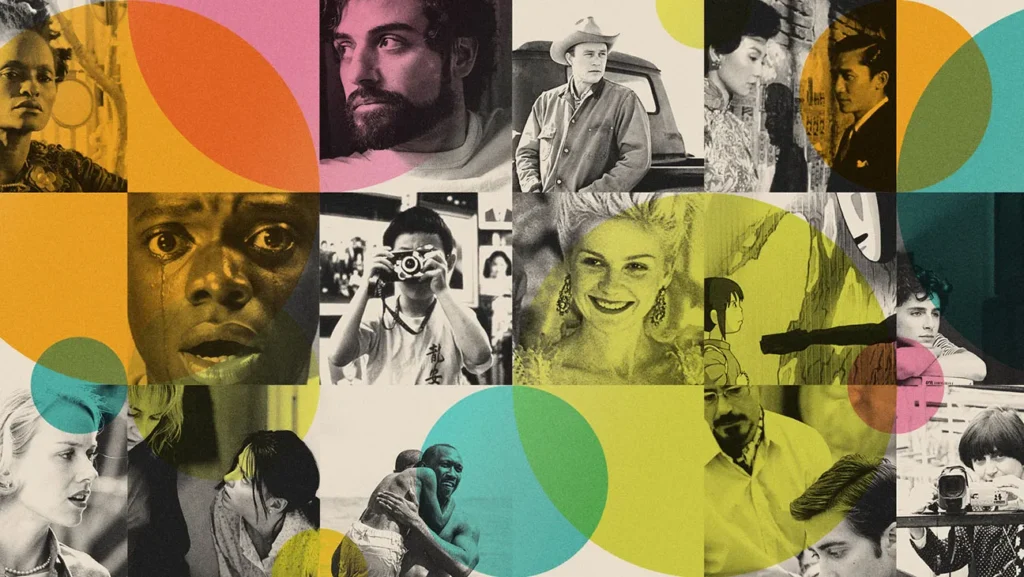
The Wider Field: Names That Cannot Be Ignored
Beyond the headline names, the pre-Cannes 2026 conversation includes a constellation of filmmakers whose presence in any competition would elevate it significantly.
Joachim Trier — the Norwegian director whose The Worst Person in the World was one of the most warmly received competition films in recent Cannes history, winning Best Actress for Renate Reinsve in 2021 — is reportedly working on new material that has generated significant anticipation among those who have heard early details.
Mia Hansen-Løve, the French filmmaker whose Bergman Island and One Fine Morning established her as one of the most consistently brilliant directors working in European cinema, has a new project in development that industry sources consider a serious Cannes candidate.
Hirokazu Kore-eda — the Japanese master who won the Palme d’Or for Shoplifters in 2018 and whose subsequent international work has, if anything, deepened his ambition — is among the names appearing on multiple pre-selection lists.
And there is always the possibility — the Cannes wild card that the festival specialises in — of a filmmaker arriving from a country or a context that nobody was watching, with a film that nobody saw coming, that walks away with the Palme and changes the conversation about world cinema entirely.
That is, after all, what Cannes does best.
Why Cannes 2026 Feels Particularly Loaded
The 79th edition of the festival arrives at a moment when cinema itself is at something of a crossroads.
The theatrical experience is recovering — slowly, unevenly, but genuinely — from the disruptions of the pandemic years. The relationship between festivals and streaming platforms has stabilised into a new, still-contested equilibrium. The conversation about what cinema is for — what it can do that no other medium can, what stories it is the right form to tell — is more alive and more urgent than it has been in a long time.
Cannes, with its fierce commitment to theatrical cinema, its insistence on the primacy of the director’s vision, and its willingness to platform work that challenges and disturbs and refuses easy resolution, remains the festival that sets the terms of that conversation most forcefully.
The films of Almodóvar, Farhadi, Joel Coen, and Lars von Trier — if they arrive on the Croisette in May 2026 — will not just compete for a golden palm-shaped trophy. They will be part of a larger argument about the kind of cinema that the world needs, and the kind of world that cinema can help us understand.
That argument, conducted in a darkened theatre on the French Riviera, in front of an audience of critics and industry figures and passionate cinephiles from every corner of the planet, is one of the most important conversations that happens anywhere in the cultural world.
Cannes 2026 cannot come soon enough.
Entertainment
She Signed at 12, Stayed for 17 Years Now Lorde Has Finally Said Goodbye to Universal, and What She Said Next Will Give You Chills…
The New Zealand pop icon quietly walked away from one of music’s biggest labels — and her raw, unfiltered message to fans reveals everything about what the industry really costs a child star.

There are goodbyes that make headlines, and then there are the ones that make you stop, sit down, and actually feel something. Lorde‘s announcement that she is now a fully independent artist is very much the latter.
On March 18, 2026, the New Zealand pop star — born Ella Yelich-O’Connor — sent a series of community voice notes directly to her fans, the kind of raw, unfiltered communication that no PR team drafts and no label approves. In them, she revealed something that had quietly happened months earlier, almost without the world noticing: her record contract with Universal Music Group had come to an end in late 2025, and she is now operating as an independent artist. Variety
No fanfare. No legal drama. Just a voice note, and the truth.
“A 12-Year-Old Girl Pre-Sold Her Creative Output…”
Lorde told fans that she had been in that contract “in some form since I was 12 years old,” when she signed her first development deal with Universal. The Hollywood Reporter Let that sink in for a moment. Most of us at 12 were worrying about school lunches and weekend plans. Ella Yelich-O’Connor was signing away the rights to her future creative work to one of the most powerful music corporations on the planet.
ALSO READ : “She Never Made It Out…” Albany House Fire Claims Woman’s Life as Family Pleads for Help to Bring Her Home
She was candid — almost painfully so — about what that meant in hindsight: “The truth is that a 12-year-old girl pre-signed and pre-sold her creative output before she knew what it would be like, and before she knew what she was signing away.” IMDb
And yet, to her enormous credit, there is no bitterness in her words. She said of UMG: “I adore them, they’re incredible people, and I have had an amazing experience with them.” LiveJournal This wasn’t a bitter split. This was something more grown-up than that — a woman choosing herself, on her own schedule, with grace.
From “Royals” to Royalty — A Career That Defied Every Expectation
For anyone who needs a reminder of just how extraordinary this artist’s journey has been: Lorde first broke through with her debut album Pure Heroine when she was just 16 years old, powered by the global smash “Royals,” which topped the Hot 100 and won a Grammy for Song of the Year. The Hollywood Reporter
She followed that with Melodrama in 2017 — an album that critics still cite as one of the finest pop records of the decade — then Solar Power in 2021, and most recently, Virgin, which arrived in June 2025 as her last album under this deal. Rolling Stone
Across her career, she has amassed more than 18 billion streams and sold 18 million albums globally. The Music Network Not bad for someone who was still in school when the world first heard her name.
What Comes Next — And Why Her Phone Background Says Everything
In the voice memo, Lorde revealed that her phone background currently reads “I have no master” — and that she’s “really trying to feel what that feels like.” The Hollywood Reporter It’s the kind of detail that hits differently when you consider how young she was when she first entered this system.

She’s not walking into silence, though. Lorde is currently in the midst of her Ultrasound World Tour, and her independence was announced just a day after she was confirmed as a headliner for Lollapalooza 2026. Hit Channel She also revealed that her upcoming Los Angeles shows will be the final dates of the Ultrasound Tour Nylon — leaving fans buzzing with speculation about what a brand-new, label-free Lorde era might actually sound like.
As for what’s creatively stirring inside her right now, she put it simply: “I’m just trying to do weird shit. I’m reading bizarre books at the moment, some of them I don’t even know if I like. But there’s newness coming through everywhere, and it feels good. It feels right.” Rolling Stone
She hasn’t ruled out signing with a label again. “I’m sure I’ll have a deal again, could well be with Universal,” she said — but made clear: “I knew that I needed to take a second to have nothing being bought or sold that comes from me. When I see an opportunity for a clean slate, I try to take it.”
A Bigger Conversation the Industry Can’t Ignore
Lorde’s departure is not happening in a vacuum. Fans online were quick to draw comparisons, with many pointing out that artists like SZA and Raye have also made waves recently — the latter famously winning big as an independent — prompting observers to note that “the Big Three labels are losing their grip on the artists that actually define the culture.” Sportskeeda
There’s something genuinely significant about the timing. In an era where conversations about artist ownership, masters rights, and the exploitation of young talent have never been louder, Lorde’s quiet, dignified exit from a deal she signed as a child speaks volumes — not with outrage, but with something more powerful: self-possession.
She is 29 years old. She has sold 18 million albums. She has a Grammy. She has a Glastonbury headline slot in her history and a Lollapalooza headline slot in her future. And for the first time in her entire adult life, she belongs to no one.
That, more than any album announcement, might be the most exciting chapter yet.

Iran Bombs Qatar’s Ras Laffan and India Is Counting the Cost — ‘88% Import Dependent on Crude Oil, Half on Gas…’

‘If Only I’d Had a Word With Trump…’ — The Iran War Is Now Causing a Cricket Ball Shortage in England, and the ECB Is Rattled

US F-35 Fighter Jet Makes Emergency Landing After ‘Suspected Iranian Fire’ Mid-Combat Mission — ‘The Aircraft Landed Safely…’

Noida Man Promised Singapore, Europe, Vietnam Tours — Then Pocketed ₹12 Lakh and Cancelled Every Ticket: ‘He Was Doing This for Years…’

Indian-Origin Man Sital Singh Sentenced to 4 Years for Scamming Elderly Americans Out of Millions — ‘They Lost Everything They Saved…’

1-Iran Issues Dire Warning to Israel and Defies Trump on Nukes: “We’re Ready to Strike Deep Inside”

Donald Trump’s net worth reveals the fortune behind the former US President and business mogul

“She Never Made It Out…” Albany House Fire Claims Woman’s Life as Family Pleads for Help to Bring Her Home

Caitlin Clark Sidelined with Quad Strain, Set to Miss Two Weeks of WNBA Action

“Tomás Rodríguez Net Worth 2025: Panama’s Gold Cup Goal‑Machine’s Surprising Fortune Revealed”

Miss Jamaica Suffers Terrifying Fall Off Miss Universe Stage; Rushed to Hospital on Stretcher in Viral Video

Moana Live-Action Teaser Sparks Outrage as Fans Call Disney’s Move a ‘Clear Money Grab’ — What Went Wrong?

Ryan Gosling’s Project Hail Mary Trailer Stuns Fans with a Mysterious Alien Ally and a Mission That Could Save Earth

Apple delays Jessica Chastain thriller The Savant about domestic extremism after recent US violence

Avatar 3, Fire and Ash trailer reveals Jake Sully’s family facing terrifying new Na’vi enemies with deadly fire powers
-

 Entertainment7 days ago
BBC Boss Finally Explains Why the Racial Slur Was Never Cut From the BAFTA Broadcast — “No One in the Truck Even Heard It…”
-

 Entertainment1 week ago
While Her Brother David Ellison Takes Over Paramount, Megan Ellison Is Quietly Building Something at Annapurna That Hollywood Should Be Very Nervous About…
-

 Sports7 days ago
“Last-Minute Heartbreak for Rayados…”: Juárez Snatch 2–2 Draw as Estupiñán Penalty Cancels Monterrey’s Lead
-

 Entertainment1 week ago
Saturn Awards 2026: James Cameron and Tom Cruise Were the Big Winners — But Nobody Predicted What Cameron Would Say When He Took the Mic…
-

 Entertainment1 week ago
Billy Porter Says He Was “Dead for Three Days” During Secret Health Battle — What He Revealed About Coming Back From the Edge Will Break Your Heart…
-
 Entertainment1 week ago
Timothée Chalamet’s awards season heats up as Palm Springs honors him with Spotlight Actor of the Year… ‘one of his finest roles yet’
-

 Business1 week ago
ITV’s Ad Revenue Falls 5% and Analysts Are Worried — But Behind Closed Doors, Sky Deal Talks Are Giving Executives a Reason to Stay Very, Very Calm…
-

 Entertainment1 week ago
“It’s f*ing wrong…” 35 Years Later, Silence of the Lambs Star Ted Levine Speaks Out on Transphobia Criticism**