
Technology News
China opens Shanghai digital yuan hub to rival US dollar but here’s the bigger plan
The People’s Bank of China launches a Shanghai hub to power digital yuan cross-border payments, blockchain services, and global digital assets


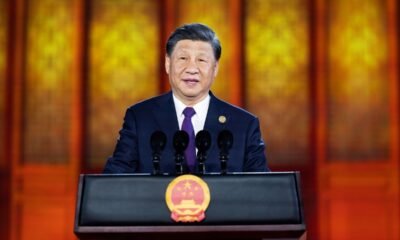
China has taken another decisive step toward reshaping the future of global finance. On Thursday, the People’s Bank of China (PBOC) announced the opening of a digital yuan operations center in Shanghai, a hub designed to oversee platforms for cross-border payments, blockchain services, and digital asset development.
ALSO READ : Google shocks crypto world with $3B deal for Cipher Mining stake but here’s the twist
The announcement, first reported by Xinhua News Agency, signals China’s intent to accelerate the internationalization of the yuan and reduce reliance on the US dollar. The Shanghai hub isn’t just about digital money—it’s a strategic move to position China at the heart of a multipolar financial system.
A multipolar monetary vision
The project was outlined in June by PBOC Governor Pan Gongsheng, who emphasized the goal of advancing the yuan’s global role. He framed the initiative as part of a “multipolar” vision, where multiple currencies support international trade and economic stability.
At the launch, three platforms were unveiled:
- A cross-border payments platform
- A blockchain service platform
- A digital asset platform
According to experts, these tools could help China challenge the long-standing dominance of the US dollar in global markets.
Tian Xuan, president of the National Institute of Financial Research at Tsinghua University, described the development as “an important step”, adding that it could offer a “Chinese solution” to improving cross-border payment infrastructure.

Stablecoins enter the conversation
Interestingly, the launch of the digital yuan hub comes at a time when Chinese authorities are also exploring stablecoins. Though China banned crypto trading and mining in 2021, recent developments suggest a softening of that stance.
In August 2025, Reuters reported that Beijing was considering authorizing yuan-backed stablecoins to strengthen the global use of its currency. That followed a July strategy session in Shanghai led by the State-owned Assets Supervision and Administration Commission (SASAC), where digital currencies and stablecoins were key topics.
Adding momentum, Securities Times, a state-run media outlet, published an editorial in June urging stablecoin development “sooner rather than later.”
Hong Kong leads the way
In parallel, AnchorX, a fintech company based in Hong Kong, has already launched the first stablecoin tied to the international yuan (CNH). Targeted at foreign exchange markets, the token is aimed at simplifying cross-border payments—particularly between countries involved in China’s ambitious Belt and Road Initiative.
This marks the first concrete step toward what some analysts believe could become a digital Belt and Road network, enabling seamless settlement of trade and investment deals without the need for US dollars.
What’s at stake
By combining the digital yuan hub with blockchain and stablecoin infrastructure, Beijing is building the foundation for a parallel financial system. For decades, the US dollar has been the backbone of international commerce. But China’s latest moves show its determination to create an alternative that could gradually chip away at American dominance.
If successful, the digital yuan could redefine how emerging economies transact, especially across Asia, the Middle East, and Africa. For businesses, this could mean faster payments, lower costs, and fewer geopolitical risks tied to the dollar.
However, challenges remain. International trust, technological efficiency, and regulatory harmonization are hurdles Beijing will need to overcome.
The bigger plan
While the digital yuan itself is not new, the Shanghai hub reflects China’s evolving strategy:
- Build infrastructure first (cross-border payments, blockchain platforms)
- Roll out stablecoin pilots through partnerships in Hong Kong
- Expand adoption via Belt and Road trade corridors
- Gradually present the yuan as a credible alternative to the dollar
Whether the world is ready for this shift is another question. But one thing is clear: with the Shanghai hub, China is no longer experimenting—it is executing a global financial strategy.




Technology News
Amazon’s AWS Cloud Went Dark Over Dubai and Iran’s Drones May Have Just Changed the Internet Forever…
2. SUBTITLE:
Iranian missile and drone strikes hit Amazon Web Services data centers in the UAE and Bahrain, taking down dozens of cloud services and raising terrifying questions about the future of global digital infrastructure in a war zone.
The Gulf had one simple promise for Silicon Valley: Bring your servers. We’ll keep them safe.
On Sunday, March 1, 2026, that promise burned — quite literally.
At around 4:30 AM PST, one of Amazon Web Services‘ availability zones — specifically the mec1-az2 cluster in its ME-CENTRAL-1 region — was hit by unidentified objects that struck the data center, triggering sparks and a fire. 404 Media What followed was not just a tech outage. It was a wake-up call for every business, government, and startup that had trusted the Middle East with their data.
What Exactly Happened?
Amazon confirmed that two of its data center facilities in the United Arab Emirates were directly struck, while in Bahrain, a drone strike in close proximity to one of its facilities caused physical damage to its infrastructure.
ALSO READ : Tanzyn Crawford Breaks Silence on Racial Backlash Over Her Role in A Knight of the Seven Kingdoms
Power to the UAE facility was cut by local authorities to contain the blaze. Amazon hasn’t officially specified what the “objects” were — but the data center appears to have been caught squarely in the crossfire between U.S. and Iranian forces operating in the region.
Amazon‘s popular EC2 virtual server service, its S3 storage platform, and its DynamoDB database service were among the roughly 60 applications experiencing elevated error rates and degraded availability. AWS confirmed that recovery would be prolonged “given the nature of the physical damage involved.”
And customers? They were told to pack up and leave — digitally speaking.
AWS advised customers with workloads in the region to consider backing up their data or migrating to other AWS regions entirely. CNBC That’s a remarkable admission from one of the world’s most powerful tech companies.
The Bigger Picture: How Did We Get Here?
On Saturday, the United States and Israel launched Operation Epic Fury, striking targets inside Iran and killing several political and military leaders — including Ayatollah Ali Khamenei, Iran’s Supreme Leader. In retaliation, Iran unleashed hundreds of drone and missile attacks against Israel and multiple U.S.-allied targets across the Middle East, including the UAE, Qatar, Kuwait, and Saudi Arabia. 404 Media
The UAE military intercepted 165 ballistic missiles, two cruise missiles, and 541 drones over two days. But 35 drones and 5 projectiles still got through — striking airports, Jebel Ali Port, and even the facade of the iconic Burj Al Arab hotel. Three migrant workers were killed. Rest of World
The Amazon data centers were not the only casualties. According to multiple reports, Iranian armaments struck the headquarters of the U.S. Navy’s Fifth Fleet in Manama, Bahrain. Google, Amazon, Microsoft, and Oracle all operate cloud facilities in nations now under Iranian bombardment. The Register Yet it is Amazon’s infrastructure that has suffered the most visible blow.
A Vulnerability Nobody Planned For
The uncomfortable truth is that nobody in Silicon Valley or the Gulf capitals ever seriously planned for this.
The January 2026 Pax Silica initiative had brought the UAE and Qatar into a U.S.-led effort to keep advanced chips away from China. The security frameworks were designed around geopolitics and supply chain control — not around protecting physical buildings during a missile and drone war. Rest of World

As Ali Bakir, an assistant professor of international affairs and defense at Qatar University, bluntly put it: the physical security of strategic digital infrastructure may have been assumed to fall under broader national defense — without ever being treated as a distinct vulnerability. Rest of World
Data management firm Snowflake attributed its own service disruptions in the region directly to the AWS outage in the UAE, showing just how far the knock-on effects spread through the cloud ecosystem. The Register
What Happens Next?
It remains unclear how long it will take for Amazon to fully restore services. The company’s dashboard warned of at least a day’s recovery time — but the war is far from over, and Iran continues to strike targets across the Middle East. 404 Media
Ryan Bohl, senior analyst for the Middle East and North Africa at RANE Network, noted that while the region’s core advantages remain intact for now, the trajectory depends heavily on how the conflict evolves. Companies are watching closely to see whether this was a contained episode or the start of a more sustained cycle of disruption. Rest of World
One thing, however, is already clear: the Gulf’s era as an unquestioned “safe harbor” for the world’s data may be over. And the next time a Silicon Valley executive signs a billion-dollar infrastructure deal in the Middle East, they’ll be asking a question nobody used to ask — what happens if the missiles come for the servers?
Technology News
Inside the Mind of the Man Who Trusts Dogs to Lead Movies
From AI labs to film sets, BARK innovation chief Mikkel Holm has a radical idea — what if dogs weren’t just stars, but storytellers?

In an era where artificial intelligence is already writing scripts, composing music, and generating entire films, one creative mind is asking a question that feels equal parts absurd and oddly profound: Why shouldn’t dogs be directors?
That mind belongs to Mikkel Holm, the Chief AI & Innovation Officer at BARK, the pet brand best known for turning dog culture into a billion-dollar business. Holm isn’t pitching a gimmick. He’s questioning how creativity itself is defined — and who gets to own it.
From Fetch to Final Cut
Holm’s thinking sits at the crossroads of AI, storytelling, and animal behavior. With generative tools becoming more intuitive, he believes creativity no longer needs to start with a human idea. A dog’s reactions — what excites them, what scares them, what keeps their attention — could become the raw data that shapes narratives.
“Dogs already tell us what they like,” Holm has suggested in industry conversations. “We just haven’t been listening in a cinematic way.”
ALSO READ : Younghoe Koo Explains Botched Field Goal After Slip: “The Ball Was Moving So I Pulled Up”
Using sensors, computer vision, and behavioral AI models, a dog’s gaze, movement, or excitement could guide editing decisions, pacing, or even story arcs. The result wouldn’t be about dogs — it would be cinema filtered through a non-human perspective.
The Birth of the First Park Chan-Woof?
Holm jokingly refers to the possibility of minting the next Park Chan-wook — except this auteur would wag instead of walk the red carpet. The joke lands because it highlights something serious: great directors don’t just tell stories, they feel them. And dogs, arguably, are pure instinct.
Unlike human creators shaped by trends, algorithms, or box-office anxiety, dogs respond honestly. They don’t care about three-act structures or Rotten Tomatoes scores. They react in real time — and Holm believes that authenticity is something modern storytelling desperately needs.
Why BARK Is the Perfect Place for This Idea
At BARK, data about canine behavior isn’t abstract. It’s central to the business. Millions of interactions — toys chewed, treats rejected, boxes loved — already inform product design. Translating that behavioral intelligence into creative output feels like a natural extension.
Holm’s role isn’t about replacing human creators. Instead, it’s about collaboration — humans setting the framework, AI translating signals, and dogs influencing the final creative choices in ways we’ve never seen before.
Is This Art or Absurdity?
Skeptics, of course, will laugh. Dogs as directors sounds like a headline built for clicks. But then again, so did AI-written novels, virtual influencers, and fully synthetic pop stars — until they weren’t jokes anymore.
Holm’s idea taps into a deeper cultural shift: creativity is no longer exclusively human. As tools evolve, authorship becomes shared — between humans, machines, and perhaps, one day, animals.
And if the result is strange, emotional, or unexpectedly beautiful? That might be the point.
A Future Where Creativity Isn’t Just Human
Cinema has always evolved with technology — from silent films to sound, black-and-white to color, analog to digital. Holm’s vision suggests the next leap might not be technical, but philosophical.
What happens when we stop asking who is allowed to create?
If the first dog-directed short film ever premieres at a festival someday, don’t be surprised if it doesn’t explain itself. Dogs, after all, have never felt the need to justify their instincts. Maybe storytellers shouldn’t either.
Technology News
Inside the Vision of the Man Who Trusts Dogs to Tell Stories on the Big Screen
From AI labs to film sets, BARK innovation chief Mikkel Holm has a radical idea — what if dogs weren’t just stars, but storytellers?
In an era where artificial intelligence is already writing scripts, composing music, and generating entire films, one creative mind is asking a question that feels equal parts absurd and oddly profound: Why shouldn’t dogs be directors?
That mind belongs to Mikkel Holm, the Chief AI & Innovation Officer at BARK, the pet brand best known for turning dog culture into a billion-dollar business. Holm isn’t pitching a gimmick. He’s questioning how creativity itself is defined — and who gets to own it.
From Fetch to Final Cut
Holm’s thinking sits at the crossroads of AI, storytelling, and animal behavior. With generative tools becoming more intuitive, he believes creativity no longer needs to start with a human idea. A dog’s reactions — what excites them, what scares them, what keeps their attention — could become the raw data that shapes narratives.
“Dogs already tell us what they like,” Holm has suggested in industry conversations. “We just haven’t been listening in a cinematic way.”
ALSO READ : Younghoe Koo Explains Botched Field Goal After Slip: “The Ball Was Moving So I Pulled Up”
Using sensors, computer vision, and behavioral AI models, a dog’s gaze, movement, or excitement could guide editing decisions, pacing, or even story arcs. The result wouldn’t be about dogs — it would be cinema filtered through a non-human perspective.
The Birth of the First Park Chan-Woof?
Holm jokingly refers to the possibility of minting the next Park Chan-wook — except this auteur would wag instead of walk the red carpet. The joke lands because it highlights something serious: great directors don’t just tell stories, they feel them. And dogs, arguably, are pure instinct.
Unlike human creators shaped by trends, algorithms, or box-office anxiety, dogs respond honestly. They don’t care about three-act structures or Rotten Tomatoes scores. They react in real time — and Holm believes that authenticity is something modern storytelling desperately needs.
Why BARK Is the Perfect Place for This Idea
At BARK, data about canine behavior isn’t abstract. It’s central to the business. Millions of interactions — toys chewed, treats rejected, boxes loved — already inform product design. Translating that behavioral intelligence into creative output feels like a natural extension.
Holm’s role isn’t about replacing human creators. Instead, it’s about collaboration — humans setting the framework, AI translating signals, and dogs influencing the final creative choices in ways we’ve never seen before.
Is This Art or Absurdity?
Skeptics, of course, will laugh. Dogs as directors sounds like a headline built for clicks. But then again, so did AI-written novels, virtual influencers, and fully synthetic pop stars — until they weren’t jokes anymore.
Holm’s idea taps into a deeper cultural shift: creativity is no longer exclusively human. As tools evolve, authorship becomes shared — between humans, machines, and perhaps, one day, animals.
And if the result is strange, emotional, or unexpectedly beautiful? That might be the point.
A Future Where Creativity Isn’t Just Human
Cinema has always evolved with technology — from silent films to sound, black-and-white to color, analog to digital. Holm’s vision suggests the next leap might not be technical, but philosophical.
What happens when we stop asking who is allowed to create?
If the first dog-directed short film ever premieres at a festival someday, don’t be surprised if it doesn’t explain itself. Dogs, after all, have never felt the need to justify their instincts. Maybe storytellers shouldn’t either.

Ocean’s Eleven Prequel Faces Turbulence: Director Lee Isaac Chung Exits Amid Creative Clash

“We Didn’t Know Until the End…” — Anthony Ramos and Jeremy Pope Break Their Silence on ‘The Beauty’ Finale Twist

Anthony Ramos and Jeremy Pope Spill on The Beauty Finale: “We Didn’t Know Until the End…”

“Seven Together, We Can Do Anything”: Netflix Unveils BTS Comeback Concert Live Stream Trailer

Maura Higgins Opens Up on Acting Dreams, ‘Dancing With the Stars’ Ambitions, and Her Coveted Birkin Bag

1-Iran Issues Dire Warning to Israel and Defies Trump on Nukes: “We’re Ready to Strike Deep Inside”

Donald Trump’s net worth reveals the fortune behind the former US President and business mogul

Caitlin Clark Sidelined with Quad Strain, Set to Miss Two Weeks of WNBA Action

“Tomás Rodríguez Net Worth 2025: Panama’s Gold Cup Goal‑Machine’s Surprising Fortune Revealed”

Elon Musk Breaks Ranks with Trump Over ‘Big, Beautiful’ Tax Bill

Miss Jamaica Suffers Terrifying Fall Off Miss Universe Stage; Rushed to Hospital on Stretcher in Viral Video

Moana Live-Action Teaser Sparks Outrage as Fans Call Disney’s Move a ‘Clear Money Grab’ — What Went Wrong?

Ryan Gosling’s Project Hail Mary Trailer Stuns Fans with a Mysterious Alien Ally and a Mission That Could Save Earth

Apple delays Jessica Chastain thriller The Savant about domestic extremism after recent US violence

Avatar 3, Fire and Ash trailer reveals Jake Sully’s family facing terrifying new Na’vi enemies with deadly fire powers
-

 Entertainment1 week ago
Tanzyn Crawford Breaks Silence on Racial Backlash Over Her Role in A Knight of the Seven Kingdoms
-

 Entertainment1 week ago
The SAG Award That Briefly Crowned ‘Apollo 13’ as the Oscar Front-Runner — Before Everything Changed…
-

 World News6 days ago
‘If There Were More Cameras… We Might Have Solved It’: Ring CEO Jamie Siminoff Sparks Backlash After New DNA Twist in Nancy Guthrie Case
-

 Technology News1 week ago
Amazon’s AWS Cloud Went Dark Over Dubai and Iran’s Drones May Have Just Changed the Internet Forever…
-

 News1 week ago
Donald Trump Confirms Attendance at 2026 White House Correspondents’ Dinner After Years of Boycott
-

 Entertainment4 days ago
Patrick Dempsey Breaks Silence on Eric Dane’s Emotional Final Days on Grey’s Anatomy: “We Always Had Mutual Respect…”
-

 Entertainment6 days ago
Susan Sarandon Reveals She Was Told ‘Not to Be Hired’ Even Recently After Gaza Stance: ‘It Became Impossible for Me to Even Be on Television…’
-

 Politics1 week ago
Nicki Minaj Stuns AmericaFest Crowd as She Praises Trump and Warns Gavin Newsom ‘It’s the End of the Road…’
Pingback: New stealth attack hijacks crypto influencers’ X accounts but here’s the trick no one saw coming - Daily Global Diary - Authentic Global News